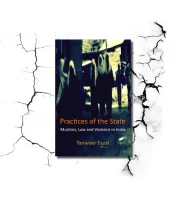
The state’s administrative, legal, and judicial systems institutionalise bias, rendering marginalisation of minorities an entrenched aspect of governance.
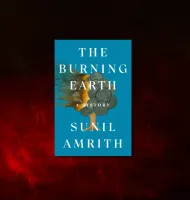
Sunil Amrith's "The Burning Earth" is 'history as literature and history as social science, and occasionally, history as natural history as well. It blends and brings together…
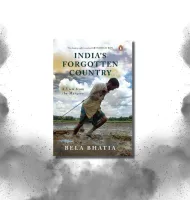
Bela Bhatia fervently urges privileged groups to recognise and respond to the struggles of the marginalised. She acknowledges caste’s influence, but does not fully confront its pervasive role,…
Savarkar's Marathi writings are key to understanding his political thought. His literary work laid the groundwork for his ideas of Hindutva and devastatingly magnified the popularity of his…
‘Manu Pillai has the skill to pull arguments, hypotheses, theories, & anecdotes from a number of vast & varied sources. He then arranges them seamlessly in a composite narrative that reminds…
Conservation efforts largely ignore landscapes where people and animals share the same habitat and conflict with each other. Making sense of life in such environments and easing tensions requires…
Gandhi’s correspondence with Sarla Devi reveals the complexity of the Mahatma’s intellectual, political, and intimate connections with one of the age’s most impressive women.
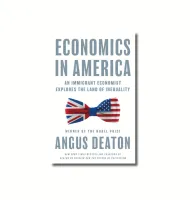
With its focus on growth and efficiency, mainstream Economics in the US has by and large ignored inequality. As a result, it has not tackled the big question: Is American capitalism today compatible…
The second volume of Manu Gandhi’s diaries chronicles a turbulent time. Living with Gandhi in Noakhali in 1946 and travelling with him, she emerges as a confident caretaker, a person with opinions,…
An ode to a “forgotten” India which needs to be given its rightful place in a Euro-American-centric globe ends up replacing one form of cultural supremacy with another. The obsession with an original…