The International Court of Justice ruling against Myanmar on genocide against the Rohingyas holds significance for India. It signals that India must restrain and deter those issuing calls for…
The consent of an individual cannot meet the test of proportionality in an intrusive state scheme. But India’s data protection act does not require a test be made as the Supreme Court set in…
The government and courts are expanding intellectual property protection over information goods—from drugs to generative AI—without empirical evidence. Invoking 'innovation' and…
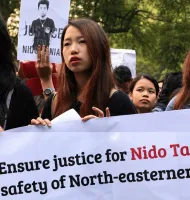
Arguments about violence against Northeastern people in Indian cities tend to observe that the state keeps no centralised record of such violence, and conclude that it should. But this absence is not…
A recent Supreme Court judgement wades into deciding who belongs or not to the SC and ST categories, and runs counter to Ambedkar's idea of fraternity: building a common brotherhood a shared…
"Despite different institutional logics, judgements and cinematic representations produce remarkably similar accounts of political violence. They ultimately reaffirm the legitimacy of existing…
In India, despite ample legal reforms, marriage remains stubbornly sacramental, and divorce, a social stigma. Marital death is not an outlier but a social fact. By giving the institution of divorce…
The Supreme Court’s ruling upholding the SIR crystallises key trends in contemporary constitutional adjudication: judicial evasion, executive constitutionalism, disregard of precedent through stealth…
A recent Madras High Court order invokes fraternity to justify reform over punishment in a caste atrocity case. Read alongside debates on transgender self-identification, it reveals both the promise…
The Transgender Rights Amendment Act 2026 is an instance of how the state's impulse to produce a limited and governable category of persons takes priority over constitutional principles of…