



In December 2025, Aheda Khatun, a resident of Nagaon, Assam, was pushed into Bangladesh. She had been declared to be a foreigner by a Foreigners’ Tribunal in Nagaon in 2019, and her writ petition challenging this decision was dismissed in August 2025 by the Gauhati High Court.
Khatun was a D, or Doubtful, Voter—one of the many tens of thousands marked so during an intensive revision of electoral rolls in Assam in 1997. Her expulsion concluded a decades-long journey that began in circumstances similar to the intensive revision of electoral rolls being carried out across India today: the Special Intensive Revision.
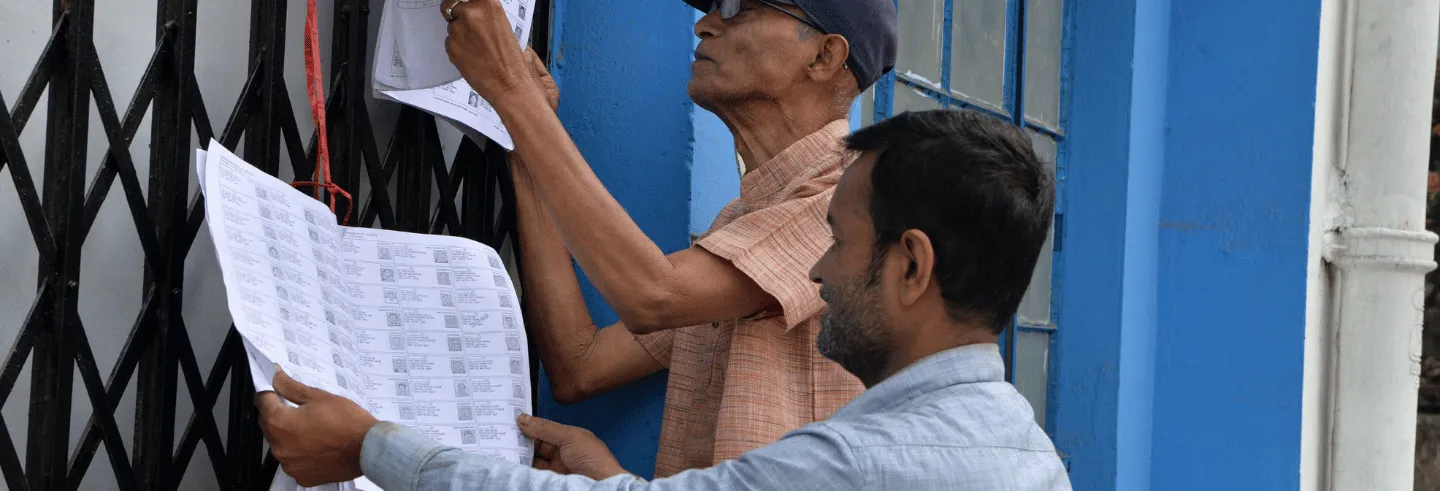
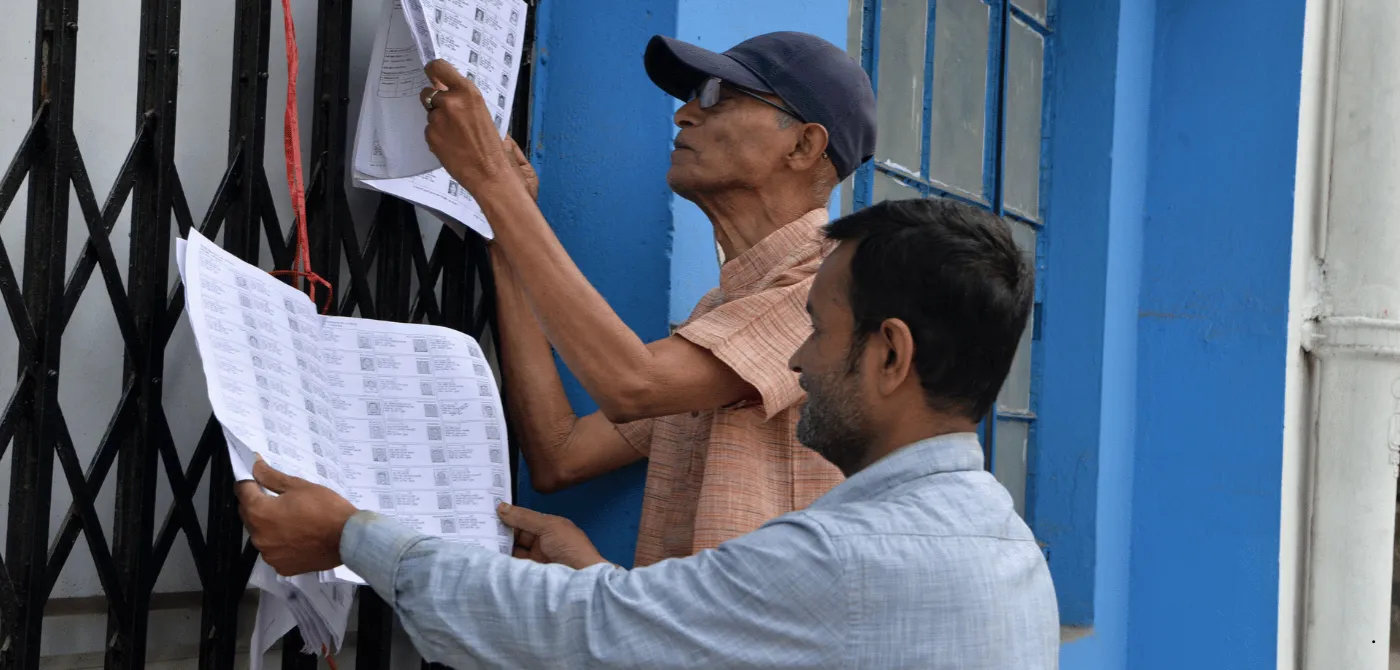
Since 2025, the Special Intensive Revision (SIR) of electoral rolls across twelve states has resulted in a tenth of their total electorate being deleted: a net 5.2 crore persons in all have been removed from the rolls. 1The deletions numbered 7.2 crores, and 2 crore voters were added, leading to a net reduction of 5.2 crore individuals from the electoral rolls. To understand the scale, the first general elections in India were held with an electorate of 17.3 crore. At this rate, by the time the SIR is completed across all states and union territories, a population nearly equal to India’s entire electorate in 1951 may have been excluded. The process marks a remarkable shift in the Election Commission’s national mandate: from enabling the exercise of voting rights, to disabling it.
But more concerning is SIR’s afterlife. As demonstrated by the history of D-voters like Khatun, citizenship determination processes following electoral roll revisions have resulted in statelessness, detention, and eventual expulsion. The Assam revisions of 1997 resulted in 3 lakh persons in the state being marked as D-voters. To remove this tag and be eligible to vote again, D-voters had to prove their citizenship before Foreigners Tribunals in the state. That process continues to this date, three decades after the revision took place. To map this journey, it is essential to make sense of the ECI’s role in citizenship determination.
Citizenship Determination
By law, only citizens can vote, and the ECI is mandated to prepare and revise the electoral rolls. The ECI periodically updates the rolls to account for births, deaths, and electors moving residence. Unlike this summary revision of electoral rolls, an ‘intensive revision’ is done de novo: the primary data is collected afresh, and the older electoral roll is tossed out. A revision of electoral rolls necessarily includes deletions and inclusions, and in updating electoral rolls, the ECI may find that a person does not qualify for enrolment because of age, residence, or citizenship status.
The ECI’s revision of electoral rolls does not conclusively determine status—it only casts doubt, and then leaves the rest to India’s immigration laws.
The last such special intensive revision took place in 2003. What has significantly changed between the 2003 and 2026 revisions is the role of the enumerator in clarifying the elector’s citizenship.
The ECI’s instructions in 2003 made clear that such a determination was not the job of the enumerator. However, the 2026 instructions for the Bihar and West Bengal SIRs specifically state that in case a person is suspected to be a foreign national, their cases would be referred to the competent authority under the Citizenship Act, 1955.
Can the ECI determine citizenship? As admitted by the ECI itself in its affidavit before the Supreme Court, the Commission does not have the power to conclusively determine a person’s citizenship. Moreover, as has been observed by the Supreme Court, when an authority is called upon to decide, for the limited purpose of another law, whether a person is a citizen of India, it must do so in the context of constitutional provisions and the provisions of the Citizenship Act. The enquiry must be quasi-judicial in character and must ensure the right to a fair hearing, which includes the right to be informed of the grounds on which the person is suspected to be a foreigner.
The ECI occupies, therefore, a liminal yet pivotal space in citizenship determination. It lacks the power to conclusively determine (inclusion or exclusion from the electoral rolls by itself does not determine citizenship status). But in choosing to exclude, the ECI can flag an individual as a suspected foreigner. This can, in turn, trigger other processes that eventually may result in a conclusive determination that a person is a foreigner and an illegal migrant. All that the ECI can do is to cast doubt on an individual’s citizenship status. But once cast, this doubt can be painfully difficult to dispel, as we see in Aheda Khatun’s case.
Casting Doubt
In the 1997 intensive revision of electoral rolls in the state of Assam, an Electoral Registration Officer (ERO) would decide on inclusion or exclusion. Their decisions were based on reports from Local Verification Officers (LVO), who had conducted spot visits to determine whether a person was eligible to be included in the electoral list. If a person was suspected by the LVO to be a foreigner, the ERO would refer their case to the Superintendent of Border Police in that district, who in turn would refer the case to Foreigners Tribunals, or FTs. On receiving the reference, the FTs would issue notice to the suspected voter and hear their case.
The exercise left the ECI in a quandary. EROs doubted the citizenship of over 3 lakh persons, but the ECI could not delete names of persons on the grounds that they were foreigners without first going through the process of determining their citizenship, but it was impossible to conclusively determine the citizenship of 3 lakh persons in time for the General Elections of 1998.
As we have seen in Assam, exclusion from the SIR is the beginning of a decades-long journey to statelessness and expulsion, enabled by India’s immigration laws.
This contrived crisis birthed the creation of the D-voter tag. A person whose citizenship was in doubt would remain on the electoral roll with a ‘D’ marked against their name, ineligible to vote till they were determined to be Indian citizens by the Foreigners Tribunals. The ECI’s instructions in this respect were upheld by the Gauhati High Court, which observed that the “peculiar situation relating to influx and presence of a large number of foreigners in Assam” justified this specific process of electoral roll revision.
Over three decades after the Assam SIR, in response to a question asked in Parliament by AIMIM MP Asaduddin Owaisi, the home ministry stated that as of October 2019, there were 113,738 D voters in Assam, of which 70,723 were women, like Aheda Khatun. This proportion mirrors the West Bengal SIR exclusion figures and indicates similar factors at play—young (often minor) married women, who had travelled to and settled in their marital homes in different districts, were caught in the crosshairs of the D voter exercise, because they were unable to produce the necessary documentation.
Suspicion, or doubt, once attached to your citizenship status, may take decades to shake off, as evidenced by the thousands of D voters still waiting for a notice from the Foreigners Tribunal in Assam. The wait to be heard by a Foreigner Tribunal is interminable and painful, so much so that D-voters frequently approach courts just so that they can receive a notice from the tribunals. Sona Khan, a D-voter, approached the Gauhati High Court thrice—twice to receive a notice, and once because, having received a notice, he found that even though the Superintendent of the Border Police had observed that there was no reason to believe that Khan was a foreigner, the Foreigners Tribunal had issued notice.
In August 2024, the Chief Minister of Assam stated in the Assam Assembly that there were 119570 D voters in Assam, of which 54,411 persons had been declared to be foreigners. In April 2025, the Chief Minister of Assam declared that only 25,000 D-voters remained in Assam—he attributed this sharp dip to the number of Bengali Hindu D-voters who the Foreigners Tribunals had found to be citizens. Therefore, once your name is removed from the electoral roll based on being suspected of being a foreign national, the ECI no longer bears any responsibility towards the consequences of such removal.
What are Foreigners Tribunals?
Once a D-voter’s case is referred to the Foreigners Tribunal, and the tribunal issues notice, the trial begins, sort of.
It is quite likely that a D-voter may never see the inside of a tribunal. Almost half of FT orders passed between 1985 and 2019 were ex parte, without the proceedee being heard or even present. Section 9 of the Foreigners Act, 1946 (now Section 15 of the Immigration and Foreigners Act, 2025), placed the burden of proving citizenship on the D-voter, and Foreigners Tribunals would routinely declare persons to be foreigners in ex parte cases, on the grounds that the proceedee bore the burden, and by failing to appear, he failed to discharge the burden.
The ECI has repeatedly used the language of purification to describe the SIR. The excision of 5.2 crore names from the electoral roll, no doubt, is an exercise in cleansing the body politic of the nation.
A 2025 report by researchers at Queen Mary University London and the National Law School of India University demonstrates how FTs lack judicial independence, are controlled primarily by the executive, and the qualifications to become an FT member have progressively weakened over time. In 1964, only retired judges could head FTs; now any lawyer with seven years of experience can. FT members are not trained in any rigorous manner.
Most importantly, however, FT procedure casts the entire burden of proving one’s citizenship on the proceedee, to the extent that FTs frequently refuse to even issue summons to witnesses, and inquiry officers and LVOs are rarely examined. Till 2013, there was no consistent process followed for serving notice on the proceedee. They continue to follow highly inconsistent approaches to appreciating evidence. Therefore, once the ECI declares a person to be a suspected foreign national, they are at the mercy of a highly arbitrary tribunal that lacks any procedural safeguards.
From the Exception to the Norm
In West Bengal, following the SIR, the Supreme Court directed the establishment of Appellate Tribunals, headed by retired high court judges, to hear appeals by 27 lakh persons who have been excluded from the final SIR list. These are not the same as Foreigners Tribunals (even though there is no legislative bar to establish FTs in any state). The mandate and operating procedure of these tribunals have not been made public yet. It is therefore unclear whether, on deciding whether a person should have been excluded from the electoral rolls, the tribunal will enter into questions of citizenship determination.
Appellate Tribunals have not been set up in any other state, and persons excluded from the electoral rolls in the 11 other states will have to apply to be included afresh. The legal lacunae only mean that if the ERO suspects them of being illegal migrants, it would be the beginning of a long journey to exile.
What happens after an excluded person is found to not be an Indian citizen? Unless they are found to have valid travel documents like a passport and a visa or if they are exempted under any specific order (for example, if they are Hindus from Bangladesh who entered India before 31 December 2024), they are vulnerable to coercive measures of removal, detention and deportation.
While the central government has the power to direct the removal of foreigners, deportation requires another country to take in the deportee. Unless a country is throwing persons into international waters, deportation always involves removal to some other country. Unless India’s processes of nationality verification determine whether the person being expelled is actually a citizen of the country they are being removed to, deportation becomes expulsion: an act of unilateral violence, pushing a person into a country that does not recognise them as their national.
India has, in fact, repeatedly acknowledged nationality verification to be necessary for deportation. In a response to a parliamentary question on deportations of Indian nationals from the United States, Foreign Minister S. Jaishankar described how an “unambiguous verification” of nationality is essential to deportation, and a “generally accepted principle in international relations”. A generally accepted principle that India is proudly flouting.
Assam has pushed 330 persons since last year, relying on a 1950 legislation, the Immigrants Expulsion from Assam Act (IEAA), enabling expulsion of persons identified as “undesirable migrants”- Aheda Khatun was one of them. The IEAA does not require any judicial determination of citizenship or nationality verification—in a way, it is worse than the Foreigners Tribunal Regime.
As we see in Aheda Khatun’s case, the intensive revision of electoral rolls may only begin a decades-long nightmare through statelessness, detention, and eventual expulsion.
Unrelated to the SIR, last April, around 1,024 people suspected to be illegal immigrants from Bangladesh were detained in Ahmedabad and Surat. In Ahmedabad, 890 people were detained, paraded through the streets by the police, and subsequently detained again, including in an open ground in a sports stadium. Only 143 of the detainees from Ahmedabad had been identified as Bangladeshi nationals by Indian authorities. Of the 6,500 detained from Ahmedabad, Surat, Vadodara, Vapi, and Kutch, only 450 have been identified as Bangladeshi nationals. There is no suggestion in the reports that any effort has been made to contact Bangladeshi authorities for nationality verification.
The alleged pushback into Bangladesh happened after the central government told the Supreme Court that deportation would happen in accordance with Indian laws. As described in a January 2025 order in Maja Daruwala v Union of India, and as admitted by the central government before the Supreme Court recently, deportation cannot take place without nationality verification. If an apprehended individual claims Indian citizenship, verification of their citizenship would take place in the state or union territory that the individual claims to be from. None of these processes seems to have taken place.
However, these guidelines have been superseded by a May 2025 notification that does away with the requirement of nationality verification entirely. Of 78 persons pushed into Bangladesh in 2025, three were identified by Bangladeshi authorities as Indian citizens and are being prosecuted as illegal migrants. These 78 individuals, reportedly brought from Gujarat, were blindfolded and left in the wilds of the Sunderbans. How these three Indian citizens will find their way back is anyone’s guess. In one admitted instance of such a mistaken push, Sunali Khatun, a pregnant woman from West Bengal who was pushed into Bangladesh, could return to India only five months later in December 2025, after her case was widely reported and taken up by the state government.
Is this the fate of millions, to be caught in a loop between a nation that does not want them and another to which they don’t belong?
There, and Back Again
Unlike in Assam, no one excluded from the SIR has had to attend proceedings to prove their citizenship, and no one certainly has been deported yet. Foreigners Tribunals do not yet exist in other states. But as we have seen in Assam, exclusion from the SIR is the beginning of a decades-long journey towards statelessness and expulsion, enabled by India’s immigration laws. The ECI’s revision of electoral rolls does not conclusively determine —it only casts doubt, and then leaves the rest to India’s immigration laws.
The ECI has repeatedly used the language of purification to describe the SIR. The excision of 5.2 crore names from the electoral roll, no doubt, is an exercise in cleansing the body politic of the nation. But the excision of people like Aheda Khatun from the electoral roll is merely an initial step in the path to purification—what begins as a removal from the political community of voters ends for many in their physical expulsion from the territory. As Khatun struggles to get back to India, this nightmarish journey may only be beginning for millions of others.