
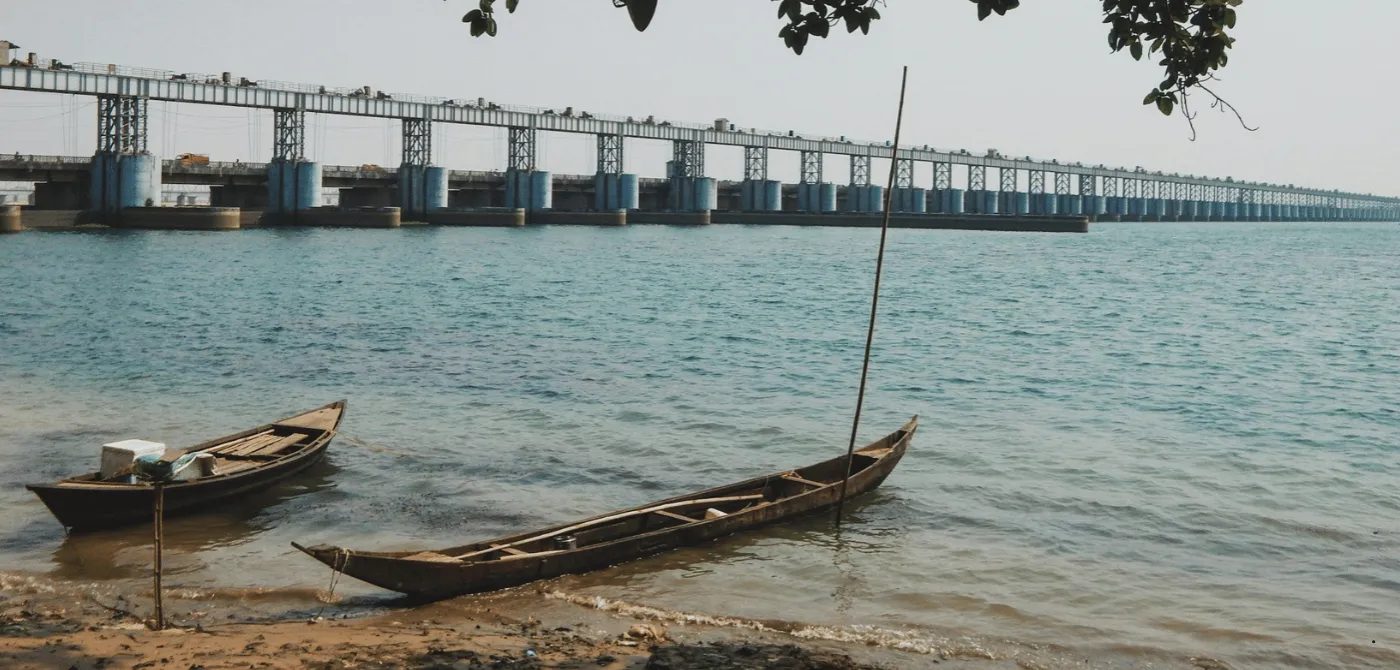



Cuttack first came to me as a palimpsest of stories in which the personal, the historical, and the mythological mingled without clear distinction.
From my father, I learnt that it was the city where my paternal grandfather spent his final days in penury, shuttling between his workplace in the Old Secretariat and the Cuttack Medical Hospital, attending to the contingencies of my great-grandfather’s failing health. It was also the place where my father’s great-granduncle, Kasinath Das Choudhuri—five generations before me—co-convened, in 1889, the first meeting of the Utkal Samaj— an organisation that would go on to take up the Oriya nationalist cause and culminate in the creation of a separate province in 1936 (Nayak 2003). The stories of my grandfather making a stop at the Chandi Maa of Cuttack were not lost on me as a child, especially the mesmerising tale of her emergence from beneath the ground after she appeared in a priest’s dream, instructing him to dig the soil.
I realised soon that the cloistered images that my mind had produced were far too limited, incomplete and constricting for the social realities that the city had to offer.
The images that came alive through the words of my father, I painted with hues of my own. The Cuttack I constructed was one of old colonial buildings with arched entrances and clock-towers, where the bazaars were packed with people haggling to get a good deal and the river-bank crowded with families seeing off their young men to conduct business in far off places; of students bustling around their college before the dim of silence in classrooms; where the brush of air carried the smell of sweat as babus gently, patiently, climbed down from cycle-rickshaws to go to their offices, and where little children were prodded by their parents to fold hands and bow down in front of the fierce image of Cuttack Chandi.
Unbeknownst to me at that time, the Cuttack that settled into my memory was structured by the normative grammar of the Brahmana–Karana social order, which appeared as the privileged site of Oriya middle-class formations of urbane conduct, modern education, bureaucratic rationality, and commercial activity. This grammar shaped not only who could speak for the city, but also which histories could circulate as representative of its past. While these perceptions were historically grounded, they nevertheless represented only a fragment of the city’s fuller and more contested social reality.
It took me many more years of waiting for that to change, when in Jayanta Mahapatra’s 2013 autobiography, Pahini Rati—'The Night is Yet to Dawn’—I witnessed a new world: the Parsi candy-store run by the Bilimorias, the delicious fish biriyani of Khan Hotel, and even the distinctly musical Telugu-inflected Odia diction of his house-help. These stories beckoned to me to make place for them in my otherwise neatly arranged cartography of memory and imagination. In many trips that I made to the city over years, I recollected vignettes: the broken signpost over the forgotten Urdu Library on the (no-less intriguingly named) Mission Street, the busy lanes of Dargah Bazaar where quietly stood the Qadam-e Rasool and the bright red Lalbagh palace, as well as the tall Jain Mandir, built by the Marwaris, standing in the middle of Choudhury Bazaar. I realised soon that the cloistered images that my mind had produced were far too limited, incomplete and constricting for the social realities that the city had to offer.
A moment of reckoning had arrived: the tenor of this city’s language was arranged carefully to suit a specific aural temperament that was a need for some; the colourful pastiche of the city was hidden. When the memory of a city is reconstituted as ‘timeless’ within a particular milieu, what gets forgotten and what is remembered?
The Many Identities of a City
Prior to the advent of colonial modernity, individuals inhabited multiple and often intersecting identities, navigating and enacting these varied affiliations in response to shifting social and historical circumstances. Such fluidity preceded the rigid taxonomic ordering of social life instituted through imperial regimes of knowledge. A familiar illustration of this classificatory violence is the tripartite division of Indian history into the ‘Hindu’, ‘Mohammedan’, and ‘British’ periods in James Mill’s The History of British India. Attentiveness to the modes of self-formation among our early modern actors in 18th century Cuttack, therefore, requires a critical distance from both colonial epistemologies and the communalised narratives actively promoted by the contemporary political establishment and its ideological apparatus.
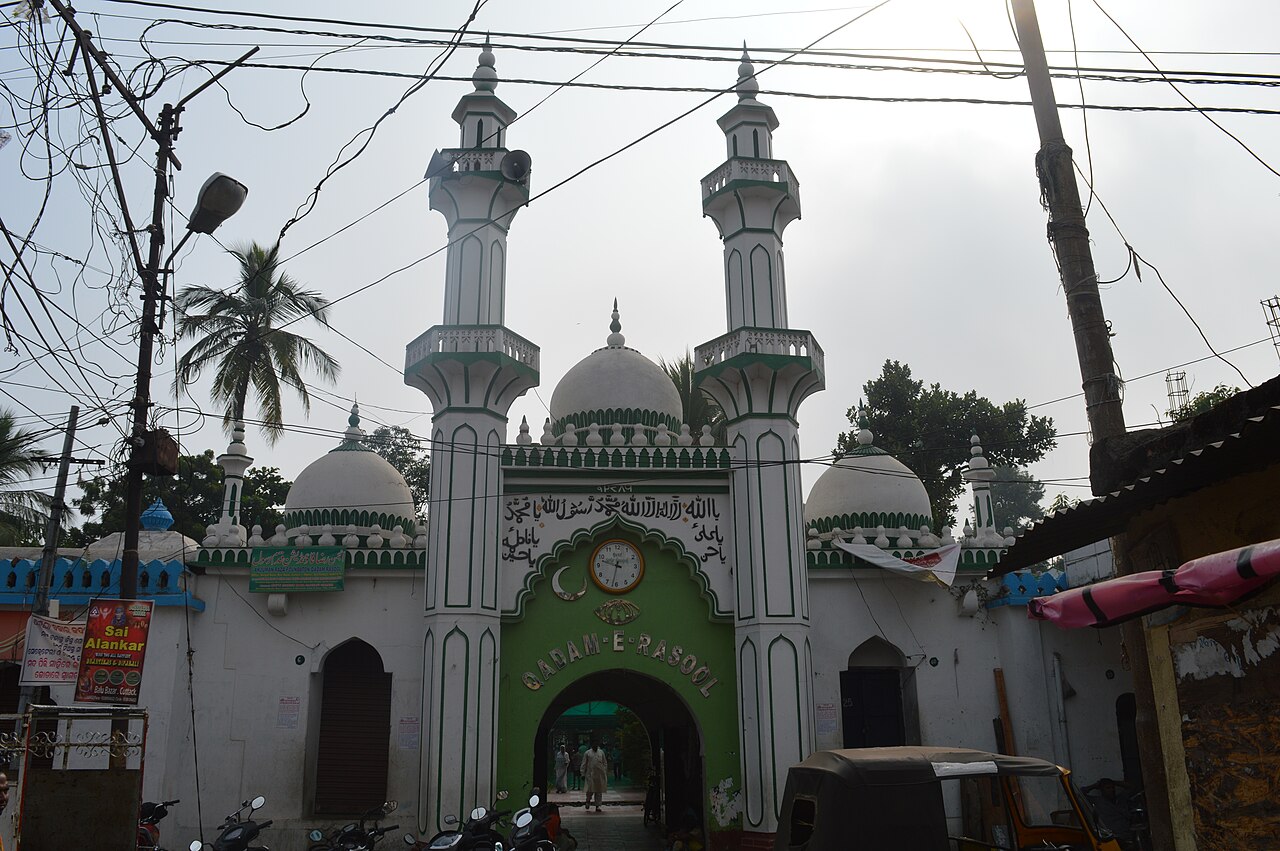
Cuttack, the grand old city of a thousand years, had lived many lives by the time colonial modernity arrived at its shores. Andrew Stirling’s 19th-century account traces the city’s history as far back as 989 CE, when Raja Nrupa Keshari founded it, and by circa 1006 C.E. it was flourishing as a capital. Cuttack—literally meaning a garrison—was originally known as Varanasi Kataka, attesting to its importance both as a military base and as a religious centre. The Vishweshara temple, dedicated to Siva, recalled Benaras’ Viswanatha temple and symbolically equalised the city with Kashi. The 13th century ‘servant-king’ Anangabhima III, who dedicated himself to the greatness of Lord Jagannatha of Puri and ruled in the deity’s name, fortified the capital, now called Abhinava (new) Varanasi Katak.
Anangabhima’s construction of the Purushottama temple in Cuttack is largely interpreted by the contemporary Hindutva brigade as a fortification of a ‘Hindu kingdom’ in the eastern region at a time when the ‘threat’ of Islam was percolating into the northern region. But that is only partially correct. His dedication of kingship to the deity Purushottama—later to be identified with Jagannatha—also came with the introduction of the concept of the trinity as we know of today: Balabhadra and Subhadra, along with the wooden image of Sudarshana, were introduced alongside Purushottama. This was an attempt on the part of the ruler to assimilate the diverse faiths of the region, spread across the Sakta, Saiva, and Vaisnava sects. Anangabhima played a decisive role in instituting a form of ritual-kingship by harnessing the expanding bhakti currents of the region and consolidating the political authority of Jagannatha. It was a territorialisation practice gesturing towards creating a theo-political state and reintegrating Brahmanical authority into his fold by claiming divine support (Kulke 1981).
Through the 16th and 17th centuries, Afghan and later Mughal authority brought to Cuttack Persianate forms of administration, revenue extraction, and military governance, which were layered onto older sacral and imperial infrastructures. The city’s political importance remained intact: it continued to function as a key military and administrative centre, with successive regimes maintaining their capitals in or around the city. The intercultural transactions between the religious life of the people and the priorities of the ruling elites displayed a striking continuity with the political-theological idioms established under Anangabhima. Sikandar Lodi’s declaration that idol-desecration was unlawful, and the participation of Mughal mansabdars in the Rathyatra of the Jagannatha temple in Puri, were accompanied by the active protection of temples in and around Cuttack itself (Eaton 2000). In these gestures, sovereignty continued to be articulated through a careful accommodation of the region’s ritual economy, even as administrative authority was exercised through Persianate bureaucratic forms.
The Cuttack of my imagination lingered as a city of patience and ordinary ethical density, holding out, however precariously, against the hardening of communal histories.
These transitions were not merely abstract shifts of sovereignty but were registered in the reorganisation of revenue offices, the movement of troops around Barabati Fort, and the growing regulation of commercial life along the riverine routes of the Mahanadi. For the inhabitants of Cuttack, the Mughal state was thus encountered less as a force of religious rupture than through officials, tax demands, troop movements, and the steady integration of the city into imperial circuits of revenue and control. Localities in Cuttack Suba, like Dargah Bazaar, Buxi Bazaar, Mohamadiya Bazaar, which are still recognised by the same names, became sites of intense interaction between ulemas, darvishes, and maulavis, as well as mahants and gurus. It was not simply the upcountry Muslims who moved in; along with growth in trade and commerce came Bengali Hindu revenue officials, Marwaris, and Gujarati baniyas to settle down and make a place for their faiths.
This, however, is not to say that the interaction between the ruling classes and the general populace—as well as the competing ruling elites and the people—was one without a fair share of violence, disagreements, as well as enmity. Elements of animosity were recorded in many ways, for instance, the times of Muhammed Taqi Khan—the Naib Nazim of the Orissa region between 1727 and 1734, shortly after the death of Aurangzeb—saw bouts of violence, though they were not strictly 'religious' in nature but more concentrated on the economic wealth of the region (Mohanty 2002). Khan’s attack on the Jagannath Temple was along the lines of Aurangzeb’s farman of 1681—which had been stalled by negotiations between Gajapati and the local Mughal administration—not simply a marker of religious intolerance but a culmination of sovereignty battles as well as quelling a rise in fiscal tensions. Underlining the complex social dynamics of the region, rancour between the Shia and Sunni was also evident in the same period, as recorded in Chahar-un-sur, a 17th century work by Mirza Abdul Qadir Bedil that provides a lively record of his visit and stay in Orissa.
In other words, Cuttack’s complexity cannot be read simply as a fusion or polarisation of identities, but must be seen as a contact zone—in the term the historian Shahid Amin (2015) uses in another context—where diverse political, religious, and social ideologies vied for dominance, each seeking legitimacy through engagement with the other. As Amin argues, rather than yielding to neatly communalised histories on the one hand, or erasing the fragile (dis)unities that were historically produced on the other, we must focus on the processes, structures, and causalities through which difference was both generated and contained. It is within these mechanisms that relatively stable forms of governance and social life became possible.
Nowhere was this long history of contact as marked as in the region’s material and literary cultures. When I first witnessed rare decks of ganjapa (from the Persian ganjifa) cards—circular in shape, small and beautifully painted images of Hindu gods—which were more in circulation in southern Odisha, it dawned upon me that they were reworking the aesthetics of Mughal courts and Maluk-era objects into depicting indigenous objects in pattachitra imagery. Elsewhere, paper paintings surfaced depicting humans in Mughal attire, signalling a clear departure from traditional Puranic styles under the influence of Islamic aesthetics.
The most noticeable influence, however, was witnessed in the literary creations of the bhakti poets of the time. Salabega—a poet cherished in every Oriya household—was the son of Lal Beg, a Muslim Mughal administrator, and a Brahmin widow. He became an exemplary jabana (yavana or outsider, a word used for Muslims) devotee of Jagannath. His poems reveal the other side of imperial power, showing devotion to the state deity was not merely a political instrument wielded by the ruling classes, but a deeply lived and personal spiritual reality for both Hindus and Muslims. Salabega’s poems profess his love and devotion toward Jagannath in Oriya, though he was also proficient in Urdu, Persian, and Sanskrit. Also noticeable was a shift in the linguistic vocabulary of the region, especially in some of the more embellished and poetic works like that of Kabisurjya Baladev Ratha, where Persian words—‘hamaar,’ and ‘fauj’ are some common phrases that we witness—appeared abundantly in verses dedicated to Jagannath.
While there were demonstrations of forceful faith like that of Salebega, it is also true that scepticism and rancour towards Islam were present. Achyutananda Dasa’s Malikas—prophetic texts that conjectured on the future within the Hindu paradigms of time—presented the Islamic victory as a danger, vilifying the rule. In such schematics, the Islamic ruler often appears within the language of Hindu semiotics, as a demon or vice, showing that this strange inclusivity of the Other within the paradigms of cosmological Hindu time was far from either exclusion or territorial identification of land with a religion. What was clear, was that the transcultural nature of the interaction had made its mark on the Orissan culture for times to come.
Borders, Faultlines and Disjunctions
In contemporary times, Fakir Mohan Senapati—the iconic 19th-century litterateur hailed as the Vyasa of Orissa—is remembered for his deeply rooted, quintessentially Oriya literary imagination. Senapati was instrumental in shaping the self-consciousness of the Oriya people. In classic textbook mode, his image is fixed onto his nationalist and patriotic contributions to the Oriya cause. The Oriya imagination’s memory of this towering figure, though, is largely limited to a simple regurgitation of a monolithic past provided by dominant frameworks—an Odia upper-caste identity that rests on a Hinduised imagination. Yet, in Fakir Mohan College, named after him in his birthplace in Balasore, I came across a large painting of his where he stands with a gentle confusion on his face, hands placed on a set of books by his side donning an achkan and pyjama. In the otherwise more popularly circulated photo of his, a close-up of his face, we can see his achkan’s collar, buttoned up and closed to his neck. Persistent in its plural past, the iconic image of Senapati reinforces onto us the need for a critical appraisal for our fragmented memorialisation.
The statist and exclusionary production of a 'pure' Oriya identity is possible today only by erasing the multiple internal contradictions that structured the world Senapati inhabited.
Senapati’s early life in his hometown on the northern fringes of Orissa had brought him in contact with the legacies of Portuguese traders. The seepage of Bangla and his exposure to English was clear, and his job in the courts had trained him well with Persian. In effect, a cosmopolitan outlook, linguistic plurality, and a plural appreciation of life governed his thoughts and writing from the very early times. Though, it was only when he shifted to Cuttack in 1896—after retiring from his service as Dewan—that he produced significant literary works that are remembered even until today, and he also became a central part of the Oriya nationalist movement with other actors like Radhanath Ray, Gouri Shankar Ray and Madhusudan Das.
Through the tumultuous decades of the 1870s and onwards, the Oriya Language Agitation took multiple shapes, as it sought to invent a distinct literary diction for Oriya in opposition to Bangla, Telugu, and Hindi—the dominant languages within whose administrative and cultural jurisdictions Oriya-speaking regions were scattered. Senapati soon became a focal point of these debates for initiating prose writing in Oriya, drawing inspiration from Ishwar Chandra Vidyasagar. His early literary experiments were sharply critiqued for their dependence on Bangla-derived tatsama vocabulary and for allegedly lacking 'authentic' Oriya character (Dash 2006). These accusations were voiced most prominently by figures such as Gouri Shankar Ray—ironically himself born into a Bengali-speaking family—who also demanded the rollback of Persian as the language of administration in favour of Oriya.
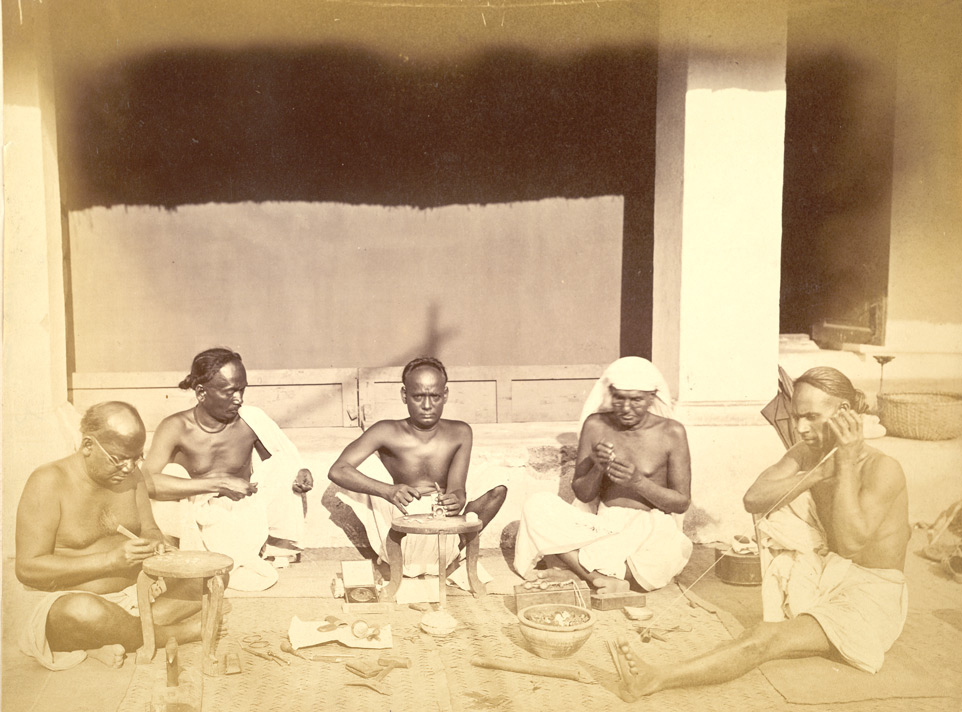
Cuttack, in everyday life, continued to carry a different rhythm—one shaped by street-level coexistence, occupational interdependence, shared festivals, food, music, and long habits of interreligious proximity.
Senapati’s literary response to these charges marked a decisive turn in the history of Oriya prose by 1902. He shifted his narrative attention to rural and agrarian lifeworlds and increasingly anchored his language in tadbhava and desaja vocabularies, drawing from lower-caste and indigenous speech rather than privileging Sanskritic or Aryan registers (Dash 2006). Yet this was not a withdrawal into linguistic purism. Senapati continued to retain Persian and English words in his prose, ensuring intelligibility and circulation among elite readers, who remained the primary patrons of print culture. In doing so, he forged a composite literary public, one that at once grounded Oriya identity in vernacular soil while remaining legible within the multilingual hierarchies of colonial modernity. Moreover, the case of Gouri Shankar Ray established that the definition of Oriya was not limited to a linguistic identity or even a religious one, but a comprehensive term that defined anyone who lived within its territories. The people were defined by the identity of a language, place and region not the other way round.
This composite and inclusive cultural formation, however, proved to be fragile as the 20th century unfolded. New pressures of mass politics, print-mediated mobilisation, and electoral articulation increasingly demanded sharper boundaries of identity. By 1949, after the brief ban on the Rashtriya Swayamsevak Sangh was lifted, the organisation had established a firm foothold in Orissa, with Cuttack emerging as the centre of its provincial operations. Two towering figures of Oriya public life—Nilakantha Das and Godavaris Mishra, both litterateurs and politicians—came under the ideological influence of the RSS and worked actively to propagate its worldview (Kanungo 2003). Their political dissidence from the Congress, their elite social locations, and their anxieties over shifting power configurations intersected here in complex ways. In Das’s articulation in particular, the term ‘Hindu’ was reframed not as a purely religious identity but as a marker of civilisational nobility; yet this gesture coexisted uneasily with his assertion that Islam posed an existential threat that could only be countered by the militarised legacy of the Marathas.
Between the decline of Mughal authority in 1751 and the British occupation of Orissa in 1803, the region had in fact been under Maratha rule. While formal administration remained in Maratha hands, governance shifted repeatedly between loyalist and dissident officers linked to the former Nawabs of Bengal. British colonial accounts would later retrospectively cast this entire phase as one of unbroken 'misrule', assimilating the Marathas into the same narrative of disorder previously applied to Afghan and Mughal regimes. Indigenous Oriya sources, however, record a more ambivalent picture. The Madala Panji, for instance, credits Maratha rulers with providing funds for the repair and maintenance of the Jagannath temple. It was precisely this layered and non-binary past that figures like Das and Mishra flattened into sharply polarised civilisational categories under the ideological grammar of the RSS.
The quiet perseverance of the 19th century identity of the Oriyas as one built out of composite elements was under threat, and would become dangerously polarised in the coming years.
A Remaking in the Making
Over the next seven decades, Orissa would witness deep political and social reconfigurations: the consolidation of religious identities, the sharpening of ideological borders, and a growing attempt to define ‘Hindu’ life as the central civilisational marker. Some of these moments became traumatic milestones in the state’s modern history, most notably the anti-Christian violence in Kandhamal following the killing of Swami Laxmanananda Saraswati. Yet Cuttack, in everyday life, continued to carry a different rhythm—one shaped by street-level coexistence, occupational interdependence, shared festivals, food, music, and long habits of interreligious proximity.
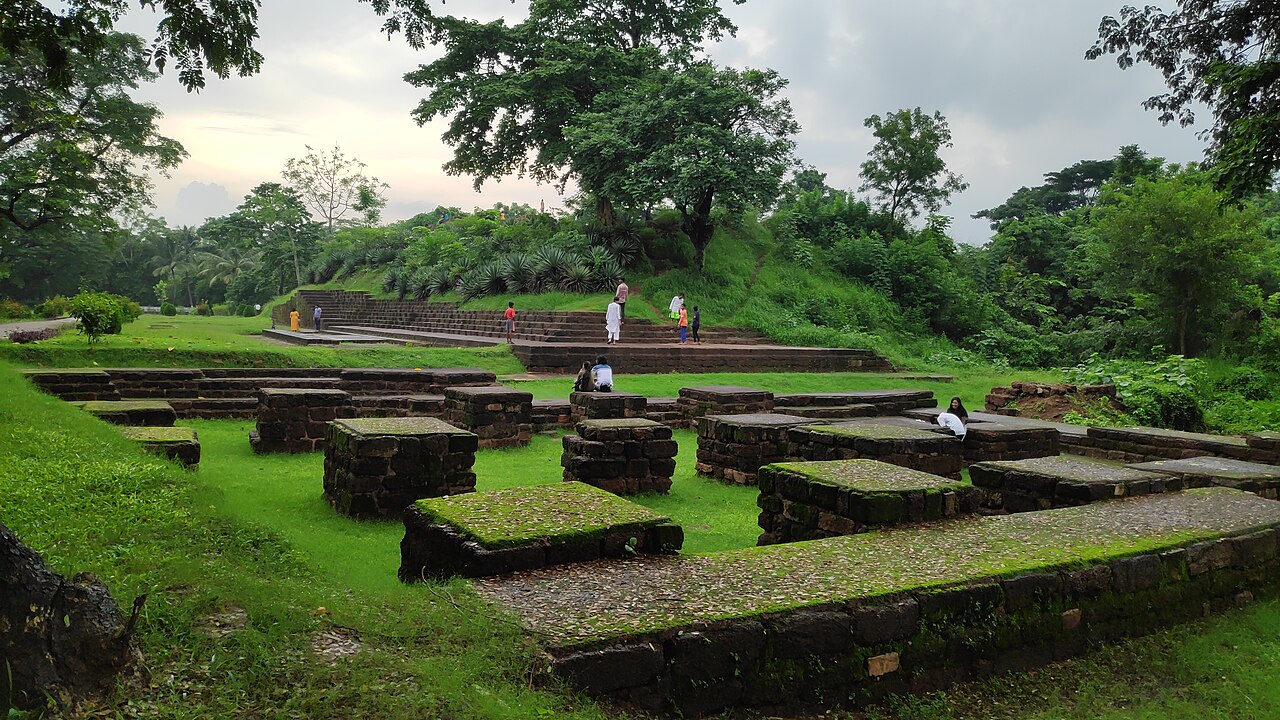
The Cuttack of my imagination lingered as a city of patience and ordinary ethical density, holding out, however precariously, against the hardening of communal histories.
This lived pluralism found one of its most resonant expressions through the 20th century in the voice of Sikandar Alam, the maverick singer who came to define Oriya bhakti music for generations. In one of his most evocative chaupadi performances, he sings of a dream-vision of Shyama stripped of divine ornaments—without flute, without garland, without the familiar insignia of godhood—leaving only a quiet, disarmed presence. The song carries a theological force remarkably close to Salabega’s own idiom of devotion: divinity as intimacy rather than spectacle, faith as vulnerability rather than triumph.
Ete Dine Dekhili Ja Shyama Ku Mu Sapanare
Nathila Kare Murali, Gale Kahin Charamali
Nathila Go Jamudali Sire Jali Jatanare
Gorachana Chita Bhale, Nathila Dekhili Dole…
So long it had been I saw Shyama in my dreams,
But he had no flute in his hands, no necklace adorned his neck;
On his head, there was no rose apple sprout from which shone a bright light.
There was no Gorachana mark on his head, nor in his eyes were…
1Author's translation.
It was this song that returned to me when, in 2025, on the eve of the Durga Puja immersion, violence erupted in the Dargah Bazaar area—one of the very neighbourhoods that had once epitomised Cuttack’s layered social life. Sitting thousands of miles away in the United States, watching smoke rise through the narrow lanes of my childhood on a phone screen, the city of a thousand years felt suddenly estranged from itself. The images of burning shops and dispersing crowds seemed to overwrite, in an instant, the long memory of shared soundscapes, overlapping rituals, and quotidian cohabitation.
What this moment disclosed was not merely the eruption of a riot, but the fragility of historical transmission itself: how easily the affective archives of devotion, music, and neighbourhood life could be eclipsed by louder political grammars. Did the ones who caused this violence, stirred up public opinion for so many days to come, never hear Alam’s song? Had they never, for once, transported themselves to the world of Cuttack way back in the times of Salabega and not for once felt it was the same sentiment that Alam represented in our times? The devotional world that linked Salabega’s Jagannath to Sikandar Alam’s Shyama had not vanished—but it had been pushed into a quieter register, increasingly inaudible within the high-decibel language of contemporary polarisation.
Abinash Dash Choudhury is a PhD candidate in comparative literature and intercultural studies at the University of Georgia, Athens, USA. The author is grateful to Aditya Kiran Nag for crucial information, as well as his continued and dedicated discussions on this piece.