
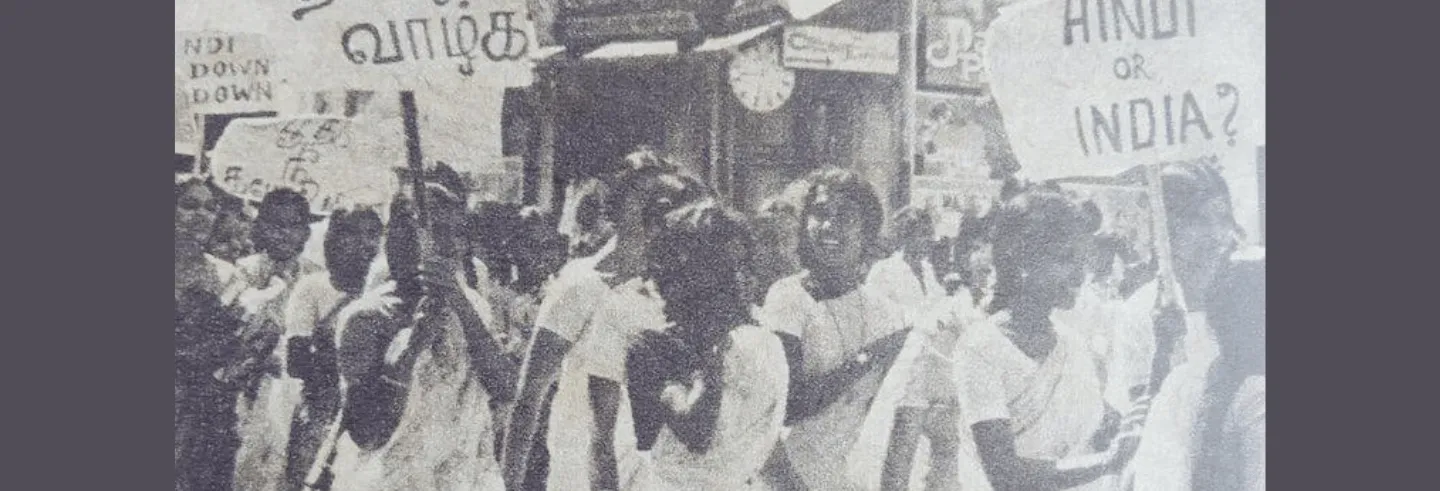
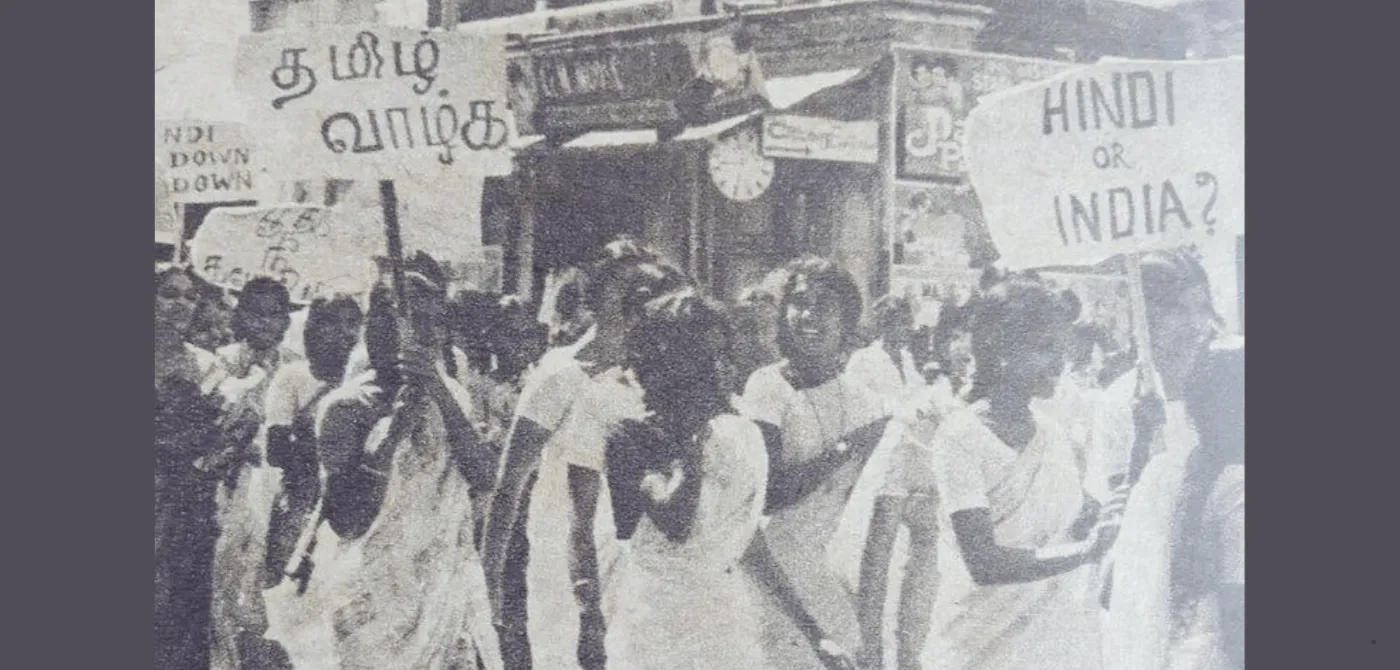




The carving out of linguistic states in India was an extremely messy affair. At the heart of the debate was a fundamental question: was language essential to personhood and cultural citizenship? Prime Minister Jawaharlal Nehru had opposed the creation of linguistic provinces in the early 1950s. Much like the various intellectuals of his time who had all just witnessed the Partition and its horrors, Nehru saw the pitfalls of dividing people based on cultural and linguistic ideas.
The States Reorganisation Act of 1956 formalised what these ground-level actors had been demanding for nearly a decade. But the outcomes were messy.
The push for linguistic states did not come primarily from elites and their views on nationalism. Reading the contemporary records of the All India Congress Committee (AICC), housed in the Prime Ministers’ Memorial Museum and Library, we see that this push came from lawyers, tobacco manufacturers, student organisations, and regional civic actors who had material stakes in how boundaries were drawn. The AICC papers present a myriad of voices on the subject, and there was no consensus on how this was to be done. Instead, they reveal a Congress leadership reacting to sustained pressure rather than leading with any coherent vision.
The question then is not simply how did the Congress see linguistic provinces before Independence, but did their approach work? By centring the bar associations and their civic allies, this essay shows that India's linguistic states were shaped from the ground up. The messy, contradictory outcomes reflect this bottom-up process. Understanding this matters because it shows us how Indian federalism emerged not from central planning but from negotiation between regional assertion and central authority.
Lawyers to the Fore
Regional bar associations, with loose affiliations to the Congress, appear to have been more vocal in the AICC papers than most other civic organisations. The lawyers understood what Congress leadership was still grappling with: new state boundaries would immediately reshape legal jurisdictions, court systems, and the very language of legal proceedings. Their professional livelihoods hung in the balance. Between 1946 and 1949, various bar associations flooded the AICC with petitions, proposals, and territorial demands.
Linguistic demands were not just about cultural romanticism or nationalist ideology. They had immediate material consequences.
When Kalipada Roy, secretary of the Bar Association of Asansol, wrote to the Congress President in 1947, that the Association wanted West Bengal united with eastern Bihar, it was not a romantic appeal to Bengali culture or identity. The petition was grounded in the practical realities of legal practice across what Kalipada Roy saw as an artificially divided region.
And when Bengali Hindus associated with the All-India Bengal Lawyer's Association began pondering a boundary for a new Bengal state, they wanted Jalpaiguri and Darjeeling, the western parts of Dinajpur and Maldah, the whole of Burdwan, the western parts of Purneah and the Santhal Parganahs, and the Manbhum and Singhbum districts. This, they argued, would create a culturally homogenous territory of 40,000 square miles and a population of two crore.
The precision of these territorial demands reveals how seriously bar associations took the exercise. They were not simply gesturing at cultural unity. They were mapping out jurisdictions.
What these petitions reveal is that linguistic demands were not just about cultural romanticism or nationalist ideology. They had immediate material consequences. Legal professionals were among the educated elite who could articulate their demands effectively to the Congress. They had organisational capacity, professional networks, and the ability to frame their interests in both practical and ideological terms. When the Congress received these petitions, it was not receiving abstract philosophical treatises on language and identity. It was receiving detailed territorial proposals backed by professional associations with real stakes in the outcome.
Coalitions
In opposition to, or at times in concert with regional bar associations, other groups petitioned the Congress voicing their own vested interests. Organisations such as the Ellore Retail Tobacco and Cigar Manufacturer's Association, Azad Hind Grandhalayam, and Students of Progressive Thought had begun demanding an Andhra State be established on linguistic and cultural basis at the earliest.
The language of linguistic nationalism became a common vocabulary through which diverse groups could frame their material and cultural interests.
What this coalition reveals is striking. Linguistic demands were not the preserve of cultural nationalists or romantic intellectuals. Tobacco manufacturers had economic interests in how state boundaries were drawn. Trade routes, tax jurisdictions, and commercial networks all depended on administrative boundaries. Students had their own stakes in the matter. Which universities would they attend? In what language would instruction take place? What did it mean for their future careers if they ended up on the wrong side of a new state boundary?
These diverse economic and social interests converged around linguistic demands. The coalition was broad and it cut across class lines. Merchants, students, lawyers, and civic associations all found common cause in pushing for linguistic reorganisation. This was not simply elite capture of a popular movement. Nor was it purely a grassroots uprising. It was something messier. Different groups with different interests all saw linguistic states as a solution to their particular problems.
The AICC papers are testimony to how these coalitions formed and evolved. Each group watching other groups make their demands created what one Congress paper, borrowing from Jeremy Bentham's idea of the panopticon described as being "like a tower situated in a circular jail wherefrom the Superintendant is watching all the prisoners right around." The various stakeholders were watching each other, and this created a kind of ideological mimicry. If Bengali lawyers could demand a new Bengal, Andhra tobacco manufacturers too could demand a new Andhra. If students in Peddapuram could organise around linguistic identity, why couldn't workers in other regions do the same? Each successful petition or vocal movement encouraged others to articulate their own demands in similar terms.
The Congress found itself facing not isolated demands but a cascade of them. The language of linguistic nationalism became a common vocabulary through which diverse groups could frame their material and cultural interests. Congress leadership was not leading this process. It was reacting to it, trying to manage demands that kept multiplying.
A Reactive Congress
There was no consensus within the Congress on how linguistic reorganisation was to be done. Even though the question of linguistic boundaries was being framed as a purely administrative exercise, the question of linguistic minorities was anything but clerical. Any reorganisation on linguistic lines would inevitably create winners and losers. Some communities would find themselves in states where they were the majority and their language had official status. Others would find themselves stranded as minorities in new states organised around languages they did not speak. How were their rights to be protected? What language would be used in local administration? In courts? In schools? Would they be forced to migrate to states where their language was dominant? The Congress leadership understood these problems, but they had no clear answer for how to manage it.
Despite Nehru's opposition to linguistic provinces in the early 1950s, ground-level movements forced the party's hand.
On one hand, it faced mounting pressure from bar associations, civic actors, and regional movements demanding linguistic states. On the other hand, it had just witnessed the horrors of Partition and was deeply wary of any further division along cultural or linguistic lines. The tension between these two positions paralysed the Congress leadership.
M.K. Gandhi's solution to the problem had found some takers. Even though Gandhi had supported the reconstitution of provinces based on linguistic lines, his solution had been two-fold. The more popularly known solution was to promote Hindustani as a rashtrabhasha or national language. Gandhi had proposed that wherever internecine conflicts or 'undesirable situations' erupted, there one would find suitable situations for the drawing of provincial lines.
The more administrative-minded Congressmen proposed that linguistic lines and provinces be drawn on a case-by-case basis. This case-by-case approach was essentially an admission that the Congress had no clear plan. It was a reactive strategy, not a proactive one. The party would wait for conflicts to emerge and then try to manage them by redrawing boundaries. This put Congress in the position of constantly playing catch-up with regional movements that were already mobilised and making specific territorial demands. The bar associations and civic actors had done their homework. They had mapped out boundaries, calculated populations, and framed their demands in both practical and ideological terms. The Congress, by contrast, was still trying to figure out its basic position.
Maintaining territorial and geographical integrity with cultural-linguistic and ethnic integrity demanded a fine balancing act. Congress functionaries understood this. They were trying to balance administrative efficiency with cultural recognition, economic integration with linguistic identity, and national unity with regional assertion. It was a nearly impossible task, and the AICC papers show the strain of these competing demands.
Outcomes and Legacy
The Congress's reactive approach ultimately failed to contain the pressure for linguistic reorganisation. Despite Nehru's opposition to linguistic provinces in the early 1950s, ground-level movements forced the party's hand. The creation of Andhra Pradesh in 1953 following Potti Sreeramulu's fast unto death demonstrated that regional mobilisation could overcome central resistance. The bar associations and civic actors who had been petitioning since the 1940s had built the organisational infrastructure and ideological framework that made such movements possible.
Indian federalism was not designed from above. It emerged from negotiation, conflict, and compromise between regional assertion and central authority.
The States Reorganisation Act of 1956 formalised what these ground-level actors had been demanding for nearly a decade. But the outcomes were messy. Linguistic minorities remained stranded in new states. Boundaries continued to be contested. The precise territorial maps that the All-India Bengal Lawyer's Association had drawn up were not adopted in full. Communities like the Mahtos found themselves divided across state lines. The tobacco manufacturers of Ellore got their Andhra state, but not in the exact configuration they had proposed. New demands emerged for further reorganisation.
What the bar associations and their civic allies achieved was not the neat, rational reorganisation they had hoped for. What they achieved was the recognition that linguistic identity had material stakes and that those stakes could not be ignored by central planning. They demonstrated that professional guilds, merchant associations, and student organisations could build effective coalitions around linguistic demands. They showed that ground-level pressure could force policy change even when national leadership was opposed.
The legacy of this bottom-up process is still visible in Indian federalism today. State boundaries continue to be contested and renegotiated. Linguistic minorities continue to demand recognition and rights. New states continue to be carved out based on regional assertion rather than central planning. Telangana's creation in 2014 followed the same pattern that the AICC papers from 1946 to 1949 reveal: sustained ground-level mobilisation eventually overcomes central resistance.
Understanding this history matters because it shows us that Indian federalism was not designed from above. It emerged from negotiation, conflict, and compromise between regional assertion and central authority. The bar associations that flooded the AICC with petitions in the 1940s were not peripheral actors in this story. They were central to it. Their professional interests, their organisational capacity, and their ability to build coalitions with other civic actors shaped the outcomes as much as any Congress resolution or constitutional provision. The messy, contested nature of linguistic states in India reflects this bottom-up process. It was never going to be neat, and the AICC papers show that Congress functionaries knew this even as they tried to manage it.
Vipin Krishna has a PhD in history from the University of California, Los Angeles.