
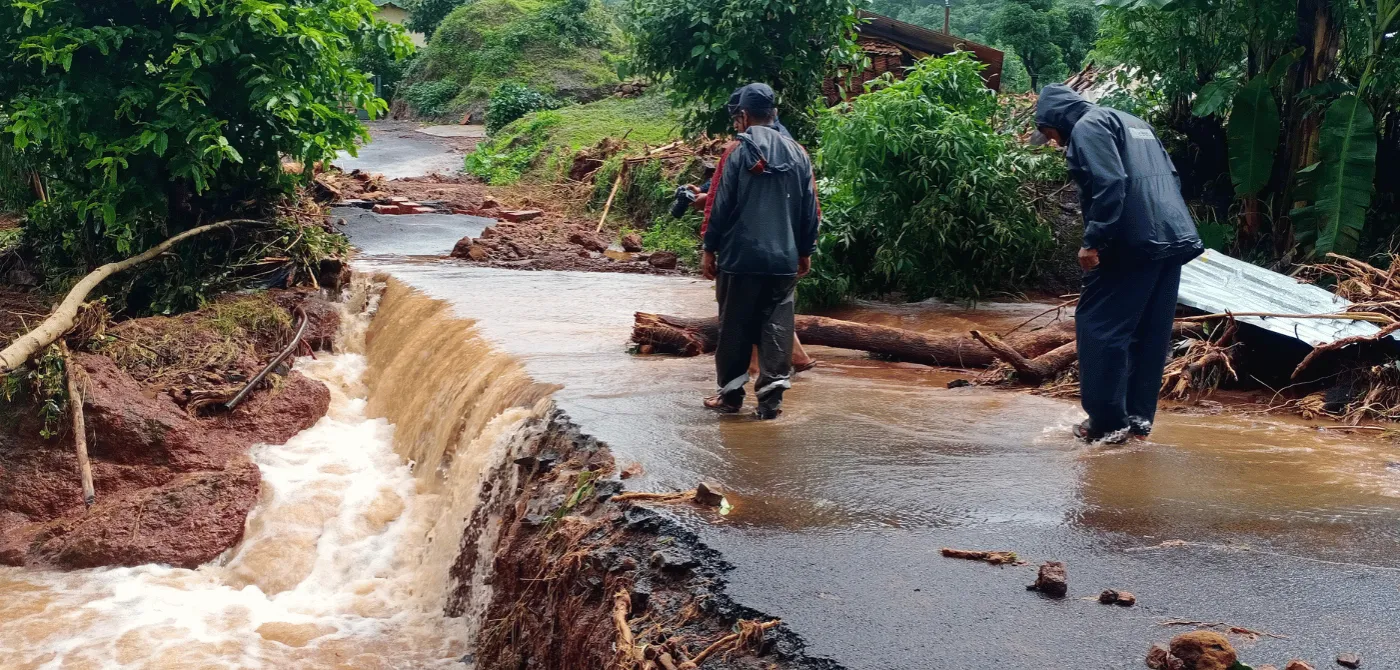



This year, the Indian summer monsoon arrived on the Kerala coast on 4 June—four days late—and covered the entire country by 9 July. The progress of the monsoon has been slow across the entire subcontinent and as of 10 August 2026, the cumulative rainfall across the entire country showed a 11% deficit. On 2 June 2026, the World Meteorological Organisation (WMO) officially declared that a strong El Niño has been evolving in the Pacific Ocean.
The Pacific Ocean is so massive that all the continents can fit in it. The equatorial Pacific Ocean is nearly half the width of the Earth’s circumference at the equator.
Since the declaration, there has been at least one article every week/10 days noting how this El Niño is one of the strongest in the century and highlighting its role in extreme weather across the world. Several news reports have labelled it as a “super” El Niño. And some go so far as to label it a “Godzilla” El Niño.
Neither of these are scientific terms, but they help deliver the shock value or the panic associated with seasons and weather, which is becoming increasingly common across the world. There has been widespread concern over the possible impact of this El Niño on world weather systems, complicated by that this year’s El Niño is expected to be the “‘strongest” since 1950. The variable relationship of El Niño and the Indian summer monsoon further complicate the impacts on already vulnerable world weather systems.
The Pacific Ocean is so massive that all the continents can fit in it. The equatorial Pacific Ocean is nearly half the width of the Earth’s circumference at the equator. With such numbers, it stands to reason that any system that develops in the Pacific Ocean would likely have significant
El Niño (little boy/ Christ child in Spanish) was documented for the first time in the 1500s as an event when Peruvian fisherman associated a low fish catch with a warm current around the South American coastline, most significantly around the time of Christmas. As meteorological science and discoveries advanced through decades, there were several metrics designed and the intensity, evolution, and impact of El Niño was documented across the world.
El Niño is the warm phase of a cyclically repeating pattern during which the ocean releases heat into the atmosphere. The average state of the atmosphere and oceans are characterised by trade winds merging close to the equator. This pushes warm waters away from the eastern part of the Pacific and it carries heat along with it, leading to cooler ocean temperatures in this region (Figure 1). This heat circulates and partly piles up in the western Pacific region along with the deeper layers of the ocean (or subsurface ocean). This is called the neutral condition of the El Niño Southern Oscillation (ENSO) cycle.
Figure 1: How the El Nino and El Nina Develop
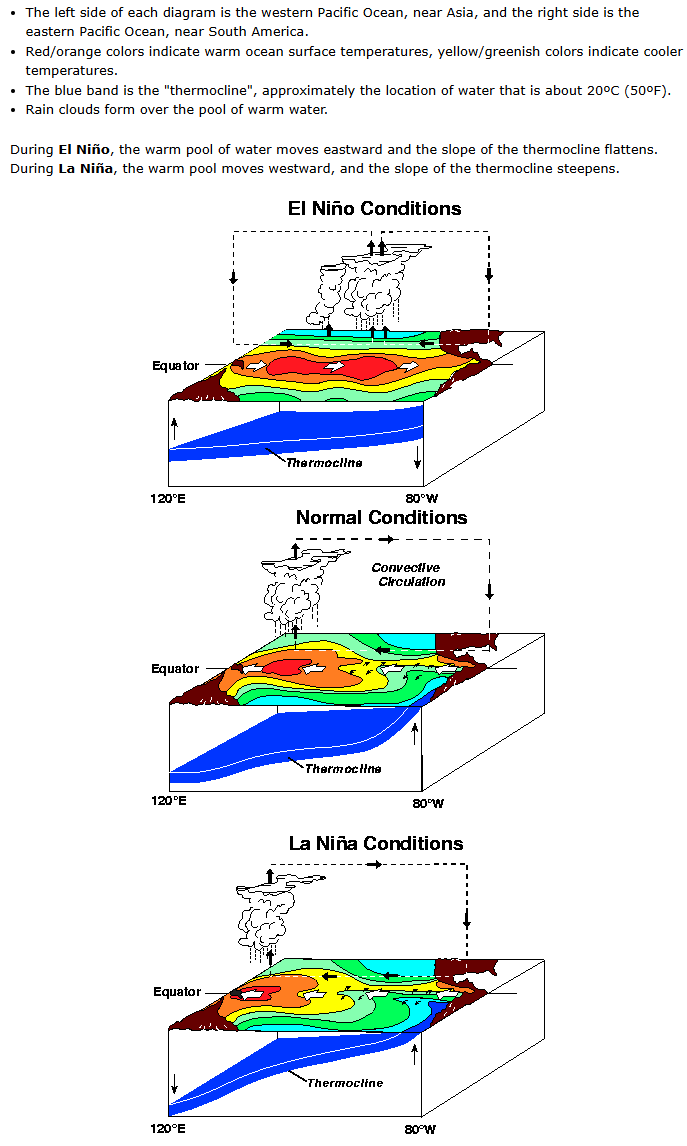
The Southern Oscillation here refers to the see saw of mean sea level pressure over two islands (Tahiti and Darwin) in the Pacific. Over the years, as this heat builds up, it begins to influence the surface ocean. During this period, if there is a trigger of ocean surface warming, or what is known as a westerly wind burst, the ocean responds with what evolves in an El Niño.
The El Niño evolution begins with the east Pacific Ocean temperature warming around spring, which reaches its peak intensity in the months of December and January and dissipates by the spring of next year. This process effectively removes heat that has built up in the deeper layers of the ocean and sometimes (though not always) leads to a cooling strong enough to kickstart a La Nina (for example, 1997-98 was an El Niño and 1998-99 was a La Nina).
The intensity of El Niño is measured by what is known as the Nino indices, which measure the change in ocean surface temperatures over the regions along the Pacific equator. These indices are also used to trace how fast or slow El Niños develop along with how the entire Pacific equator changes during the El Niño cycle.
But El Niño is not simply an ocean phenomenon. It is accompanied by changes in wind patterns, sea level pressure, and precipitation. An opposite phase of this cycle known as La Nina (little girl in Spanish) occurs when the cooling over the east Pacific strengthens, thereby reinforcing the strength of the Walker circulation. The exact trigger for an El Niño to occur is still not entirely understood, but its impact has been mapped across the world.
To add to this, the cycle of neutral and El Niño/La Nina conditions has been undergoing changes due to ocean warming triggering stronger and more intense El Niños, along with changes in the frequency of their occurrence. Every El Niño is unique and evolves differently and with different intensity and no two El Niños has an identical impact on the weather and climate patterns around the world. The 2026 ocean temperature updates show extremely warm water feeding this year’s El Niño.
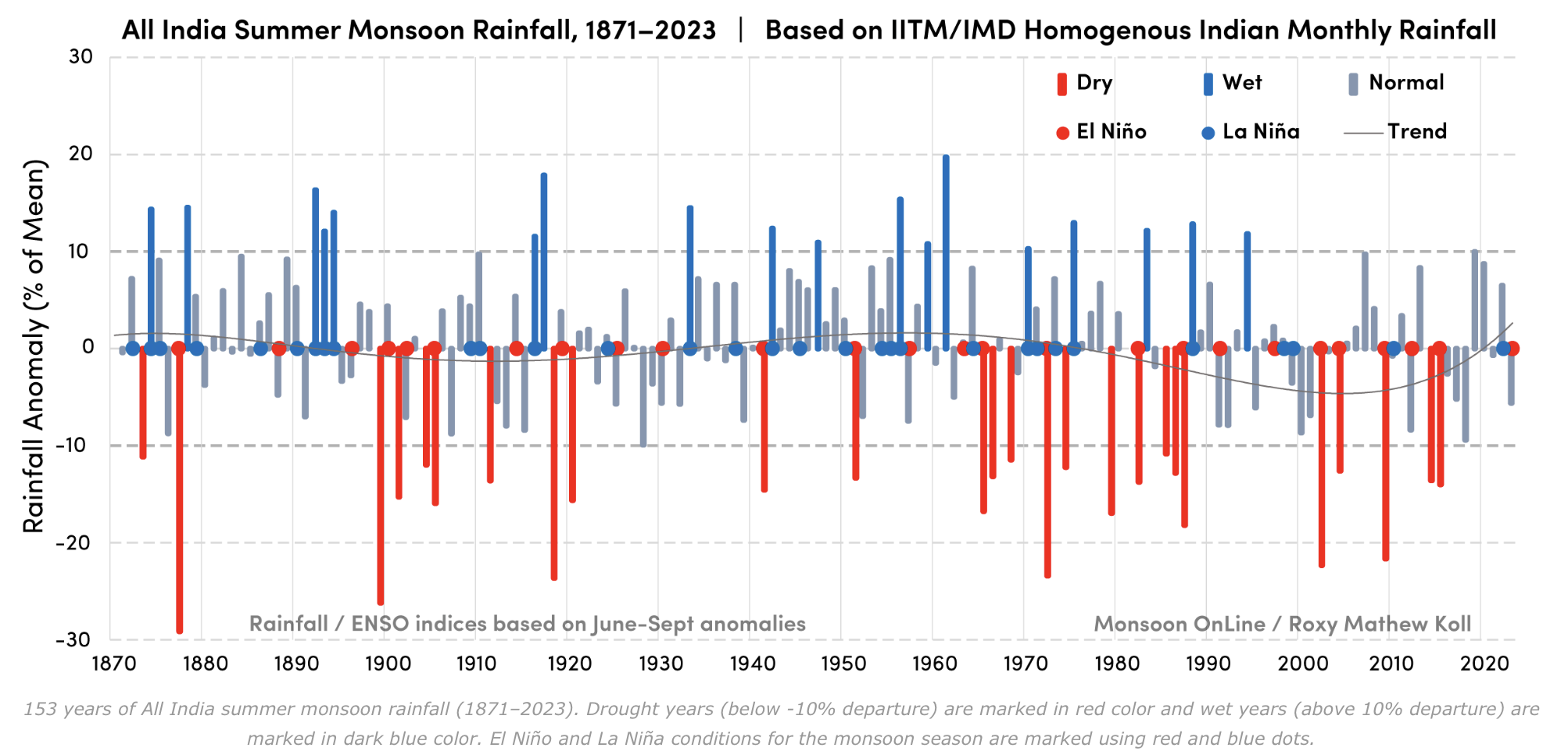
The Indian summer monsoon from one year to the next is also very unique. No two seasons are identical and its response to a strong, weak or moderate El Niño is also different. The Indian monsoon has variations on multiple fronts. There are patterns of rainfall (known as synoptic patterns) keeping some regions wetter, while others dry. It does not rain the same amount over the entire country for four months from June to September at a stretch.
Figure 2: Summer Monsoon Rainfall 1871-2023
The monsoon arrives on the coast of Kerala and takes roughly more than a month to cross the entire country. Then there are periods of rainfall or dry spells across most sectors of the country, known as active break phases of monsoon. The impact of El Niño is seen across all these—the timing of onset, the amount of rainfall over the country, and the timing, frequency, and intensity of the active-break phases. Further, these patterns are changing due to climate change even without the additional compounding effect of El Niño and/or the Indian Ocean Dipole (see below).
Two recent studies (Dhara C. et al. 2025; Bhupendra A. Raut et al. 2026) have highlighted how areas of Thar and Kutch are starting to see more rainfall while the areas of Indo Gangetic plains and Northeast India are slowly drying up. This decrease does not protect these regions from extreme rainfall events, which are on the rise across most parts of the country. This adds to the stress caused by recurring disasters. One problem faced in some areas is compound hot and dry extremes, which occurs due to extreme heat followed by dry conditions that can affect crop sowing timings and yields.
As if one year is not bad enough, El Niño impacts linger into the next year, with the possibility of a harsher summer and another year of delayed monsoon onset. This puts additional stress on the farmers as well as the gendered burden of maintaining potable water in the households. Crop insurances barely help the farming community get back on its feet, let alone compensate them for such back-to-back losses.
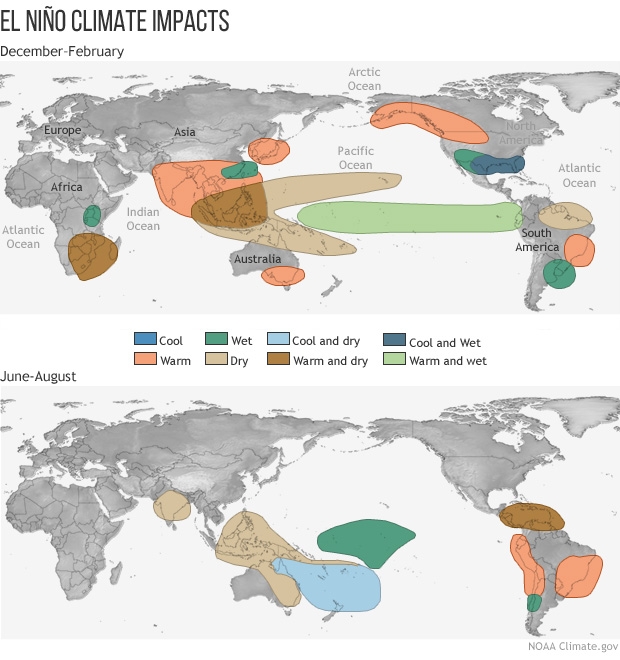
The 2026 El Niño is forecasted to be one of the strongest since 1950, and has proven to be one of the most rapidly evolving systems. This puts the world in an unusual spot. On the one hand, the general impact of El Niños is well understood from drought-like conditions in Indonesia and Australia, the higher probability of fires in the Amazon, stronger summers but milder winters across multiple regions, and the one that is most intently studied—the less-than-average strength of the Indian summer monsoon rainfall. However, patterns of weather in itself are undergoing changes, most notably that of Indian monsoon rainfall and extreme precipitation events. This year’s June ended with a 40% deficit but July brought bursts of rainfall that continued to the initial weeks of August. In some very small areas, the aggregate of July and August bursts of rainfall have surpassed the seasonal average.
On 31 July 2026, the WMO published a press release indicating that the Indian Ocean Dipole is likely to develop in the Indian Ocean, which adds an interesting complexity to the El Niño-Indian monsoon relationship.
Unfortunately, a cumulative rainfall or reaching the seasonal average cannot be celebrated as a milestone. For one thing, the delayed onset and an extremely dry June has affected the cropping cycle. While delayed sowing can help recover some of the agricultural deficit, July’s downpour would have affected young plants and late sowing is associated with low yield. Some parts of drought-stricken Jharkhand have already reported up to 80% rainfall deficit.
Alternating between extremely wet and extremely hot, dry conditions—combined with extreme heat during break periods—can put crops into a state of shock. This has to do with a large-scale delayed onset and severe deficit in the initial months of monsoons. It remains to be seen how the monsoon rainfall is affected as El Niño gathers strength. (See Figure 2 above for Indian summer monsoon rainfall aggregates in years of El Nino/El Nina since 1871.)
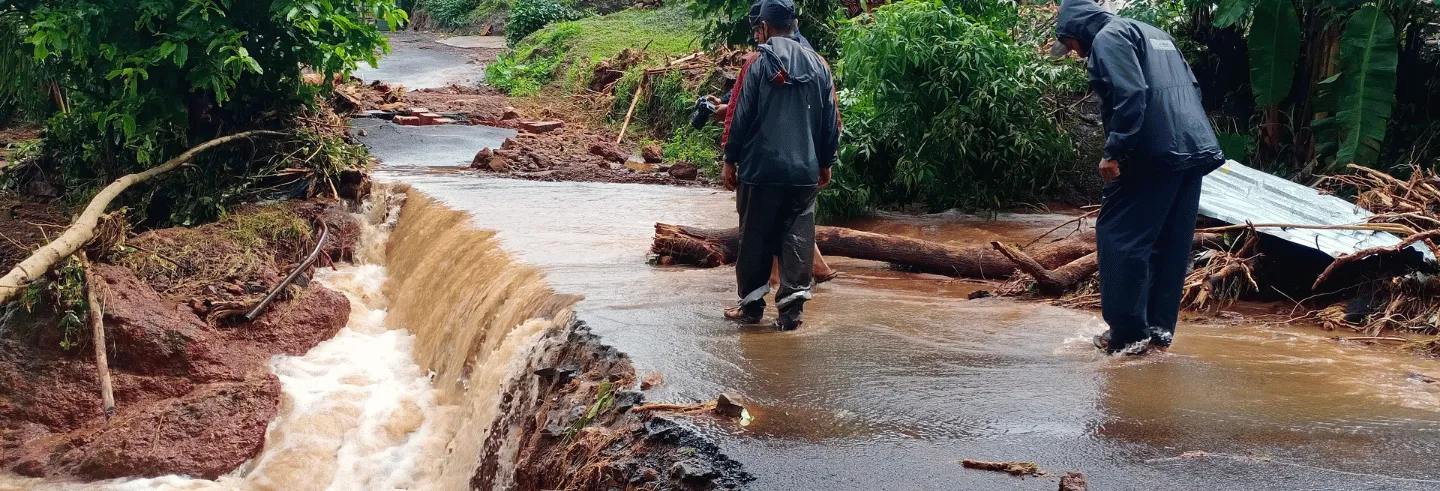
Rural areas bear the brunt of uneven rainfall behaviour. Extreme rainfall events often cause flash floods, which not only destroys planted crops but also washes away the topmost layer of soil. Thus, it becomes near impossible to have a second sowing cycle once the flood waters recede. In Marathi, this is referred to as “ola dushkal” or a “wet drought”. Extreme rainfall does little to replenish ground water, which is crucial at times of delayed monsoon and necessary as an assurance for water supply in the following year.
El Niño Global Impacts During Winter and Summer
On 31 July 2026, the WMO published a press release indicating that the Indian Ocean Dipole is likely to develop in the Indian Ocean, which adds an interesting complexity to the El Niño-Indian monsoon relationship. The 1997-98 El Niño was declared to be the strongest of the century. This meant that the country was anticipating and preparing for a severe drought. However, the 1997 all-India monsoon rainfall was marginally (2%) above normal. This highlighted the gaps in our understanding of the El Niño Southern Oscillation-Indian monsoon relationship.
The answer was initially attempted by two groups of scientists (Saji et al.1999; Webster et al.1999) who found that there is a periodic cooling of the East Indian Ocean in tandem with warming over the West Indian Ocean, thus named the Indian Ocean Dipole (IOD). The IOD has its own index known as the Dipole Mode Index, which measures the intensity of each event. As with El Niño, its impact on the Indian summer monsoon also varies from year to year.
The IOD tends to offset the effect of El Niño on the Indian monsoons. So, an impending IOD evolution spells good news. But what of regions that have already crossed their seasonal averages? Or the ones close to completing it with a month and half of the monsoon season left? There are uncertainties to date on whether the drought-stricken areas will receive sufficient rainfall by the end of the season. There are no straightforward answers to these questions except for formulating appropriate mitigation strategies.
Food and water security cannot be attained without allowing the voices of marginalised communities being included in policy making.
Another sector that record-breaking temperatures and uneven rainfall patterns affect is fisheries. The El Niño cycles are riding on oceans already at extremely high thermal stress. As a result, El Niños have become stronger and their impacts have been intensifying. This increases the possibility of super-charged cyclones forming in both the Bay of Bengal and the Arabian Sea, which ravage the coasts. So, along with farmers, the fishing community also has been bearing the brunt of hotter oceans and frequent maritime extremes. Whether through the hotter oceans or the complex El Niño-monsoon relationship, the communities working on feeding the country bear the brunt of it all.
Unfortunately, our current mechanisms for adaptation and resilience do not serve those who need it the most. Not all farmers or farm labourers are compensated equitably for their loss of wages (owing to extreme heat stress) or due to delayed sowing or crop destruction.
Food and water security cannot be attained without allowing the voices of these communities being included in policy making. Prescribing the use of climate-resilient crops, water management, and allowing for ground water recharge cannot be implemented effectively unless the most vulnerable and marginalised have a say in policy formulation.
The same applies to water stress in urban areas. Water cuts in cities are focused more in marginal areas than in affluent regions. This in spite of that most affluent and gated communities maintain sufficient tanks and often supplement it with borewell supplies to have a 24x7 water supply. The water stress is forced on people who, in fact, use water with great care.
As of the end of June, 14 of the 24 Central Water Commission’s (CWC) reservoirs were below a 10-year normal level. Starting mid-June, as the water levels in dam areas receded, cities such as Mumbai and Pune enforced water cuts to be maintained till August. There was already water stress during the months of April and May due to a particularly severe summer season. However, most of the rain deficit was compensated by July, when it rained heavily over a short period of time.
As El Niños keep getting more intense and their impact on our seasons continues to get stronger, it is not sufficient to remedy the agricultural sector after the monsoon has delayed or deficits have resulted in late sowing and lower yields.
The rate at which our seasonal patterns and extremes are changing now outpaces the rate at which adaptation strategies and disaster management policies get implemented. Most commonly, climate resilience in India works on managing post-disaster destruction, rather than enhancing our preparedness for it.
As El Niños keep getting more intense and their impact on our seasons continues to get stronger, it is not sufficient to remedy the agricultural sector after the monsoon has delayed or deficits have resulted in late sowing and lower yields. Such mechanisms often ignore the invisible burdens borne by the most marginalised genders and castes, and these vulnerable groups tend to fall through the cracks.
The preparedness for climate disasters will require going beyond a one-size-fits-all policy for tackling climate disasters or implementing band-aid-covering-bullet-holes recovery strategies in their aftermath. Flash floods along the hilly states or coasts will require tailored strategies compared to the plains or interior regions. For example, the east coast fisher community is no stranger to cyclones and it can help the fisher communities on the west coast who are now experiencing the wrath of frequent cyclones.
Local and regionally tailored, and inclusive adaptation strategies need to be formulated in the coming years. Policies and solutions for agriculture, fisheries and multiple other sectors, must take into account the prescriptions of communities which carry generational knowledge of their craft rather than instructing them to change their practices without giving them adequate support. The role of community engagement in unlearning and learning ways of preparing for changes cannot be overlooked in policy formulation and implementation.
Aditi Deshpande is Assistant Professor, Department of Atmospheric and Space Sciences, Savitribai Phule Pune University.