



When Baba Adhav lay ill in hospital, in December 2025, the entire political who’s who of Maharashtra paid respectful visits and sent concerned enquires about his health. On his passing, messages came from the Maharashtra chief minister and from the prime minister himself.
With his charismatic personality and unending energy, Baba began to organise the workers. He spoke to them about rights, caste, and education, strengthening and supporting them.
And yet, all of Baba’s life had been spent in peaceful but persistent protest, pitting him against the government at every stage, which sent him to prison 53 times. He never accepted a state honour during his long and active lifetime, but at his passing on 8 December 2025, the state showered him with accolades. This was surely the intriguing thought that played in the minds of everyone who had worked with him as they said their farewells on 9 December.
Born Vishnudas Pandurang Adhav on 1 June 1930 in Pune, he was known all his life as Babasaheb or Baba. His name is synonymous with labour rights, and most people know of him as a 'labour leader'. But Baba was much taller and broader than that simplistic description. His legacy is wide and far reaching, as was his work. His vision was a transformation of society with each individual transforming from within.
As a young man he had been involved with the Rashtra Seva Dal, and was greatly inspired by the ideas and ideals of Mahatma Jotirao Phule, the 19th century reformer who, inspired by Thomas Paine’s Rights of Man, first applied a rights approach to the issue of caste in India. This consciousness of caste permeated all of Baba’s work, including his work with unorganised labour. He was part of the Satyashodhak movement, pioneered by Phule.
In 1953, Baba was a qualified ayurvedic doctor, and he began a practice in Nana Peth in Pune, a major trading hub. This was where commodities from all over the country arrived by truck, and were purchased by retailers. The immensely heavy work of unloading trucks, storing goods, weighing them, and re-loading them was all done manually by labourers, almost entirely from the Kunbi Maratha community and other backward castes.
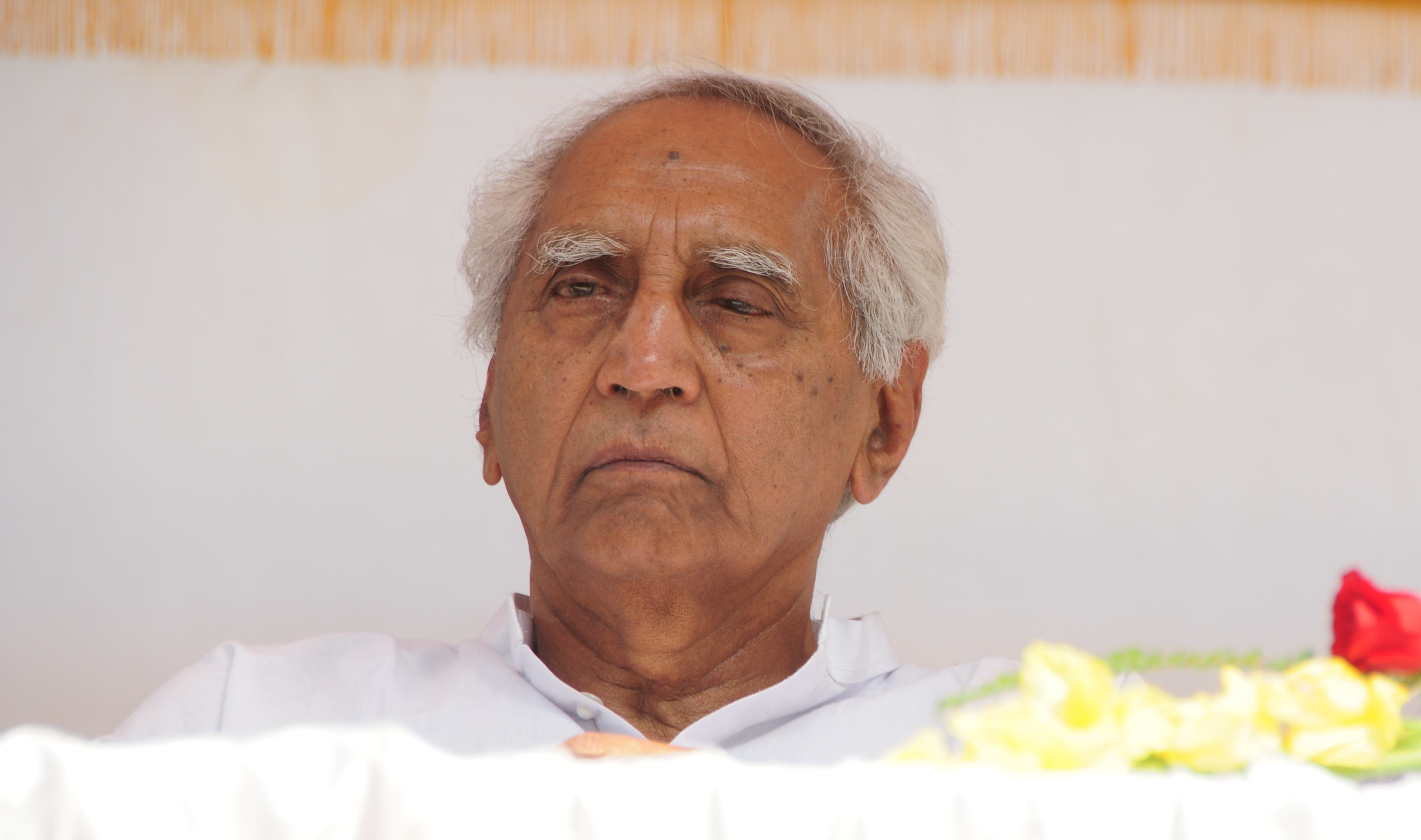
Baba was their local doctor. His warm, curious personality meant that he soon began to learn more and more about the inhuman conditions in which they lived and worked. They had absolutely no support, financial or social, to fall back on in times of difficulty.
With his charismatic personality and unending energy, Baba began to organise the workers. He spoke to them about rights, caste, and education, strengthening and supporting them. In 1956, this work led to the establishment of a union of the head-load workers, the Hamal Panchayat.
This as yet informal union had its first successful strike for minimum wages and better working conditions. Formalised as a labour union in 1972, the Hamal Panchayat continued to grow in strength, empowering head-load workers in other parts of Maharashtra to demand better conditions. To a great extent because of the Panchayat’s sustained pressure, the Maharashtra government passed social security legislation for unorganised labour in 1969—the Maharashtra Mathadi, Hamal and other Unprotected Manual Workers (Regulation of Employment and Welfare) Act.
Baba was not one to rest and relax or to encourage people to do so. Each success spurred him on to a more ambitious dream for workers. He believed that workers and their children should live better lives, and improve their prospects all the time. He encouraged them to think of all the hindrances to this progress, and to tackle them themselves.
The biggest among these was credit. Most workers were indebted to local money lenders, who charged usurious rates of interest. The union started its own credit scheme, which completely transformed the economic status of numerous workers.
A scheme for providing workers with cheap, clean, and nutritious meals at mid-day was launched in 1974 and branches soon spread to different parts of the city. The scheme, Kashtachi Bhakar (bread of labour), continues to run. A secondary school for children of workers, established in 2001, was another such outcome of this new sense of purpose and ambition that Baba fostered.
“Baba brought the focus of the labour movement not only to the unorganised sector, but to the stree-shudra-atishudra, in Phule’s words—women, Dalits, and among them the most backward castes.”
Meanwhile, Baba continued to be involved with a variety of initiatives that addressed the issues of the most marginalised. His long-time associate Nitin Pawar says, “Baba brought the focus of the labour movement not only to the unorganised sector, but to the stree-shudra-atishudra, in Phule’s words—women, Dalits, and among them the most backward castes.”
Following several cases of caste-based discrimination in access to scarce water resources in famine‑affected Maharashtra in 1972, Baba launched a movement across the state called Ek Gao, Ek Panawtha—One Village, One Water Source. This movement later extended to agitations demanding common cremation and burial grounds, and other shared public facilities from which people were segregated by caste. This was in continuation of his lifelong commitment to a non-violent struggle for justice.
Baba was always active, and was imprisoned during the Emergency in 1975, during the Samyukta Maharashtra movement in the 1950s, and as far back as the freedom movement when he was a youth. There was no contemporary social issue that he stayed away from, whether it was the rehabilitation of people displaced by dams, farmers’ movements, the liberation of Devdasis, protests against a statue of Manu on the premises of the Rajasthan Assembly, or, more recently, the lynching of Muslims.
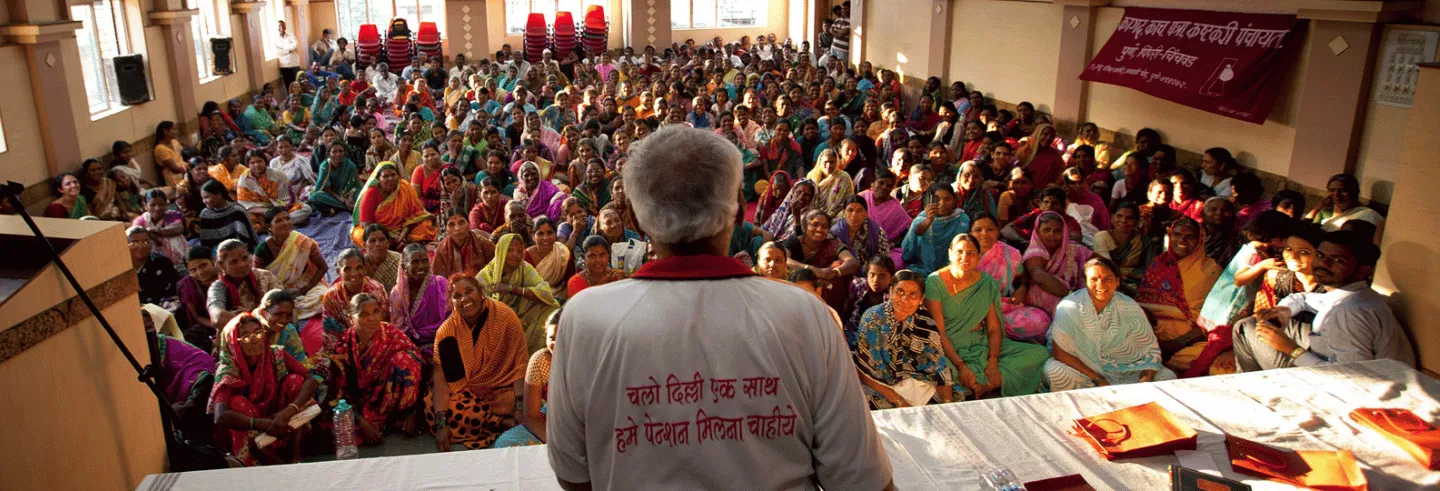
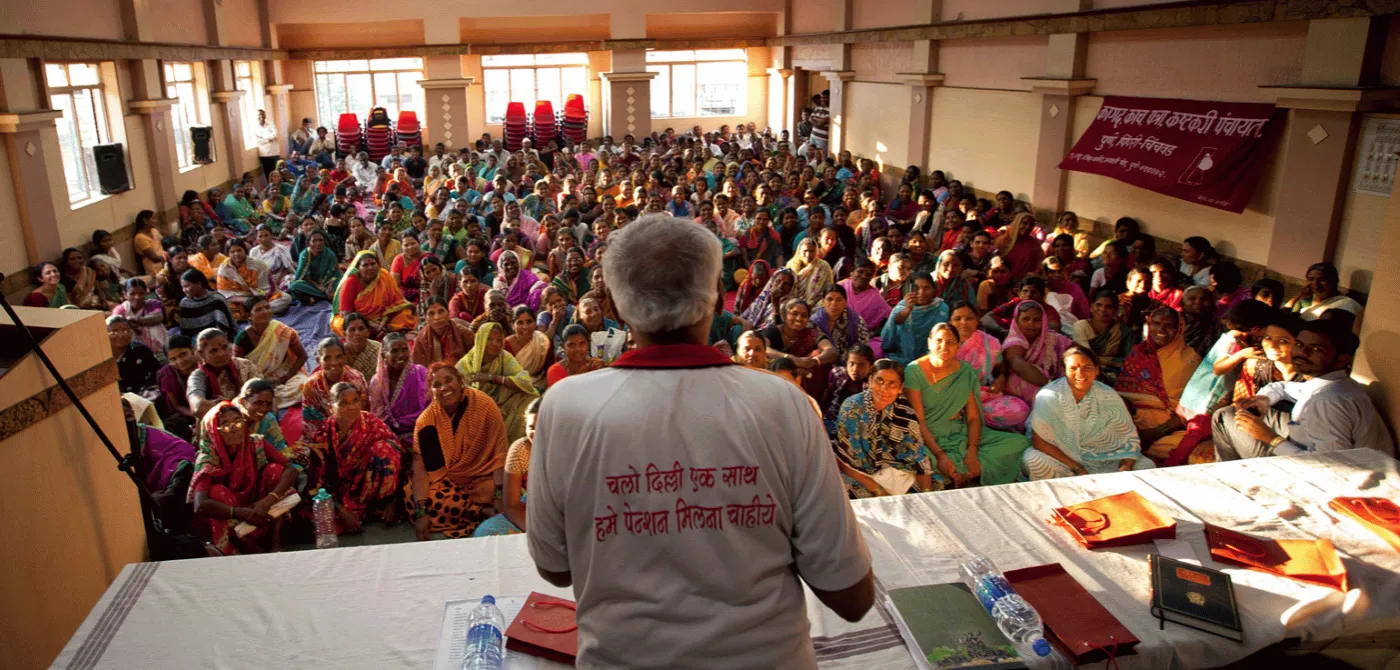
He was also a leading light in the movement for pensions, whose genesis was in the late 1990s with the Kagad Kach Patra Kashtakari Panchayat (KKPKP). This movement was later taken nationwide by Aruna Roy, Nikhil Dey, and others, to demand pensions for workers in the unorganised sector and, later, universal old‑age pensions. He would be right there among workers and activists for all-night demonstrations at Jantar Mantar in Delhi, even into his nineties, until such protests became impossible. He also played an active role in the formation of the Rashtriya Ekatmata Samiti in Pune in 1982.
Mahatma Gandhi was a major inspiration for Baba’s approach to issues. Non-violent resistance was the most evident influence. But there was also a certain strategic savviness that came naturally to him, as it did to Gandhi, both about what would appeal to the people he was trying to organise and empower and, more importantly, about what would actually work. He would often advise agitated young activists to act against their natural inclination; out of respect they would follow his advice, and the results were often far better than they would otherwise have achieved.
Harshad, now working with SWaCH, a cooperative of waste pickers, recalls a time when a woman activist from among the waste pickers was trying to break away from the union with her own group. Harshad and the others were furious because they knew it would weaken the movement, and they were not even willing to talk to her to negotiate.
Baba, on the other hand, organised a meeting with important labour leaders from different unions and invited the rebel activist to speak. Disarmed by the importance of the occasion and the respectful hearing that her concerns received, she spoke frankly about everything that was bothering her; solutions were discussed, and the situation was successfully defused.
No one would call Baba a Gandhian only. His approach was complex and pragmatic, inspired equally by Ram Manohar Lohia, the socialist leader Vinayakrao Patwardhan, Phule, and even, to some extent, by Karl Marx. Though he was critical of the left, he also shared many affinities with left ideology and worked with leftist movements and leaders for the common cause.
Moghe also credits Baba with bringing socio‑cultural aspects into the labour movement. Deeply rooted in culture himself, he had a finely tuned sense of how to balance cultural and progressive sensitivities.
In recent years, the socialist and communist movements have moved closer together, uniting against a “common enemy”, as Kiran Moghe, secretary of the All India Democratic Women’s Association (AIDWA), says. This was Baba’s natural space, where defining ideology was less important than defining issues and action plans.
Moghe also credits Baba with bringing socio‑cultural aspects into the labour movement. Deeply rooted in culture himself, he had a finely tuned sense of how to balance cultural and progressive sensitivities. For example, he would encourage all worker movements to participate in Shiv Jayanti celebrations, focusing on those aspects of Shivaji that were about environmental protection and communal harmony.
He would begin every meeting with a recitation of Phule’s Akhand and an exhortation to workers to come together, go to prison, and perform good social duties such as blood donation. These were sung in the form of an invocation that people in Maharashtra are accustomed to at the beginning of any function.
The success of the Hamal Panchayat inspired many groups of unorganised sector workers to come together and unite for the common cause of a better life for themselves and their families. Domestic workers, construction workers, waste pickers, rickshaw drivers, and many other unorganised groups benefited from his guidance and active participation.
Baba’s approach, and his advice to others starting similar movements, was simple—you must have numbers; your strength is in numbers. You must also carry common citizens with you, not just the workers who provide a service but also the citizens who avail of that service. This would put the government or administration on the back foot and force them to respond.
The Kagad Kach Patra Kashtakari Panchayat was one such initiative. It began as a modest group of women waste pickers organised by a couple of social workers from the SNDT Women’s University department of adult education. The early focus was on ensuring access to waste from households and commercial establishments and on preventing harassment.
But Baba’s vision was larger, and he encouraged the women to think big. The movement led to the formation of the union in 1993, which now has over 9,000 members, largely women, and has won them a status and access to livelihood that they had previously had to fight for every day.
Baba always had his ear to the ground and a huge network of like-minded people as well as government officials who respected him even when they disagreed with him. He never used his influence loudly or ostentatiously; instead, a quiet word here or there would get things moving. He always treated the legal route as a last resort, giving protest and negotiation the highest priority while never backing down on key issues.
They watched as Baba, who had never been given any recognition by the state, was given a state funeral with a full gun salute.
Lakshmi Narayan of the Kagad Kach Patra Kashtakari Panchayat recalls an incident when a group working with street children at the railway station complained to him that the porters were bullying and beating the children. Baba gave them a patient hearing; nothing more was said, but the beatings stopped.
Baba wrote regularly, publishing many books as well as columns in major newspapers. Several newspaper houses and social organisations honoured him with a range of awards and recognitions.
In 1966, Baba married Sheela, who became known to everyone around them as Sheelatai. She was a nurse in a government hospital and supported him fully in every way, which allowed him to work on various fronts without domestic and financial worries. They have two sons, who live in the United States and Canada, and three grandchildren. Everyone recalls the soft light in Baba’s eyes when he spoke about his sons and grandchildren.
All those who met Baba would comment on his wit and sense of humour. In an earlier interview with a web portal, Ajit Abhyankar of the Communist Party of India (Marxist) spoke affectionately about how Baba always greeted him with an ironic but light‑hearted “Laal Salaam!”.
This lightness of being endeared him to all the men and women who ever came in touch with him, and who turned up at his funeral in their thousands, in tears. They watched as Baba, who had never been given any recognition by the state, was given a state funeral with gun salutes. They placed a champak flower, Baba’s favourite, on his body and left, hopefully to take forward the legacy of the man who empowered and guided them, listened to them, and fought for them, fearlessly and determinedly.
Mini Shrinivasan works on education in rural and tribal areas, alongside documentation and translation work for non-governmental organisations.