



There is a paradox at the heart of India's relationship with its oldest conservation systems.
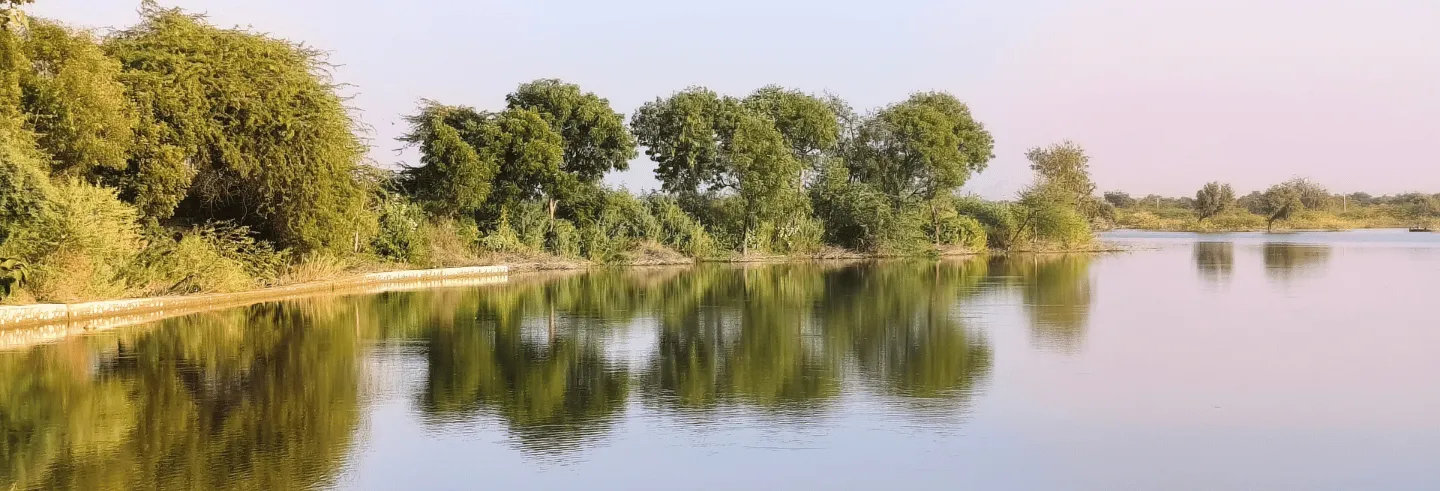
In December 2024, the Supreme Court did something unusual for a conservation order: it tried to write spiritual geography into law. Hearing a long-pending application on Rajasthan's orans—sacred grazing commons watched over by local deities— the court, in In Re: T.N. Godavarman Thirumulpad v. Union of India & Ors., directed the state forest department to map every oran, classify it as a "deemed forest," and consider declaring it a "community reserve" under the Wildlife (Protection) Act, 1972.
When confronted with such landscapes, environmental governance tends to know only one way to recognise them, convert them into an administrative category.
Conservationists welcomed the order as overdue recognition for landscapes that had survived for centuries with no legal status whatsoever. But several of the very groups who had fought for this recognition immediately flagged a problem. The environmental lawyer Ritwick Dutta has argued that a "community reserve" places these commons under the administrative oversight of the forest department the very institution orans had functioned, for generations, to keep at arm's length.
This is a paradox shared across much of the Global South. The orans, like Karnataka's devarakadu, Kerala's kavu, Jharkhand's sarna, and Meghalaya's law kyntang, were never protected because a government agency patrolled them. They survived because communities-built ritual, taboo, and obligation around them, making deforestation socially unthinkable.
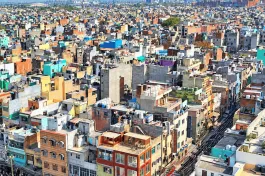
The stakes extend well beyond rural commons. Almost every Indian metropolis draws water from catchments, springs, and watersheds in distant forest patches which have historically been sustained by exactly the kind of customary stewardship sacred groves represent. When a grove or grazing commons is reduced to a patch of vegetation on a satellite map, what disappears from view is the standing arrangement between a community and a landscape, an arrangement cities have often unknowingly, been free-riding on for generations.
Conservation policy measures biodiversity. Water policy measures supply. Infrastructure policy measures demand. None of these frameworks is built to register the social institutions that connect people to the ecosystems generating these services in the first place. When confronted with such landscapes, environmental governance tends to know only one way to recognise them, convert them into an administrative category: a forest, a reserve, a heritage site. In doing so, it frequently captures the geography while losing the relationship that produced it.
Dividing Nature and Culture
The tradition of community stewardship over India’s estimated 100,000 sacred groves (Malhotra, Gokhale, Chatterjee, and Srivastava 2007), sits awkwardly within a conservation architecture built on satellite cover, species counts, and legal notification. The 2023 amendment to the Forest (Conservation) Act—now renamed as the Van (Sanrakshan Evam Samvardhan) Adhiniyam— narrowed the legal definition of "forest" to land already notified as such, or formally recorded in government registers. Sacred groves, community forests, and grazing commons that had never been surveyed fell outside this definition overnight, even though the Supreme Court's order in Godavarman Thirumulpad had long held that the term "forest" should carry its broadest, dictionary sense, regardless of ownership or official record.
The Supreme Court’s oran order can be read as the judiciary's attempt to correct course. But the remedy reveals a deeper limitation.
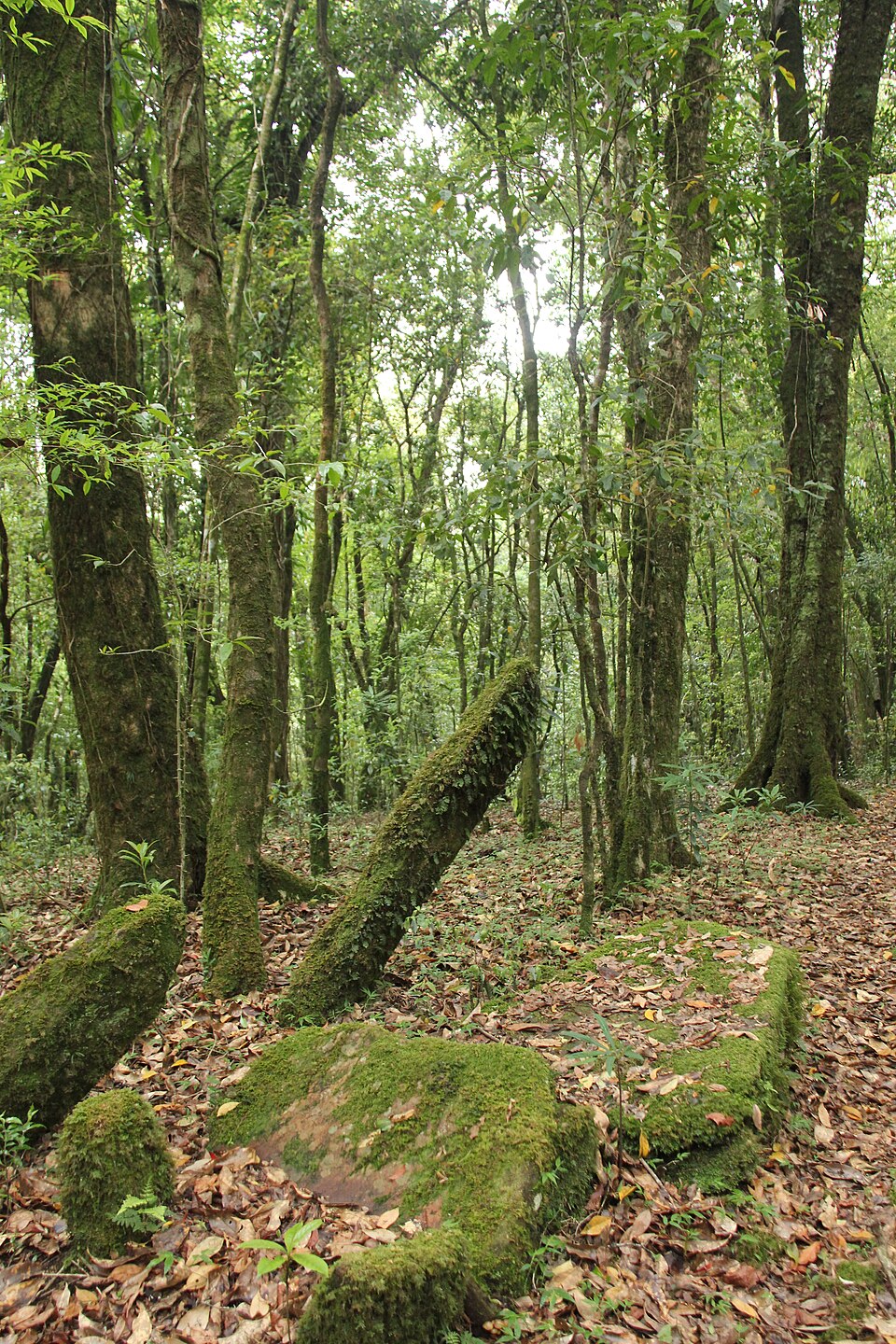
Indian law has essentially two registers for valuing a forest: ecological (a deemed forest, a biodiversity hotspot) or administrative (a notified reserve, a protected area). It has no comparable register for a third kind of value, of a landscape sustained by a community's sense of duty toward it. So, when courts and ministries try to protect sacred groves, they reach for the only tools available, even when those tools risk displacing the customary institutions, gram sabhas, and informal councils that did the actual work of conservation. Folding a sacred grove into a wildlife-management category secures its ecological future, even as it quietly erodes the socio-cultural structure that made the grove’s survival possible in the first place.
The instinct to separate "nature" from "culture" is not a neutral scientific choice. It is a specific institutional history that the Global South largely inherited rather than invented. Modern protected-area conservation took shape around an idea that wilderness was most authentic when emptied of people. This was an idea pioneered at Yellowstone National Park the United States and exported through colonial administrations across Africa and Asia. Indian, African, and Latin American forestry departments built on this template, frequently displacing the very communities whose long presence had shaped the biodiversity worth protecting.
"Biocultural diversity", the term now circulating through Convention on Biological Diversity (CBD) documents and IPBES reports, is an attempt to undo that inheritance. It insists that the variety of life on a landscape and the variety of human practices sustaining it are not two separate facts to be measured separately, but one entangled outcome. Sacred forests are simply the clearest available evidence for this claim; they are places where you cannot explain the biodiversity without the belief system, nor the belief system without the biodiversity.
What is unfolding in Rajasthan is not an Indian peculiarity, it is a regional variant of a far wider Global South pattern. Indigenous Peoples manage or hold tenure rights over at least 38 million square kilometres across 87 countries, disproportionately overlapping with the planet's remaining biodiversity (Garnett et al. 2018). Ghana, with more than a thousand sacred groves tied to local deities and ancestral spirits, has watched the same custodial systems erode under population pressure and changing belief, even as researchers document these groves outperforming nearby state forest reserves in species richness. Kenya's Mijikenda communities have maintained their kaya forests, sacred, fortified clearings now inscribed as UNESCO World Heritage sites—through taboo and ritual rather than fencing. Ethiopia's church forests, Tanzania's clan-protected woodlands, and sacred sites across Benin, Nigeria, and Madagascar tell variations of the same story, of dense, biodiverse patches surviving inside otherwise degraded landscapes. They persist because of belief systems that conservation bureaucracies are only beginning to take seriously.
Across these geographies, the underlying governance question is identical to India's. Should customary institutions be left alone, formally absorbed into state categories, or supported through some intermediate arrangement that respects their authority while giving them legal standing against encroachment, mining, or land conversion? Most states in the Global South, working with constrained budgets and inherited colonial-era forestry laws, have defaulted to absorption, the exact move that India's courts are now attempting with orans. The consequences are similar everywhere, better legal visibility, and weaker community control.
An Uneven Global Reckoning
This question has acquired unusual urgency just now. At the CBD's COP16 in Cali, reconvened in Rome in early 2025 to settle unfinished business, parties created a permanent Subsidiary Body on Indigenous Peoples, local communities, and people of African descent, formalising a role in global biodiversity governance that these groups had sought for nearly a decade. They also established the Cali Fund to channel benefits from the commercial use of genetic data back to the communities whose territories generate that biodiversity in the first place, with at least half of its proceeds earmarked for Indigenous peoples and local communities. The same summit saw renewed debate over biodiversity credits, a market mechanism many Global South governments and civil-society groups view warily, since it risks pricing customary territories into financial instruments controlled, designed, and ultimately benefiting actors far from the communities doing the conserving. For the first time, biocultural stewardship is being written into the architecture of international environmental law, not treated as a footnote to it even as the question of who controls the resulting money remains unresolved.
A genuinely biocultural approach to conservation would extend legal protection to customary stewardship in roughly the form communities already practise it.
India's own updated National Biodiversity Strategy and Action Plan, unveiled at the same Cali summit, commits to conserving 30% of the country's land and water by 2030 through protected areas and so-called Other Effective Area-Based Conservation Measures a category explicitly designed to recognise community- and privately-conserved landscapes that fall outside formal sanctuaries. On paper, this is precisely the kind of instrument sacred groves should fit into.
In practice, independent researchers involved in drafting the plan have cautioned that its monitoring indicators do not require genuine community buy-in. The estimated annual outlay of over Rs 81,000 crore will mean little if implementation continues to bypass the institutions like gram sabhas, customary councils, women's grazing collectives that have done this work for free, for centuries.
The contradictions are sharpest where climate ambition and customary conservation collide directly. Many orans sit on the open grasslands of Rajasthan now being eyed for solar and wind installations, since renewable energy projects are exempt from the environmental clearances required of other infrastructure. These same grasslands are among the last refuges of the critically endangered Great Indian Bustard, whose population has been thinned partly by collisions with transmission lines built to carry "green" power. A landscape that survived feudal land grabs and decades of agricultural expansion may yet be cleared in the name of decarbonisation, the same crisis that recent biodiversity frameworks claim to be addressing.
Sacred forests and grasslands across the Global South face a comparable squeeze, economies under pressure to expand renewable capacity and resource extraction simultaneously, often in the very landscapes that customary institutions have spent generations holding together.
Toward a Biocultural Turn
None of this argues against legal recognition. Sacred groves left in legal limbo are vulnerable to mining leases, encroachment, and "wasteland" reclassification. Orans have lost ground to exactly these pressures for decades. Rather, the argument is that recognition without redistribution of authority is a partial fix.
A conservation framework that can see ecological outcomes but not the social relationships sustaining them will keep solving yesterday's problem while missing today's.
A genuinely biocultural approach to conservation would extend legal protection to customary stewardship in roughly the form communities already practise it. It would recognise gram sabhas and traditional councils as conservation authorities in their own right under instruments like the Forest Rights Act's "community forest resource" provision, rather than defaulting to forest-department control as the price of legibility. Even the Supreme Court's oran order gestured toward this, directing that traditional custodian communities be designated as Community Forest Resource holders and "empowered […] to continue protecting wildlife, biodiversity, and natural resources." The test will be whether implementation honours that language or quietly reverts to administrative habit.
For India, with its unmatched density of customary sacred landscapes, the stakes of getting this right are larger than domestic policy. As the world's most populous country navigates simultaneous pressures, a 30x30 biodiversity commitment, an accelerating renewable energy build-out, and a Forest Conservation Act recently narrowed by its own legislature, India's choices will be read closely by other Global South states facing the identical triad of pressures with far thinner administrative capacity. A conservation framework that can see ecological outcomes but not the social relationships sustaining them will keep solving yesterday's problem while missing today's.
The deeper task, for India and for the Global South more broadly, is not simply to protect more land. It is to recognise in law, education, business, finance, and in governance that the relationship between a community and its landscape can itself be a conservation infrastructure, every bit as real as a fence, a satellite, or a forest department.