



It has been over five decades since Augusto Boal, a theatre practitioner from Brazil, introduced the concept of the “Theatre of the Oppressed”, which was influenced by Paulo Freire’s work.
Boal writes deeply about the nature of power. He says power exists in an invisible form, and the purpose of this theatre is to unveil it.
What does that mean?
Power and protest are opposing expressions, and both are constantly active, opposing each other. They produce new forms of response. Between these two, there lies another centre of power—the centre of neutrality. We are all part of it. When we express an opinion, it is wrapped in this neutral stance. It provides an aura of impartiality. It gains credibility by claims of seeming equidistance.
Those who hold a neutral stance view two opposing views as a contradiction, yet take the position that this contradiction is natural and inevitable.
This neutrality is the most dangerous form of power as it controls the “narrative of ‘State Versus …”. German writer Elias Canetti says in his Crowds and Power (Victor Gollancz/Viking Press, 1962), “It consists in relegating something to an inferior group, while presupposing a higher group to which we ourselves belong. We exalt ourselves by abusing others. The existence of two opposing kinds, different in value, is assumed to be natural and inevitable. Whatever is good is, it is there to be contested with the bad. We ourselves decide what belongs to each.”
Those who hold a neutral stance view two opposing views as a contradiction, yet take the position that this contradiction is natural and inevitable. They position themselves like the pointer of a scale, between the ruling power and resistance. In a sense, this is the stance of a jury or a judge. Good and evil always exist, but it is “we”— neutral people—who decide what is good and what is evil.
There is a popular perception that this jury-like stance is “neutral”. This neutral group portrays itself as standing on the side of good, and therefore while taking a stance, they fashion it as a moral choice.
Boal creates a crisis in his theatrical exercise to expose the emptiness of this neutral stance by inviting the audience to respond. Theatrical situations are contextualised; thereby they sharpen the moral ambiguity of response.
Practically, most people who claim to be neutral ultimately align with powerful and influential forces. Except in extraordinary circumstances, the masses too mostly act as carriers of the ideology of the ruling power.
If you look at what the Narendra Modi regime did through its followers, media, and social influencers in saffron was to create a supposedly neutral mass to judge “what’s good and what’s bad”, thereby providing a clear ideological prism. For more than a decade, the country was fed with a narrative that was echoed and reproduced by the supposedly neutral “society”.
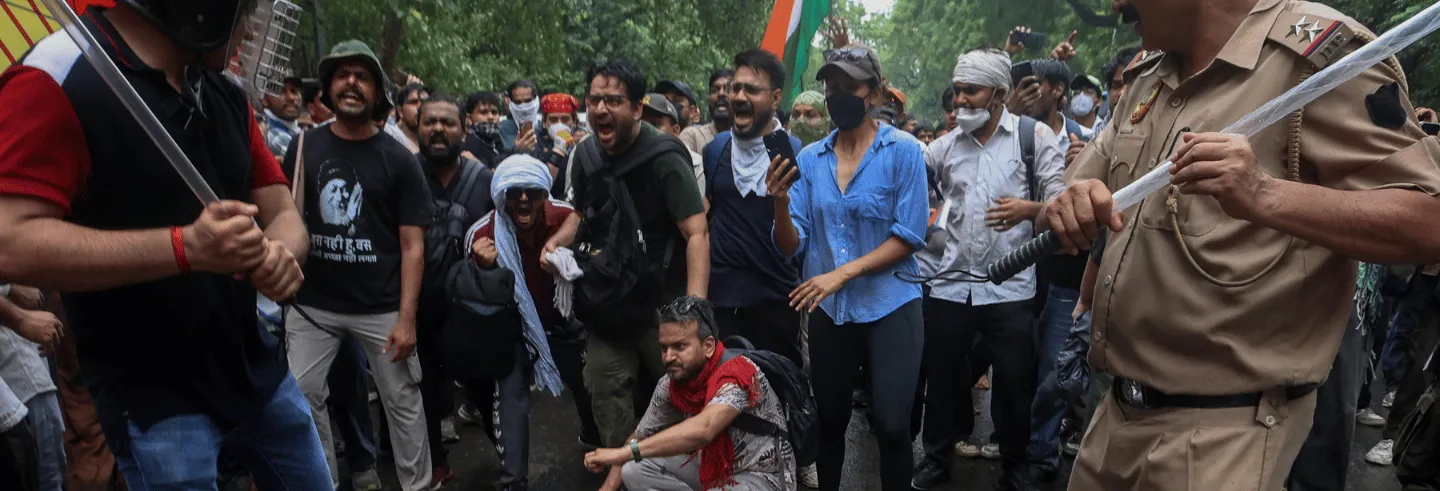
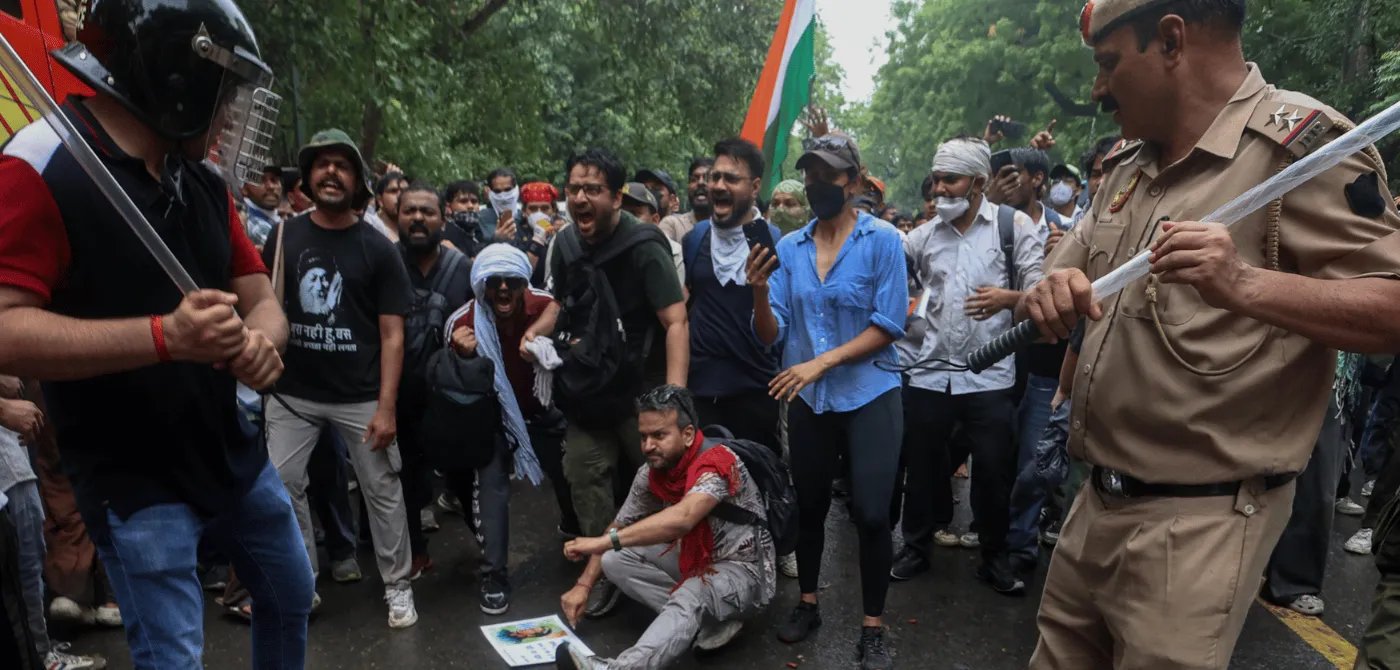
Let us look at this in the context of the recent Gen Z protest. The very reaction of the Gen Z—defiant and irreverent—derailed this narrative, by challenging the “neutral society” to respond. This “neutral” mass did exactly what Gen Z wished for. It criticised them for their crudeness, their “un-sanskari” articulations. Reacting to the recent cockroach protest, ignoring the legitimacy of core demand, “neutral mass” expressed its discomfort, pretending to be horrified, by asking, “Oh is this how one writes on a placard?”, “Is this how one speaks?”, and “How obscene”, and so on.
What Gen Z did was to break the conventional mould of protest and narrative, flummoxing this ally of the state.
The silence of these groups about the invisible oppression of the state is palpable and acute. Yet, they focus on analysing the forms of resistance that arise due to the oppression and condemn it on “moral grounds”.
By projecting themselves as holding a neutral position, they betray their leaning towards the state and help it to weaken the power of resistance. They stand in a position of expressing an opinion about an event without truly being a participant (either physically or mentally).
Meanwhile, the extraordinary power of the state expands beyond the political spectrum and bureaucracy and into the classes of society. The present regime in India through its mentor organisation has already created this mass to endorse it. In other words, it managed to create an invisible hegemony, with allies in society. These hegemonic forces are generally savvy in identifying the modes of resistance and dissent and manage it accordingly. What Gen Z did was to break the conventional mould of protest and narrative, flummoxing this ally of the state.
The present protest, in a way, was a strange weave of Charlie Chaplin, Bertolt Brecht, and M.K. Gandhi. The performative aspect of this protest has already been noted by several observers. But what was striking was the free space for spontaneous creative expression, which we generally do not find in campaigns organised by formal organisations. Even the slogans are curated and controlled in such “protest performances”. Satire and irreverence are certainly absent because they are considered not suitable for serious engagement.
Satire works in two ways. One, it deconstructs mass/state narratives, and two, it works like shock therapy for benumbed minds. Satire eradicates fear; it is the ultimate proof of one’s free agency in democracy. The duty and beauty of any resistance lie in how well it reconstructs, using unpredictable tools and metaphors.
Though street plays are engaged as part of campaigns, they are essentially a minor trope. Decades ago, the Karnataka Rajya Raitha Sangha (KRRS) organised a unique protest campaign, “Laugh at the powers”. It was unique, shocking and brutal. But that too was rather controlled, and waves of laughter at prominent places were orchestrated gestures, without much variation. It was a one-off protest. The KRRS neither repeated it nor did any other organisations in their campaigns.
But Gen Z seems to have internalised the core values of Ambedkar and Gandhi to write a new chapter on ideological convergence.
In resistance and protest, the protestors not only have to deal with the political power and executive, but also have to negotiate with the fellow social beings around us, especially the “neutral people”. Exposing the state is easier for protestors. But to expose the neutral state ally needs a radically different strategy.
By being irreverent, creative, and performative Gen Z has exposed these “neutral” actors—opinion makers. The smug moral postures of the “neutral” mass, which tilted in favour of the state by denigrating the irreverent expressions of Gen Z, were exposed through Gen Z’s brutal engagement. This response, wrapped in cultural ethos, has further exposed the leanings of the society mentored by certain hegemonic ideological tenets. The explosive dissent of Gen Z is a pointer to the tutored assumptions of a society groomed in the mould of state ideology.
In a way, the protest was without the frills of ideologically formed groups. Yet, the spontaneous alignment of these protesting youth towards Baba Saheb Ambedkar and Gandhi is to be noted. The Dalit assertion, by far, was mostly exclusivist by nature. But Gen Z seems to have internalised the core values of Ambedkar and Gandhi to write a new chapter on ideological convergence. The performance, so to say, has clearly demonstrated the new ways of the “Theatre of the Oppressed” to be carried forward in future struggles.
As debates and reactions intensify in a democracy, new forms of protests are formed and created. The pointer of a scale, which currently is biased towards the state, may tilt towards resistance as well if Gen Z continues to attack with its new set of articulations. The learning curve for a senior generation should be a humbling one. That is in the future, yes. But as the saying goes, tomorrow too slips into history the day after.
K.P. Suresha is a Kannada poet and critic, who also writes on agrarian issues. He has brought out three collections of poetry, and has written short stories and literary criticism as well.