

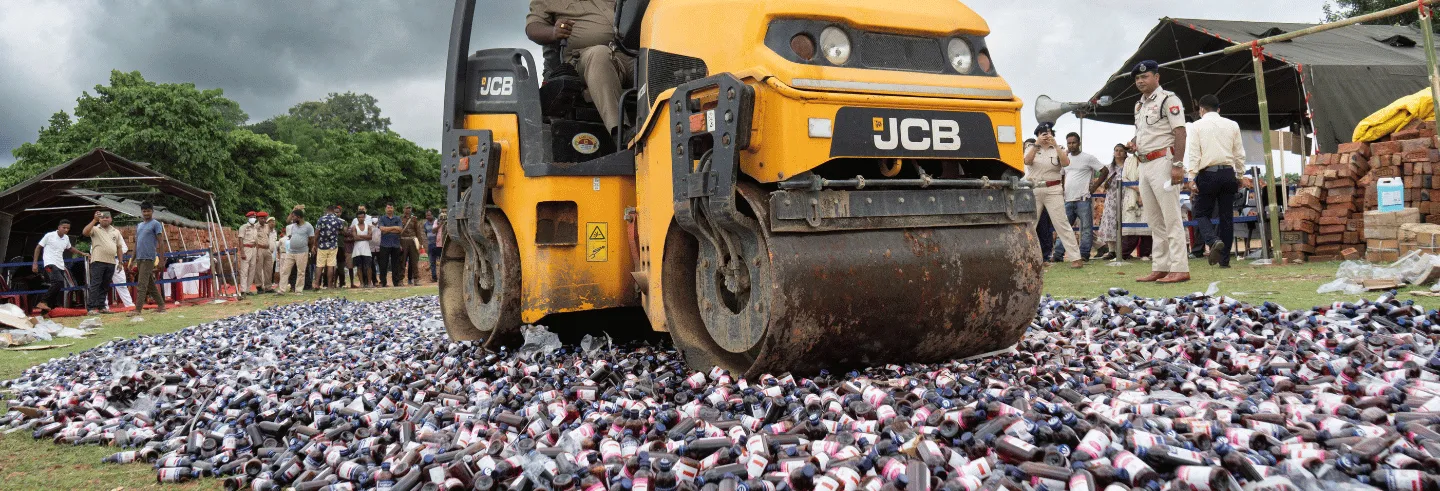
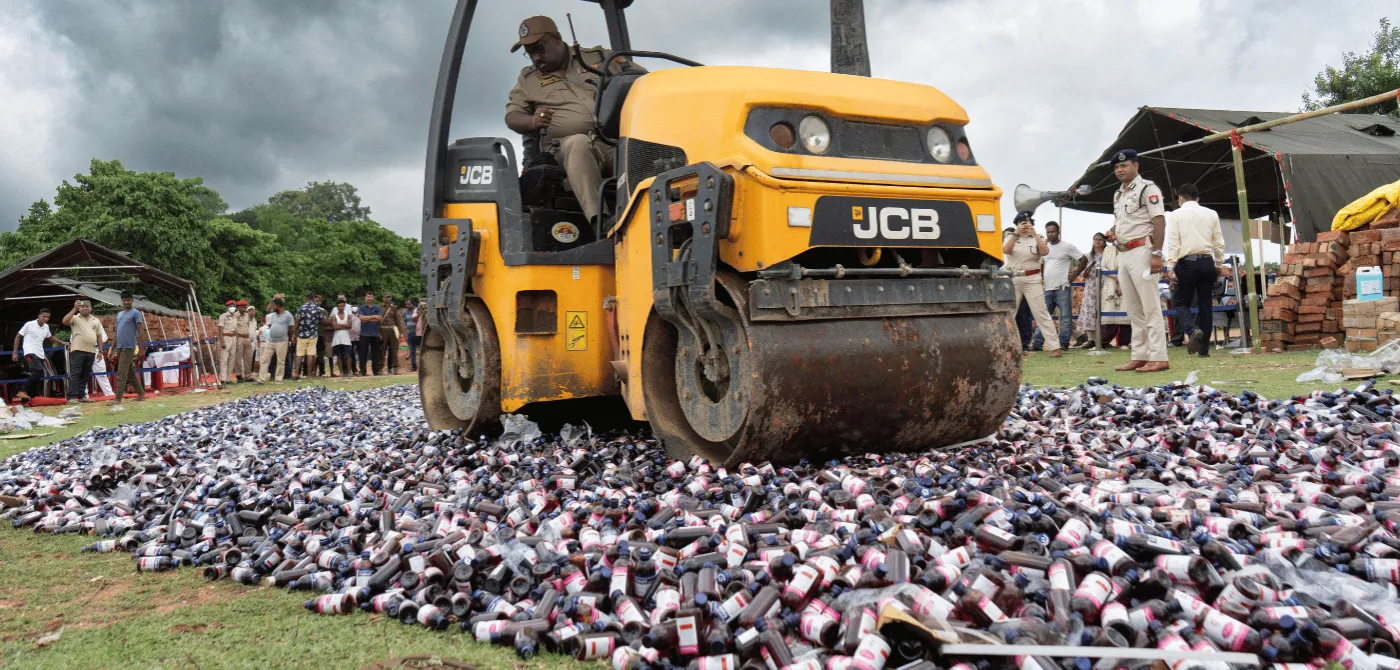



The death of 24 children in Madhya Pradesh because of adulterated cough syrup, which came to public attention in October 2025, was yet another rude reminder of India’s broken drug regulatory framework. This was the fourth such incident in five years because of adulterated cough syrup manufactured in India. Previous incidents in Jammu (2020), The Gambia and Uzbekistan (2022), and Cameroon (2023) claimed the lives of approximately 140 children.
For the most part, the government’s response has swung between assertive nationalism and conspiracy‑tinged claims, accompanied by periodic promises of imminent yet persistently elusive reform.
In all these cases, the cough syrups had been adulterated with diethylene glycol (DEG), a deadly chemical that causes renal failure. This is a known issue and the law requires pharmaceutical companies to perform safety checks on industrial solvents used during formulation of these syrups. Yet, many Indian pharmaceutical companies fail to do so. Deaths of innocent children do not seem to create a sense of urgency within our administration primarily because public outrage from such incidents vanishes with the news cycle.
Although cough syrup tragedies have made headlines now, there are other poorly manufactured drugs in India such as injectables, intravenous fluids, and eyedrops, which are toxic and have caused fatalities. These drugs have to be manufactured under sterile conditions to prevent contamination.
Since the deaths of five patients at the Postgraduate Institute of Medical Education and Research (PGIMER) in Chandigarh (2022) attributed to contaminated injections, there have been four further incidents in which contaminated injectable drugs or eyedrops made in India caused the deaths of between two and five patients each. These occurred in Karnataka (2023), West Bengal (2023), the United States (2023), and Colombia (2024). Sadly, these incidents never made national headlines.
While the death toll mounts globally due to drugs made in India, the Government of India has done little to reform its drug regulatory framework. For the most part, the government’s response has swung between assertive nationalism and conspiracy‑tinged claims, accompanied by periodic promises of imminent yet persistently elusive reform. Substantive reforms that go beyond merely increasing funding and resources are urgently needed if there is a genuine commitment to preventing avoidable deaths from unsafe medicines.
Fixing the Regulatory System
Designed in 1940, when public health was the responsibility of provincial governments under the Government of India Act, 1935, the Drugs Act originally vested all powers to regulate domestic manufacture and standards in the provincial governments. The central government had the power only to regulate imports.
The firm accused of causing deaths of children in The Gambia in 2022 had several run-ins with drug controllers in multiple Indian states, yet it never lost its manufacturing licence until after the tragedy.
Post-independence, there was a push to centralise after the Pharmaceutical Enquiry Report, 1954 recommended such a move. Towards this end, the power to set standards and approve new drugs was centralised in the Union government, but the power to issue manufacturing licences, which is crucial to regulating drug quality, remained with state governments. Due to this disjointed legal framework, India now has one drug regulator for each state and union territory, in addition to the Drugs Controller General of India (DCGI), resulting in a total of 37 regulators. The state drug regulators are under the control of the state governments, with the health minister having the final say on the cancellation or suspension of licences.
There are three principal drawbacks to this regulatory framework. The first is that the pharmaceutical industry gets access to the national market across India while being answerable to only one state government for its manufacturing licences. For example, a drug manufactured in Tamil Nadu can kill children in Madhya Pradesh, but there is no way for citizens of Madhya Pradesh to hold the drug controller or health minister of Tamil Nadu accountable.
In theory, the firm can be prosecuted in any state where its drug sample fails testing, but given the sclerotic pace of the Indian courts, these cases often drag on for years and rarely result in conviction. Even if the firm is convicted, it does not lose its licence, because only the drug controller in Tamil Nadu can cancel its manufacturing licence.
Second, the pharmaceutical industry finds it far easier to influence state-level politics because it provides employment and tax revenues to state governments. While incidents that cause deaths are difficult to brush under the carpet, cases involving outright corruption or administrative violations are often covered up.
The third drawback is the logistical challenge of coordinating between 37 different regulators with competing interests to ensure smooth information flow on failed inspections, failed drug quality tests, and the recall of “Not of Standard Quality” (NSQ) drugs across the country. These logistical issues have serious consequences for the lives of citizens. For example, the firm accused of causing child deaths in The Gambia in 2022 had several run-ins with drug controllers in multiple Indian states, yet it never lost its manufacturing licence until after the tragedy.
In 2019, the Government of India amended the Drugs and Cosmetics Rules to give itself the power to conduct joint inspections with state governments, but it still lacks the power to cancel manufacturing licences. Two lobbies challenged the new rule in court—the association of state drug controllers and a pharmaceutical industry lobby. They made for strange bedfellows as petitioners, but their joint opposition to central inspections highlighted how state-level politics shapes drug regulation.
They eventually lost their legal challenge to the rule. Since then, the Drugs Controller General of India has, through a steady stream of leaks to the press, claimed that his office has been conducting hundreds of joint inspections with state drug controllers using a “risk-based” inspection model. But there is little transparency about how these inspections are designed or what they achieve. This leads to the central problem with India’s drug regulatory framework—a pervasive lack of transparency.
Transparency Enables Effective Regulation
The biggest challenge after the fragmentation of the regulatory framework is the lack of transparency on how this fragmented drug regulatory system functions. There is no way for Indians to access inspection reports of drug manufacturing facilities. As a result, there is no way for the public to know whether drug inspectors are in fact conducting regular inspections of these facilities.
Even where such information exists, data from multiple drug regulators on drugs that fail quality testing is not compiled in a centralised, searchable database that purchasers in the public or private sector can use.
Take, for example, the manufacturing facility in Tamil Nadu that has been held responsible for the deaths of the children in Madhya Pradesh in October 2025. Photographs of the facility circulated after the incident and the subsequent inspection report published by the Tamil Nadu Drug Controller painted the picture of a decrepit facility that should never have been in operation in the first place.
If inspection reports had to be published annually, drug inspectors would likely take inspections more seriously and be more diligent in identifying compliance lapses. The fact that such a facility did not figure in the list of risks that the Drugs Controller General of India supposedly uses to decide which facilities to inspect calls that entire risk-based approach into question. The mere publication of these reports would have acted as a deterrent for both the industry and drug inspectors.
In addition to inspections, drug controllers also monitor the quality of the drug supply by purchasing medicines from the market and testing them in government laboratories for adherence to standard quality. Although such testing is often skewed towards cheaper drugs because of budget constraints and poorly equipped state drug-testing laboratories, some of the better-resourced drug controllers in Tamil Nadu and Gujarat do test more expensive injectables.
Reports from these government laboratory tests are seldom made available online for public viewing. At most, the Drugs Controller General of India and a few states publish a monthly list on their websites of drugs that failed testing, but they do not disclose the full reports that explain why exactly these drugs failed.
Even where such information exists, data from multiple drug regulators on drugs that fail quality testing is not compiled in a centralised, searchable database that purchasers in the public or private sector can use to conduct due diligence on companies before placing large procurement orders. As a result, even public procurement agencies often end up buying drugs from pharmaceutical companies with a poor track record of producing standard-quality medicines simply because they quote the lowest price in the tendering process.
While many government agencies conduct their own testing of drugs which they procure before releasing them for consumption, very often poor-quality drugs do slip through the cracks. Take for example, a recent blacklisting order passed by the All India Institute of Medical Sciences (AIIMS) in Delhi of a firm which had supplied intravenous fluids containing fungus. The injectable was released for administration and recalled only after several departments spotted the fungus visible in it.
Delays and Lenient Punishments
A third problem with India’s drug regulatory framework is that even when it uncovers wrongdoing, it is simply too slow and often far too lenient in dealing with errant Indian pharmaceutical firms. For example, after the deaths of 14 people at J.J. Hospital in Mumbai in 1986 due to diethylene glycol (DEG) poisoning, the state government announced a prosecution. A reporter discovered in 2022 that the trial had still not begun because of transfers and other procedural delays within the Mumbai district courts.
In effect, this means that unless there is a serious incident where Not of Standard Quality drugs have caused deaths, pharmaceutical companies rarely ever face any consequences for their fraudulent actions.
In other cases that are prosecuted after a state drug testing laboratory finds a Not of Standard Quality drug in the market, there is a noticeable trend across the country of very lenient punishments. Judicial magistrates who hear these cases sentence the manufacturer to “simple imprisonment till the rising of the court”, which allows the convicted managerial personnel of a pharmaceutical firm to go home after spending the day in court till the judge rises.
The preferred punishment in most cases where drugs fail quality testing are administrative measures such as the temporary suspension of licences for a few days or at most a few weeks. Technically, this means that a factory should stop manufacturing the formulations for which the licence has been suspended but nobody really knows how these licence suspensions are enforced. There is good reason to believe that the government does not really enforce these licence suspensions strictly since it is rare to hear of pharmaceutical companies challenging such suspension of licences.
In effect, this means that unless there is a serious incident where Not of Standard Quality drugs have caused deaths, pharmaceutical companies rarely ever face any consequences for their fraudulent actions.
Regulatory Capture
The pharmaceutical industry is one of the few manufacturing success stories in India. The government is heavily invested in its success and is reluctant to punish it for its failures. This gives the industry and its lobbyists undue advantage in the corridors of power when it comes to lawmaking.
A revision to Schedule M, which sets quality standards and good manufacturing practices (GMP) for pharmaceutical companies, was notified in December 2023 and was to go into effect in June 2024.It came into effect on January 1, 2025, after a delay.
In earlier episodes, such as the deaths linked to contaminated cough syrups in The Gambia, the government played the nationalism card to attack the WHO, which had issued the alert.
Earlier this year, the Ministry of Health granted a one-year extension for small and medium-sized pharmaceutical companies (with an annual turnover of less than Rs. 250 crore) to upgrade their facilities as per the revised Schedule M of the Drugs and Cosmetic Act because of intense lobbying by the Rashtriya Swayamsevak Sangh (RSS)-affiliated Laghu Udhyog Bharati, among others.
A cursory review of all the deaths from Not of Standard Quality drugs in the last five years clearly indicates that most of them were manufactured by this segment of the industry. Public health concerns are often discounted or ignored in favour of making it easier to do business. One example is the Ministry of Health’s reluctance to involve the public in its response to concerns about faulty hip implants.
As Kaunain Sherrif M. documents in his book The Johnson & Johnson Files: The Indian Secret of a Global Giant (Penguin Random House India, 2025) the Ministry never provided a platform for victims of the fraud perpetrated by DePuy, a Johnson and Johnson subsidiary, to describe their experience, pain and suffering. DePuy marketed metal-on-metal Articular Surface Replacement (ASR) hip implants that had unacceptably high failure rates and exposed patients to toxic metal debris, leading to severe complications and the global recall of the devices. The victims in India were largely denied a voice because of official apathy, incompetence and corruption.
This is not unique. The membership of the Subject Expert Committees (SEC), which supposedly advises the Drugs Controller General of India on approval for new drugs and devices, does not contain any representation from the polity or public health advocates. Not only are the deliberations of such committees not made public; basic mechanisms such as ensuring there is no conflict of interest are not adequately implemented in choosing who advises the regulator. This level of opacity of the regulator enables regulatory capture and makes it difficult for stakeholders to hold the government accountable.
Conclusions
India faces several challenges in building a credible and responsive drug regulatory system. Many of these can be addressed only by the parliament through the enactment of a new law, which is actually the easier part of the reform process. The harder task is tackling regulatory capture, building technical capacity within the regulatory structure, improving its responsiveness to the polity, and reorienting it towards public health rather than the objectives of the pharmaceutical industry.
The only way to combat regulatory capture is to elevate drug quality to a position of real importance in public discourse. This happens rarely in India, apart from after the recent tragedy in Madhya Pradesh. In earlier episodes, such as the deaths linked to contaminated cough syrups in The Gambia, the government played the nationalism card to attack the WHO, which had issued the alert about the “Made in India” cough syrups. Much of the media readily deflected attention from the underlying regulatory failures until similar problems eventually affected Indian citizens themselves.
Building a domestic discourse on the importance of drug quality is therefore a crucial but difficult challenge, especially given the willingness of the government to weaponise nationalism to drown out criticism of both the pharmaceutical industry and the drug regulator.
Dinesh S. Thakur is a public health activist.