The Covid-19 pandemic demonstrates that the discipline of public health needs to be open towards a plurality of ideas and paradigms. Else it could end up being reductionist and suited to…
Bangladesh could do for Covid-19 and other diseases what India did for HIV/AIDS: provide expensive therapeutic drugs globally at low prices. But its potential is constrained by a lack of indigenous…
A survey of reforms in health policies in India over the past two decades – actually a string of privatisation policies – indicates that we have moved away from and not towards Universal Health…
‘Struggles for a more just, fair, inclusive, or caring politics in the time of Covid-19, need to be grounded in the everyday work of building institutions, supporting the vulnerable amongst us, and…
While trying to maintain our psychological equilibrium during a pandemic, we may well do so in a manner that facilitates the emergence of authoritarianism. But there can be hope too if we allow…
The pandemic has already taught us that for a better world we cannot have the market as the backbone of the economy; we need a more inclusive politics; decentralised governance is essential; and we…
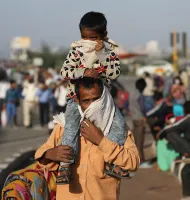
India's Covid-19 crisis is one effect of a decades-long process that has produced impoverishment, hunger, and ill-health, all at once. Its history of epidemics can offer insights into…
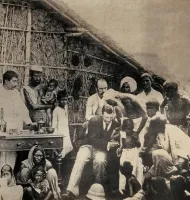
The eradication of smallpox in India in the 1970s may throw light on the evolving corona strategies. The attempts, then & now, operate against the backdrop of a destitute landscape, &…
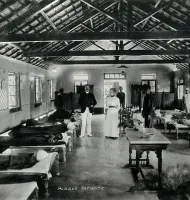
The plague of 1898 brought Calcutta's workers out into the streets to strike against low pay & forced inoculation. The disorders during the epidemic gave the working class their first…
There are dimensions of justice, human rights and constitutionalism that need to guide governments when there is a public health emergency as with Covid-19. The focus has to be on the right to health…