

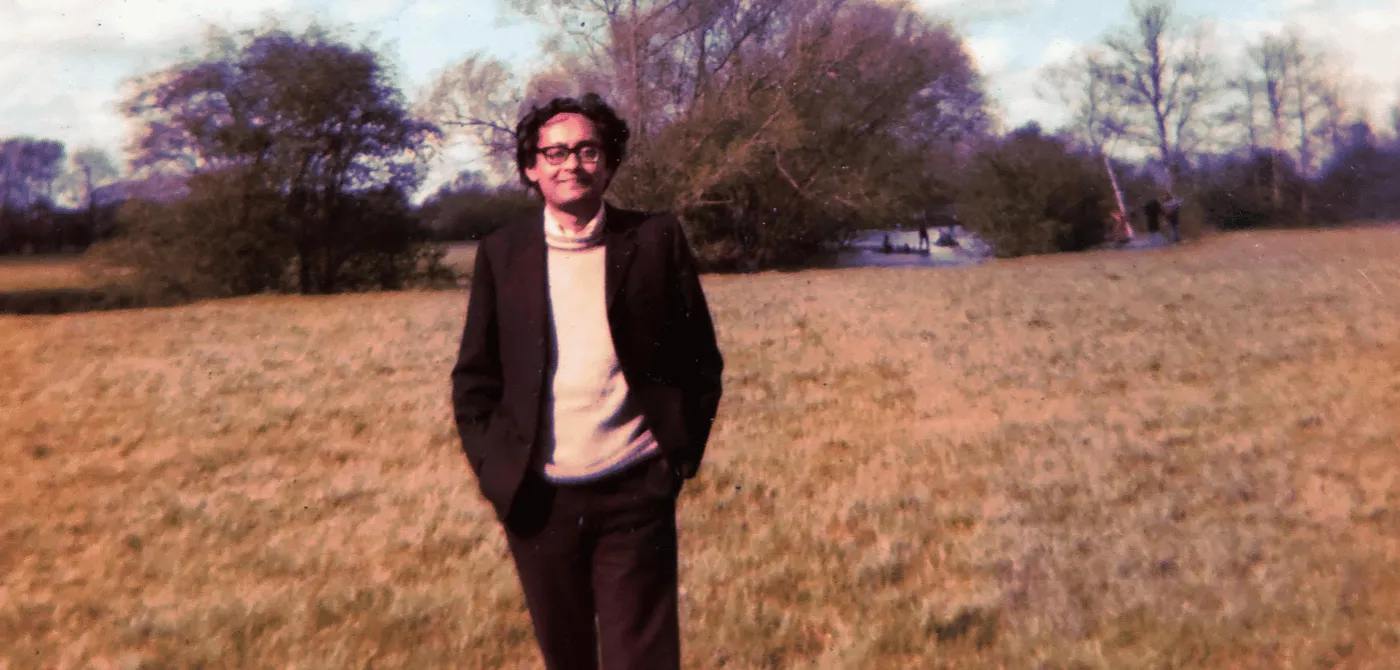



Sumit Sarkar’s passing on 13 August 2026 made me reflect on the many ways in which his persona and his work have left its imprint on me. He was my teacher during my master’s programme in Delhi University between 2000 and 2002, when I took both of his courses: ‘Early Modern Europe’ and ‘Social History of Modern India’. His feedback on one of my assignments has stayed on with me: the distinction he drew between the authority of historians and their published works on one side, and evidence, rational and ethical evaluation of analysis of evidence, on the other.
To simply follow a set interpretation, explanation, and narrative, would be equivalent to surrendering the historian’s responsibility for critical appraisal. Precisely for this reason a history student needs to develop an analytical faculty to assess contending historical narratives, through a critical scrutiny of the evidence, the premises of analysis, and the ethical choices that mediate judgement. Sarkar’s feedback alerted me against a strict reliance on historians’ authority and reproducing their narratives within my own work. To have a historian of his stature encourage a young scholar like me to use my own judgement, and most of all, my own ethical framework and worldview, was a liberating idea. Being taught this early on was to make me a lot less awed by reputation and a lot more invested in argument and ethics in my own research and writing.
For any serious historian, Prof Sumit Sarkar will live on in references, his memory will inspire scholars to become better historians, thinkers and teachers.
Sarkar’s class lectures incorporated his efforts to encourage amongst students this development of a critical faculty. He presented varied perspectives and rationalist and humanist grounds to critically evaluate historiographies. The learning was not confined to the classroom: he best put his critique of historicism while addressing a group of students, including myself, who in 2001 gathered on the university campus to protest the attack by the right-wing on another of our teachers, D.N. Jha, for his book The Myth of the Holy Cow. Historicism would have us see a seamless continuity between the historical tendencies of how human civilisation has developed from the past to the present and onto the future. Additionally, it leads us to sanitise the past and obliterate its complexity, to suit our notions of the present and their projections into the future. Any ‘uncomfortable’ historical fact, colliding with the politics of the present and the future, is treated as an undesirable invocation of the past. Hence, it also suppresses any scope of contending historical representations and, more so, of the analytical faculty necessary for such scrutiny. That day in 2001, Sarkar elucidated how the contest over the past reflected the contest over thoughts and ethics about a desirable present and future. He opined that we should not be as obsessed with the past in our public life as our then (and present) current ruling establishment pushed for. In this sense, he encouraged us to be as much students of history as of philosophy.
Many of us knew Sarkar primarily through his oeuvre of historical writings, which exhibited a remarkable vastness, as also dynamism and responsiveness towards new trends. Readers readily appreciated the thematic evolution in his works. His work on the Swadeshi Movement, informed by class analysis, introduced a distinction between the upper middle-class and the lower middle-class nationalists. The latter constituted the stream of “extremist nationalists”. Modern India: 1885-1947 (1983) displayed the regional and societal breadth of, and diverse currents in the politics of masses, and its interaction with the politics of imperial elites and nationalist elites.
Some found him iconoclastic in his A Critique of Colonial India (1985)—which demonstrated the conservative sides of the Bengal renaissance reformers—and in his critique of his colleagues in the Subaltern Studies series. 1'The Decline of the Subaltern in Subaltern Studies'. In Writing Social History by Sumit Sarkar (New Delhi: Oxford University Press, 1997) In both, he appeared to passionately sustain the application of his Gramscian and a social history approach. His Writing Social History (1997) responded to the new urgency of history of caste, colonial subalterneity, and the import of social anthropology and semiotics to study self-perception, experiences and agency of the subaltern masses. His long years of teaching of social history, in collaboration with his intimate intellectual comrade, Tanika Sarkar, brought to us voluminous collections of histories of women and social reform on one hand, and caste in modern India on the other. Modern Times (2014), his final work, summarised and commented on the latest trends in economic, environmental and cultural history.
In my judgement, his finest and sharpest exposition came in Beyond Nationalist Frames: Postmodernism, Hindu Fundamentalism and History (2002). It drew attention to the flipside, rather the slippery slope, of postmodern history writing that proves conducive to communal ethics in re-imagining of Indian history. He was particularly sceptical of relativism, perspectivism, nativism, and the reductionist nexus between power and knowledge in postmodern history writing that took hold over the later subaltern studies series, and other works of its historians.
Sarkar’s engaged scholarly enterprise and sustained writings were no mere intellectual pursuit; he was passionately committed to social democracy.
Beyond Nationalist Frames rejected the conventional nationalist historiography that colonial domination was the primary contradiction, while caste oppression and humiliation was the secondary contradiction. It interrogated the related assumption that anti-caste struggles were a source of distraction for anticolonial nationalism in the 20th century, serving to fissure in the latter’s virtuous politics. Sarkar showed that the valorisation of nationalist politics at the cost of anti-caste movements, first, limited us from a critical appraisal of nationalist thoughts and, second, blinded us towards the complex historical reality, especially its current of anti-caste struggles. Postmodernist historiography shared with communalist fundamentalism a problematic valorisation of nationalist thoughts and, thereby, paved the way for normalising a prospect of conservative authoritarianism.
Sarkar’s engaged scholarly enterprise and sustained writings were no mere intellectual pursuit; he was passionately committed to social democracy. His association with the principles of social democracy and a humane and liveable future was manifest when he opposed communal discourses and its politics. We saw him march in protest against the American invasion of Afghanistan in 2001. And despite his long affiliation with the CPI(M), he opposed the forceful taking over of land and the suppression of protesting sharecroppers in Singur and Nandigram in West Bengal during 2006-09.
I will end my recollections with another personal story. In a recent interview for a professorship at the Centre for Historical Studies in Jawaharlal Nehru University —where I studied for a PhD— as soon as I referred to the works of Sarkar, the chair of interview panel and two other interviewers—one a professor from Gorakhpur University and the other professor retired from IGNOU—rebuked me for citing a leftist historian, a historian whose writings are allegedly against the ‘Indian civilisational ethos’. It was a laughable proposition, but reflective of our times. For any serious historian, Sumit Sarkar will live on in references, his memory will inspire scholars to become better historians, thinkers and teachers.
Dhiraj Kumar Nite is an associate professor at the School of Liberal Studies, Ambedkar University Delhi.