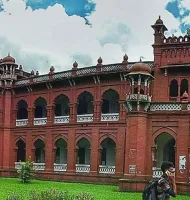
In 1921, Bengal witnessed the foundation of two universities: Visva Bharati and Dacca. The early years of the institutions give us a portrait of two unique models of education, learning, and pedagogy.
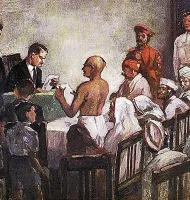
Exactly a 100 years ago, Gandhi was sentenced by a court for ‘sedition’. Its memory makes us revisit the Non-Cooperation Movement, which introduced mass politics into India.
From the early 20th century onwards, US Immigrants of South Asian origin—referred to as 'Hindus'—had to confront laws in many states against 'interracial' marriage. It wasn't…
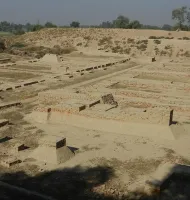
A right-wing nationalist agenda would make us believe Dwijas alone were civilisation builders in India. But Indian civilisation began with the Harappan culture, whose inheritors are the present-day…
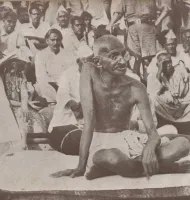
'Gandhi was aware that intellectual labour was necessary for the culture of the mind and accepted the necessity of a division of labour, but not the idea that bodily labour had to be confined to…
AFSPA keeps apart ideas of law and justice; a separation that makes the Nagas 'killable', as in Oting. The law incorporates them into the Indian nation-state as rights-deprived subjects —…
Was John Orth a self-proclaimed ‘guru’ in the US in the early 20th century, or a one-time rug-dealer suspected of being a Russian spy, or perhaps the Austro-Hungarian archduke Johann Salvator himself…
India’s maharajahs during colonial rule were much more than the stereotypes we have of profligate spenders and incompetent rulers. They were complicated personalities who could subtly resist imperial…
"What does it mean then to remember the ‘horror’ of partition at a time when identities are so polarised. Do we remember only what was done to us, leaving out all that we did to others and to…