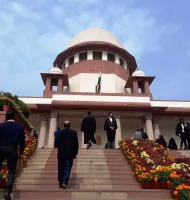
A close analysis of the Supreme Court's final judgement on the Ayodhya dispute that has been criticised as much as it has been praised for how it has brought about closure
The protestors in the north-east, the Muslim community and a vast number of agitating students are all united against the CAA. But there are differences among them that they must be sensitive to;…
‘A reasonable analysis based on primary legal principles, on the Constitution’s language and on the Court’s own past decisions, will show us that the CAA … infracts fundamental rights, in particular…
Many student & other groups have made statements condemning the Citizenship Amendment Act/National Register of Citizens, & the police brutalities at Jamia Millia Islamia & Aligarh Muslim…
The Citizenship Amendment Bill and the pan-Indian National Register of Citizens mark a foundational shift in the Indian conception of citizenship, providing paths to citizenship for some and driving…
India’s political experiment over seven decades had shown that federalism can accommodate diverse policies for diverse identities and thus strengthen democracy in a plural society. That has now been…
Ever since the Right to Information Act was enacted in 2005 there have been continuous attempts to dilute this potentially powerful law. The dilution has come from government action as well as by…
The deep insecurity of nation-states in a networked world makes governments demand that internet data be retained in the country where it is generated. India’s approach is in line with this approach…
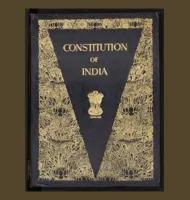
Two recent books that talk about India’s Constitution as a people’s charter and its transformative character remind us why it remains an enduring document.
Autonomy and social justice are often in a tense relationship in Assam. While the demands for autonomy reflect the desire for territorial control over land, demands for social justice reflect an…