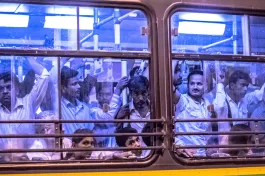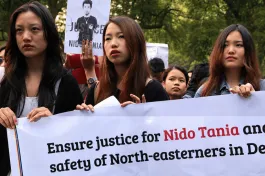

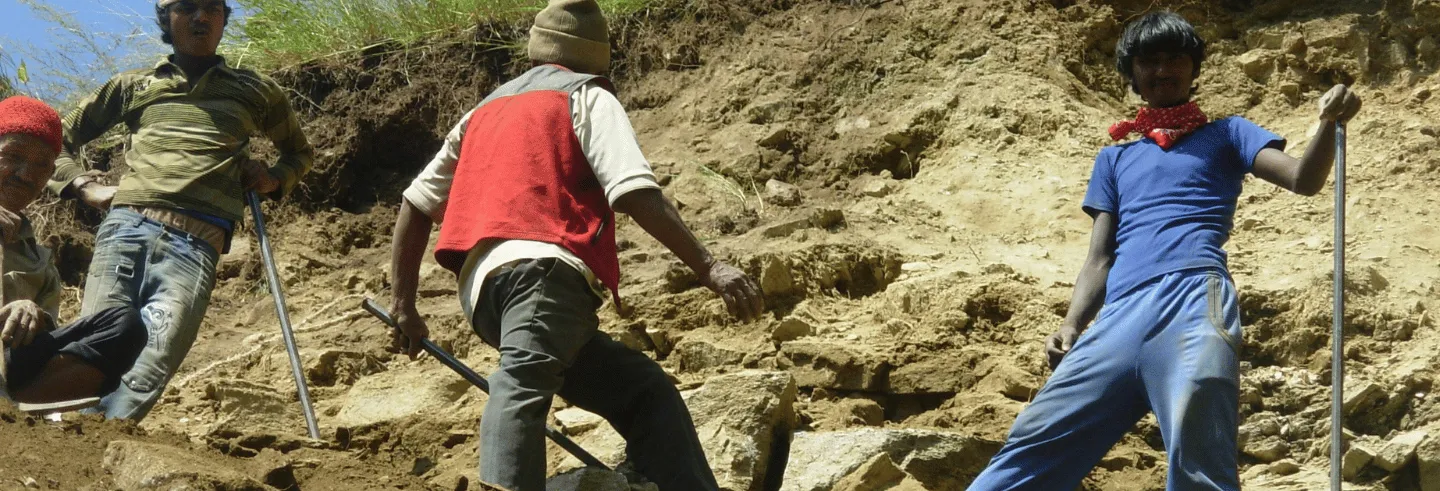



For decades, the journeys of millions of migrant workers across India attracted remarkably little public attention. Every year, labourers left villages in eastern Uttar Pradesh, Bihar, West Bengal, Odisha, and Jharkhand to lay railway tracks, erect apartment blocks, cultivate fields, harvest crops, clean cities, and sustain innumerable informal enterprises. Their movement became so deeply woven into India’s economic life that it scarcely figured in public debate. Internal migration was treated as a background condition of development rather than one of its central institutions.
Particularly in eastern India, questions of mobility became intertwined with concerns about undocumented immigration, demographic change, and border surveillance, often without adequate empirical foundation.
The nationwide lockdown imposed in March 2020 marked a decisive turning point. Images of exhausted workers walking hundreds of kilometres along highways and railway tracks transformed internal migration from an economic statistic into a profound national moral crisis. For the first time since Independence, India confronted an uncomfortable paradox: the economy depended upon millions of migrant workers, yet neither the state nor society possessed even a basic understanding of who they were, where they came from, or how they lived.
The Union and state governments responded with hurried efforts to register migrant workers, expand labour databases, and improve statistical systems. The crisis exposed not merely administrative shortcomings but also a deeper intellectual failure—a failure to understand a phenomenon on which much of India’s economic growth had long depended.
Yet, the visibility created by the pandemic soon assumed an altogether different character. As economic activity resumed, migration re-entered public debate for reasons that had little to do with labour. Increasingly, it was discussed through the language of borders, citizenship, and national security. Particularly in eastern India, questions of mobility became intertwined with concerns about undocumented immigration, demographic change, and border surveillance, often without adequate empirical foundation. Migration ceased to be viewed primarily as work; it became a question of belonging.
This shift invites a broader reflection on the nature of borders in modern political life. Borders are not merely territorial lines separating sovereign states. They are also cognitive and political institutions that shape how states classify populations, define membership, and distinguish citizens from non-citizens. Yet, for those who inhabit borderlands, the same spaces are experienced rather differently. Borders are places of cultivation, trade, kinship, seasonal employment, and everyday survival. The frontier, in other words, sustains two distinct political imaginations.
The first may be described as the security frontier. Here the border functions primarily as an instrument of sovereignty. Its purpose is to regulate entry, distinguish citizens from foreigners, and safeguard territorial integrity. Without such a frontier, neither citizenship nor jurisdiction can be meaningfully sustained.
The second may be called the labour frontier. Here, the border is understood less as a barrier than as a lived economic landscape. People cultivate land divided by political boundaries, trade across adjoining markets, sustain kinship networks that long predate the nation-state, and move in search of livelihoods. The labour frontier is organised not by the logic of exclusion but by the practical imperatives of survival.
These two ways of imagining the border are not inherently incompatible. Every modern state requires secure borders, just as every society depends upon the mobility through which livelihoods are sustained. The difficulty arises when one understanding overwhelms the other.
For much of the first two decades after Independence, movement across the eastern frontier was understood primarily through a humanitarian lens.
During the past four decades, India’s eastern border has increasingly come to be interpreted almost exclusively through the lens of national security. The historical experiences of Partition, refugee movements, the Bangladesh liberation war, the Assam Movement, border fencing, and continuing debates over undocumented migration have understandably contributed to this shift. Yet, the consequences extend well beyond questions of territorial sovereignty. Categories originally developed to regulate an international frontier have gradually travelled beyond the border itself, shaping the way Indian citizens moving within their own country are perceived and understood.
The concern of this essay is not the legitimate authority of the modern state to regulate entry across its international boundaries. That authority is both necessary and widely recognised. Rather, our concern lies elsewhere: what happens when the exceptional logic of the international border becomes the ordinary language through which internal labour migration is understood? What changes when categories devised to distinguish foreigners begin to shape the everyday experience of fellow citizens?
These questions acquire particular significance in West Bengal, whose long border with Bangladesh has made it central to India’s political imagination. It is here that the two lives of the border—one defined by security, the other by labour—intersect most visibly. Understanding the relationship between them, we shall argue, is essential not only for explaining contemporary migration but also for understanding what citizenship means in an increasingly mobile republic.
Security, Labour, and Citizenship
Before India’s eastern border became a frontier of surveillance, it was a landscape of movement. The boundary created by Partition in 1947 altered the legal status of mobility across this region, but it could not immediately dissolve the social, economic, and familial relationships that had evolved over centuries.
For much of the first two decades after Independence, movement across the eastern frontier was understood primarily through a humanitarian lens. Millions crossed the border as refugees, driven by communal violence, political upheaval, and economic insecurity. In keeping with its constitutional commitments, the Indian state responded through programmes of relief, rehabilitation, and resettlement. Migration was unquestionably a political issue, but it was not yet framed principally as a threat to national security. The border was perceived less as a site of infiltration than as the setting of an immense human tragedy.
This understanding began to change during the late 1970s and early 1980s. The Assam Movement (1979–1985) marked a decisive shift in public discourse, redirecting attention from refugee rehabilitation to the identification of “illegal foreigners”. The Assam Accord (1985) institutionalised this transformation, and the decades that followed witnessed the expansion of border fencing, electronic surveillance, and the growing presence of the Border Security Force.
Yet, the political argument frequently moves directly from changes in demographic composition to assumptions about undocumented immigration, as though no other explanation was conceivable.
Together, these developments reshaped the political vocabulary of migration. The relatively objective category of the “refugee” gradually gave way to the far more politically charged figure of the “Bangladeshi infiltrator”. What changed was not merely the language through which movement was described, but the underlying assumptions through which mobility itself came to be interpreted.
There were, of course, compelling reasons for this transformation. Few would dispute that undocumented migration raises complex legal, administrative, and political challenges. Every modern state has acquired the authority to regulate entry across its borders. Over time, however, the security framework acquired an explanatory reach that extended well beyond the specific problems it had originally been designed to address. Increasingly, it became the dominant lens through which almost all forms of mobility in eastern India were understood.
The consequences are particularly evident in contemporary debates on demographic change. Census data undoubtedly record shifts in population size and religious composition, but they do not explain the causes of those changes. Fertility decline, mortality, age structure, refugee settlement, internal migration, and international migration all leave demographic imprints.
Demography describes outcomes; it does not, by itself, establish causation. Yet, political argument frequently moves directly from changes in demographic composition to assumptions about undocumented immigration, as though no other explanation was conceivable.
The available evidence points to a considerably more complex reality. During the past three decades, fertility has declined sharply across all major religious communities in India. West Bengal, whose total fertility rate has fallen to around 1.6—well below replacement level—has experienced substantial fertility decline among both Hindus and Muslims.
Bangladesh, meanwhile, has undergone one of the most remarkable demographic transitions in South Asia, marked by dramatic improvements in female education, life expectancy, fertility reduction, and poverty alleviation. The Bangladesh invoked in contemporary political rhetoric often bears only a limited resemblance to the Bangladesh of today. Demographic change along India’s eastern frontier is more plausibly understood as the cumulative outcome of Partition, refugee movements, fertility transition, internal migration, and changing economic opportunities than as evidence of a single, continuous process of undocumented immigration.
Why, then, does the language of infiltration continue to dominate public discourse?
The answer lies less in demography itself than in the political work that demographic narratives are made to perform. Once the security frontier becomes the dominant framework through which the border is imagined, statistics cease to function as neutral descriptions of social change. Instead, they are selectively mobilised to legitimise pre-existing political narratives—for instance, the repeatedly invoked claim during the 2026 West Bengal Assembly election campaign that “more than one crore Bangladeshis reside illegally in West Bengal”.
The districts most frequently represented in political discourse as destinations of undocumented immigration—Murshidabad, Malda, and Uttar Dinajpur—are simultaneously among India’s largest exporters of migrant labour.
Communities come to be understood less through their social and economic circumstances than through their presumed relationship to the international boundary. The conflation of “Muslim” with “Bangladeshi”—despite its lack of empirical foundation—thus acquires political salience. In this way, the distinction between citizen and foreigner is gradually detached from the territorial border and transformed into a portable social classification, accompanying citizens wherever they move within the Republic.
It is here that we intend to make a departure. The most consequential effect of the security frontier is not simply that it transforms how the state governs the border. More profoundly, it alters how society imagines those associated with the border. Language, religion and place of origin begin to acquire meanings that extend far beyond geography. A Bengali-speaking Muslim citizen from Murshidabad or Malda may therefore become an object of suspicion not only near the international boundary but also in Delhi, Surat, or Mumbai. Categories originally devised to regulate an international frontier begin to accompany citizens as they move through India’s internal labour markets.
The irony is striking. The districts most frequently represented in political discourse as destinations of undocumented immigration—Murshidabad, Malda, and Uttar Dinajpur—are simultaneously among India’s largest exporters of migrant labour. Over the past three decades, these districts have become some of India’s largest reservoirs of migrant labour. Every year. hundreds of thousands of workers leave these districts for Kerala, Karnataka, Gujarat, Maharashtra, Delhi, Punjab, and Haryana. Their earnings sustain households, finance cultivation, repay debts, educate children, and reshape village economies.
The significance of this inversion extends beyond statistical observation. It reveals the difference between the questions posed by politics and those posed by political economy. The former asks who is entering the nation; the latter asks why so many citizens are compelled to leave home in order to secure a livelihood. Both questions are legitimate. The problem arises when one entirely eclipses the other.
To understand the labour frontier, therefore, one must begin not with the international boundary but with the village. Across much of rural West Bengal, agriculture remains the principal occupation, yet it no longer provides an adequate livelihood for many households. Holdings have steadily fragmented through successive generations of inheritance; river erosion has consumed cultivable land along the Ganga and its tributaries; recurrent floods and uncertain markets have increased agricultural risk; and opportunities in manufacturing remain limited.
Under such conditions, migration is no longer an exceptional response to crisis. It has become an integral component of household livelihood strategies. Families increasingly depend upon a combination of cultivation and migration rather than upon either alone. Agriculture provides continuity; migration provides liquidity.
What distinguishes the border districts is not their poverty alone, but the near absence of their economic realities from the dominant political narrative. Public attention remains fixed upon the international frontier even as everyday life is organised around internal mobility.
The Portable Border
Migration is often explained as a straightforward response to wage differentials. Workers, it is assumed, move because wages are higher elsewhere. Economic incentives undoubtedly matter, but they account for only part of the story. India exhibits some of the widest regional disparities in income in the world, yet long-distance migration remains lower than many economists would predict. The explanation lies not simply in labour markets but in the dense social institutions that organise rural life.
Labour corridors are seldom created by anonymous markets. They emerge through relationships. A mason finds work in Kochi and is later joined by his brother. A cousin follows, then neighbours from the same village.
Caste, kinship, and community networks function as informal systems of social security. They provide credit during periods of distress, assistance in illness, support during old age, and, often, the contacts through which employment is secured. Leaving the village therefore entails more than changing one’s place of work. It frequently means stepping outside a social world that has evolved over generations. Migration is thus accompanied by social uncertainty as well as economic opportunity.
Paradoxically, it is these very networks that also make migration possible. Labour corridors are seldom created by anonymous markets. They emerge through relationships. A mason finds work in Kochi and is later joined by his brother. A cousin follows, then neighbours from the same village. Contractors repeatedly recruit from places where earlier migrants have established a reputation for reliability and skill. Over time, particular neighbourhoods in distant cities become closely associated with villages hundreds or even thousands of kilometres away. Migration, therefore, is not merely the movement of individuals; it is the movement of social networks.
Recognising this changes the meaning of migration itself. Migrants are not isolated workers responding mechanically to market signals. They are members of households managing risk through spatial mobility. Migration becomes an institution of livelihood, as integral to household survival as cultivation, livestock rearing, or small-scale trade. The labour frontier is characterised not by perpetual movement but by a cyclical rhythm of departure and return through which village life itself is reproduced.
It is precisely at this point that the labour frontier intersects with the security frontier.
Workers who board a train in Murshidabad imagine themselves entering a labour market. Increasingly, however, they arrive carrying something more than their skills. Their language, accent, religion, and even the district on their identity documents becomes social markers interpreted through the vocabulary of the international border.
This is what is meant by the “portable border”. The border ceases to function solely as a territorial line separating sovereign states. It becomes a social classification that accompanies particular citizens wherever they travel. The migrants leave the border behind geographically, yet the border continues to shape how they are perceived by employers, police officers, bureaucrats and even neighbours. A distinction originally devised to separate foreigners from citizens begins to differentiate among citizens themselves.
The Bengali-speaking software engineers employed in Bengaluru are seldom asked to establish the nationality of their ancestors…The experience is concentrated overwhelmingly among … those who combine three visible characteristics: Bengali speech, Muslim identity, and employment in the informal economy.
The developments that followed the Pahalgam violence in 2025 brought this process into unusually sharp relief. Verification drives conducted in several states, ostensibly to identify undocumented Bangladeshi migrants, resulted in the detention and questioning of numerous Bengali-speaking Muslim workers employed as masons, construction labourers, vendors, and daily-wage earners.
Investigations by journalists and civil society organisations documented several cases in which individuals possessing Aadhaar cards, voter identity cards, and other official documents were nevertheless required to furnish additional proof of citizenship. In some instances, intervention by state governments or judicial authorities proved necessary before detainees were released. These episodes do not suggest that border regulation is itself illegitimate. Rather, they demonstrate how institutional practices originally designed for governing an international frontier can migrate into the regulation of internal mobility.
The portability of the border is also highly selective. The Bengali-speaking software engineers employed in Bengaluru are seldom asked to establish the nationality of their ancestors. Nor do the corporate executives from Kolkata ordinarily attract suspicion merely because of their language.
The experience is concentrated overwhelmingly among manual workers, especially those who combine three visible characteristics: Bengali speech, Muslim identity, and employment in the informal economy. Class, religion, and region intersect to produce a distinctive form of vulnerability. What appears, in public discourse, as an issue of national security is often experienced, in everyday life, as a denial of equal civic recognition.
Kerala provides an instructive contrast. No Indian state has depended more extensively upon migrant labour from eastern India. Construction, manufacturing, hospitality, domestic work, and numerous service occupations rely heavily on workers from West Bengal, Bihar, Assam, and Odisha. The state has also made significant efforts to incorporate migrants through welfare programmes, health insurance, educational initiatives, and multilingual public services.
Yet, Kerala also reveals the ambiguities of the labour frontier. Migrants are officially described as athithi thozhilali—guest workers—and are widely referred to as Bengali bhai. Both expressions are intended to convey respect and hospitality. Yet they also underscore the provisional character of belonging. A guest, however warmly welcomed, remains a guest. Hospitality differs fundamentally from citizenship. The former depends upon generosity; the latter rests upon rights.
The contrast is revealing. In one setting, the migrant encounters suspicion; in another, paternalism. Neither fully reflects the constitutional relationship between the Republic and its citizens. One sees the migrant primarily through the lens of security, the other through that of labour. Neither consistently sees him first as a citizen.
Citizenship in a Mobile Republic
The argument developed in this essay is not that India must choose between secure borders and free movement. The real question lies elsewhere: should the categories created for governing an international frontier come to shape the everyday experience of citizens moving within their own country?
The Constitution offers a fundamentally different point of departure. It conceives of a single political community within which every citizen enjoys equality before the law, the freedom to move throughout the territory of India, and the freedom to reside, work, and pursue a livelihood in any part of the Republic. These freedoms are not simply instruments for creating an efficient labour market. They are among the foundational principles through which the Republic constitutes itself as a political community. They affirm that citizenship precedes region, language, religion, and occupation.
Ultimately, however, the challenge is not merely institutional; it is moral and political. Every republic must decide how it chooses to see those who move within it.
Recovering this constitutional understanding of migration undoubtedly requires institutional reform. India needs more reliable statistics capable of capturing seasonal and circular migration rather than privileging permanent relocation alone. Social protection must become genuinely portable so that welfare accompanies workers instead of remaining tied to their villages of origin. Verification of citizenship must adhere rigorously to due process, ensuring that language, religion, or occupation never become substitutes for legal evidence.
Equally important, destination states must recognise migrant workers not as temporary guests but as fellow citizens entitled to equal access to public institutions, education, healthcare, legal remedies, and social protection. These are administrative reforms, but they derive their significance from a larger constitutional commitment to equal citizenship.
Ultimately, however, the challenge is not merely institutional; it is moral and political. Every republic must decide how it chooses to see those who move within it.
Throughout the Constituent Assembly debates, B.R. Ambedkar repeatedly warned that political democracy could endure only if sustained by a corresponding social morality. Constitutions distribute powers, establish institutions, and define legal rights, but they cannot by themselves cultivate the habits of mutual recognition upon which democratic life ultimately depends. Citizens must learn to recognise one another as equals before the law, irrespective of differences of caste, religion, language, occupation, or region.
The migrant workers occupy a uniquely revealing position within this constitutional landscape. They sustain India’s economic transformation, yet their own place within the Republic often remains uncertain.
Whether they are received as equal citizens, temporary guests, or presumptive outsiders reveal something fundamental about the moral condition of Indian democracy. Their journey is therefore not simply a movement from one labour market to another. It is also a test of whether the constitutional promise of equal citizenship travels as freely as the citizens to whom that promise belongs.
Kabir Rana is a doctoral student at the University of Exeter, the UK; Kumar Rana is Director, Institute for Human Development-Eastern Regional Centre, Ranchi.