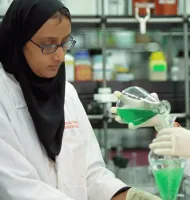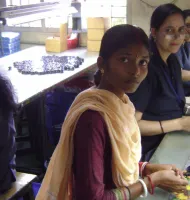

A workspace for highly educated women forced to leave their trained careers is emerging—they avoid demanding full‑time roles of 70 plus weekly hours, and opt for contract or home‑based work while…
The ASHAs of Kerala receive a meagre honorarium though they play an indispensable role in the state’s healthcare. They are seen as 'volunteers' and the centre refuses to classify them as…
The increasing participation of women in work in recent years as revealed by official surveys, especially in 2023-24, appears to arise from definitional changes that now include groups of women as…
Contrary to official claims that we have “an equitable, vibrant labour market where women play a leading role”, there has been a decline in real incomes of self-employed women and falling real wages…
Indian women’s agency is primarily influenced by marital status and caste, rather than religion or education. This suggests that legal reforms alone, like the Uniform Civil Code, might not be enough…
Life events like marriage and motherhood, which are near-universal among Indian women, have been found to play a significant role in women’s decision to join or leave the workforce. So too sexual…
Improving menstrual hygiene facilities at workplaces is crucial as a goal in itself and for encouraging female workforce participation. The government must set clear goals and objectives, create a…
Educated women leaving the workforce hurts India’s growth. But child & family care options are lacking in the work structures we now have. We need “bridge” jobs, like part-time work, to help…
Fewer women are entering the labour market in West Bengal, a decline steeper than in the rest of India. A new book examines structural factors that entrench women and girl children in underpaid,…
A good approach to build a new framework for measuring women’s work better is for the National Statistical Office to accept the definitions and categories recommended in 2013 by the 19th…