



The Covid-19 global pandemic, which stretched three years from 11 March 2020 to 5 May 2023, has left behind questions that still await answers, scars that have yet to heal, and fears that cannot be easily dispelled. The concoction of misinformation, inadequate and unreliable information, and medical interventions falling well short of needs left behind not just disease and death, but also trauma and fear that have not entirely disappeared.
Official claims were exposed as gross underestimations when images of half-submerged corpses on the banks of the Ganga appeared, along with stories by independent media.
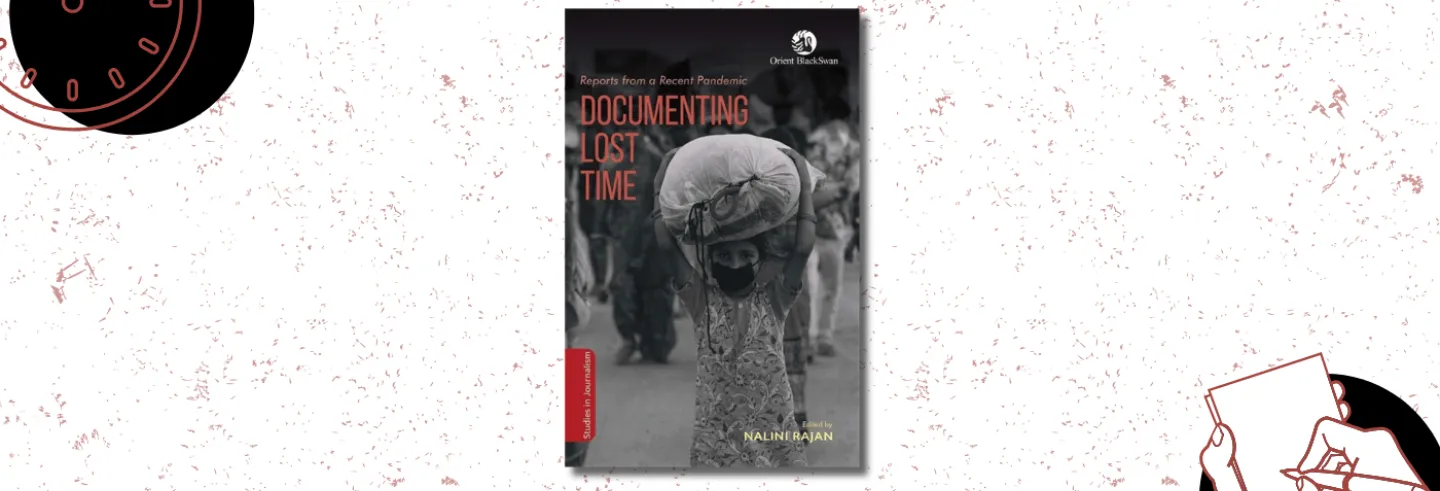
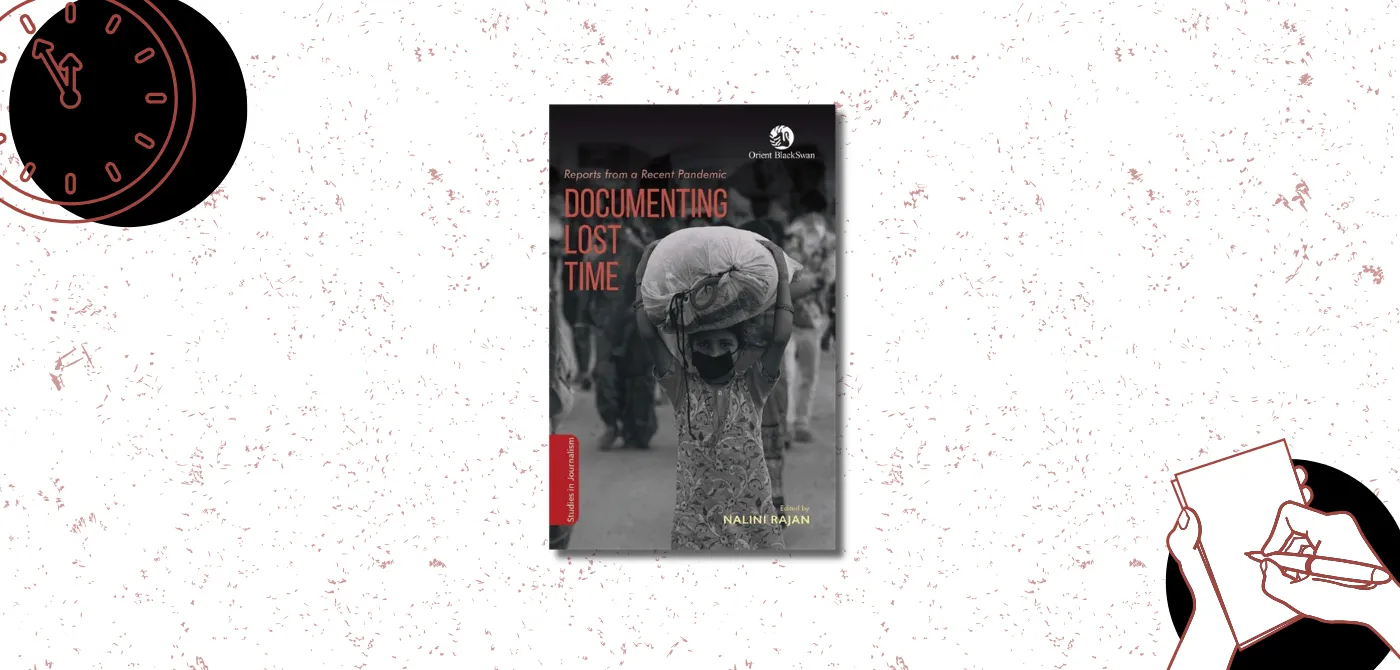
Capturing all of this is not an easy task. The book under review attempts to document what it calls “lost time” through 17 essays that cover the journey of the pandemic through India.
Edited volumes are often uneven, as is this one. However, it contains individual essays that together provide useful information and perspectives as we look back on the Covid-19 pandemic.
The most comprehensive is “The Virus and the Viral: The Use and Abuse of Information During the Pandemic” by senior journalist Pamela Philipose. She divides the different kinds of fake news that circulated over that time into three categories: first, the narrative controlled and propagated by the government; second, the communal propaganda in the initial months; and third, the way such information was used for profit, both monetary and political.
The government’s control of information was an extension of what the Narendra Modi government has attempted to do on many issues. To achieve this, the government not only found ways to reach out and persuade mainstream media to accept the official narrative but also centralised the source of information for the media.
The strategy worked. For instance, mainstream media did not question the official figures put out by the government on the extent of the spread of the infection or the death toll. Official claims were exposed as gross underestimations when images of half-submerged corpses on the banks of the Ganga appeared, along with stories by independent media. Despite this, the government continues to claim that the death toll was lower than estimated by the World Health Organisation (WHO) and other international bodies.
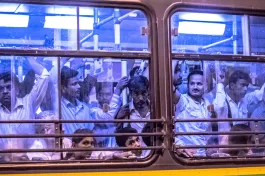
Similarly, in the initial days after the sudden lockdown declared by Prime Minister Narendra Modi on 23 March, the government was in denial about the impact on ordinary people. This was exemplified by the mass exodus of migrant workers from the cities. Those images of workers walking, crammed into trains and buses, and finding any means of transportation remain seared in our memories, thanks to photographs, real-life accounts, and films.
Despite this, as Philipose reports, the government remained in denial. Even when the photograph of an infant trying to wake up his dead mother went viral, the Press Information Bureau did a “fact check” claiming that the woman had died due to pre-existing health issues.
The lowest point in media coverage must surely be the way it reported on the meeting of the Tablighi Jamaat in New Delhi.
Meanwhile, the Solicitor General of India told the Supreme Court that on 30 March—a day when roads, trains, buses, and all forms of transport were bursting with people rushing back to their villages—not a single migrant worker was on the road. He also claimed the government was providing food and shelter to “about 23 lakh people”. Incidentally, the same Solicitor General referred to journalists as “prophets of doom” and “vultures” when the government approached the Supreme Court to pass an order preventing media from publishing any news about the pandemic without first clearing it with the government.
The lowest point in media coverage must surely be the way it reported on the meeting of the Tablighi Jamaat in New Delhi. Philipose, as well as Vikas Pathak in a separate essay, document how the false narrative that the virus was spread by followers of the Jamaat was amplified by mainstream media. As Philipose rightly points out, people fell for this misinformation partly because they did not understand the way the virus spread, but also because “communal forces were able to exploit fear, ignorance, and pre-existing prejudices to scapegoat an entire community”.
Another important essay is by retired Madras High Court judge, Justice K. Chandru. He lays out the ways in which the government used laws such as the Epidemic Diseases Act of 1897, passed in colonial times to deal with the bubonic plague in Bombay.
Writing specifically about Tamil Nadu, Justice Chandru notes how the state government added Covid-19 to the list of notified diseases recognised by the Public Health Act. Under this law, public health officers could act to control the disease and set up a system whereby public hospitals and local authorities would come under a single authority. Private hospitals and medical practitioners could also be brought in by the state government.
Implementation of this system was affected by the suddenness of the lockdown. It gave the police powers to stop movement of vehicles and people. In just four months after the lockdown, he notes, the police had booked 5.6 lakh traffic violations.
Such powers with the police also resulted in violence against the poor, especially migrant workers fleeing cities, or daily wage earners who had no option but to venture out.
Justice Chandru also notes the impact of the lockdown on the functioning of the courts. He writes, “The courts became virtual arbitrators of disputes between the beneficiaries and the government. Judges started advising the government on how to better manage the unfolding situation.”
An important reminder in Justice Chandru’s essay is on how state governments used the pandemic to tighten labour laws when “hundreds of thousands of people were losing jobs owing to the closure of commercial enterprises”. When 10 central labour unions drew the attention of the International Labour Organisation (ILO) to this, the government backtracked. He also draws our attention to the inadequacies in the Inter-State Migrant Workers Act of 1979 in the face of the pandemic’s impact on migrant workers.
One wishes that there had been a chapter looking at India’s public healthcare system and how and why it virtually fell apart during the pandemic.
While there has been a good deal written on the scientific and medical aspects of the pandemic, it is still something that needs constant reminders and reiterations. The misinformation spread during those years has not vanished and is bound to resurface if another global health crisis appears.
In this collection, T.V. Venkateswaran, a science writer and founder editor of India Science Wire, does a competent compilation of the journey of Covid-19 from China’s Wuhan district to the rest of the world. His essay was written in 2020, when the pandemic had just begun. As we know, the spread of the virus continued unabated and turned more virulent. Although he touches on the vaccines, the writer does not elaborate on the controversy surrounding them. Still, in a short chapter, he has assembled the credible information that emerged about the virus—a handy reference for anyone wanting to pursue this further.
One wishes that there had been a chapter looking at India’s public healthcare system and how and why it virtually fell apart during the pandemic. This meant that the majority, who cannot afford private health care, had to scramble for help, or just quietly give in to the disease, unattended and uncounted. The increasing privatisation of health care is a concern when a country where many people are poor must grapple with a health emergency like the Covid-19 pandemic.
The three long years when the pandemic tore through India ought to have prompted a closer look at the inadequacies of our health care system, an acknowledgement of the extensive costs of unthinking and unplanned responses of the government—such as the sudden and arbitrary lockdown—and the dangers of official and unofficial policies that target one community at times of such distress.
None of this has happened. Instead, “lockdown” has now been incorporated into all our languages. This became evident when the US and Israel-led war on Iran began on 28 February 2026. Within days, rumours of a “lockdown” led to an exodus—albeit smaller—of migrant workers from our cities.
Kalpana Sharma is an independent journalist, columnist, and author.