



“I had completely lost interest in politics. The MNF motto had been ‘For God and Country.’ Now there was only God” (Rey interview 2022: 84). This is how Vankhuma (b. 1940, or Vanlalkhuma, according to some sources), a former cadre of the Mizo National Front (MNF), describes how life changed for him in 1970. He gave up fighting in the Mizo insurgency (1966–1986) and turned all his attention to matters of faith and worship. Known as Gideon Rey, he is now a distinguished senior figure within the Bnei Menashe (Children of Menashe) community in Israel.
It is well known that many Mizo rebels were devout Christians. After all, they chose Operation Jericho as the code name for their first military operation in February 1966.
The Bnei Menashe members come from Mizoram and the Kuki-inhabited parts of Manipur. Outside the context of the Bnei Menashe appellation, which has become synonymous with the group’s Orthodox Jewish practices, in India, they are known as Mizos and Kukis, respectively. They are part of a large and loose assemblage of transborder people that academics generally refer to as the Kuki-Chin-Mizo group. They live in several Northeast Indian states—but primarily in Manipur and Mizoram—in addition to the Chin Hills of Myanmar and the Chittagong Hill Tracts of Bangladesh. The group includes “numerous similarly nested, evolving, and often contested identities, most of them sharing a broadly similar worldview” (van Schendel 2025: 594).
Origins in Mizo Insurgency
According to a recent article reassessing India’s counterinsurgency strategy in the Mizo Hills, a pattern had developed by 1970 where the MNF remained capable of carrying out militant acts, while discontent among Mizo civilians intensified. The conflict dragged on until 1986 because India’s counterinsurgency tactics failed to lay the groundwork for either a swift victory or a durable peace (Holt 2025: 406–425).
The strategy of village regrouping, which was a lot like the Strategic Hamlet Program adopted in Vietnam by the United States and its South Vietnamese allies, was especially resented by Mizos living in the countryside. In 1971, the Gauhati High Court intervened and stopped the further regrouping of villages. But by then 75% of the population of Mizoram were already relocated (Pachuau 2014: 251–253).
Along with the end of the village regrouping programme, the 1970s saw a surge of Christian revivalism in Mizoram and the Kuki-inhabited areas of Manipur. Various groups and sects broke away from the main Baptist and Presbyterian establishments.
In the words of the Israeli American writer Hillel Halkin, “Worship became increasingly emotional, pervaded by ecstatic singing and dancing. Itinerant preachers enthralled large audiences. Millennialism flourished. The Bible was read and re-read for its signs and portents. Biblical verses were debated in streets and tea stalls. Worshippers switched churches repeatedly, going from one splinter congregation to another in their search for the truth. Theology replaced politics as a subject of consuming interest. Religion became, as it were, the adrenalin of the masses (2022: ix–x).
In many parts of the world, there are now groups that had converted to Christianity during colonial times, self-identifying as Jewish…This is true of the Christian parts of the Indian Northeast as well.
This was the context in which the idea of Mizo-Kukis being related to ancient Israelites spread rapidly. There was also speculation that Manasia or Manmasi, the fabled ancestor of the Kuki-Mizos, was the same person as Menashe, the son of Joseph in the Bible who founded a group of Israelites that was named for him (Halkin 2022: ix).
This belief has an older history in the area. Challianthanga, also known as Mela Chala, a catechist for the United Pentecostal Church in the village of Buallawn, started an “Israelite” community in 1951. He did this after having a vision that “told” him that the Mizos were Israelites. He tried to get the people in the village to live according to the Old Testament, albeit as Christians. He also told his fellow villagers that to avoid Armageddon, they had to return to Israel, their ancestral home (Samra 2008: 112). Chala himself is long dead, but his son now lives in Israel (Halkin 2022: ix).
Chala’s followers sympathised with the Mizo rebellion and saw MNF leader Laldenga as God’s instrument. During the regrouping of villages, Buallawn’s residents were relocated to the larger village of Ratu and were instructed not to spread “their subversive beliefs” (Hmar 2019: 86).
In 1973, a year after Vankhuma signed a surrender agreement and received a certificate of pardon, he gave himself the name Gideon—the famous Israelite leader from the tribe of Menashe in the Bible. “We connected the tribe of Menashe with our ancestor Manasia,” he says, “whom we had remembered for generations, long before we were Christians. We began to read the Torah; its complete translation into Mizo appeared in 1960. We immersed ourselves in it” (Rey interview 2022: 88).
It is well known that many Mizo rebels were devout Christians. After all, they chose Operation Jericho as the code name for their first military operation in February 1966. According to an MNF leader Zamawia, the “operation was called Jericho, because we were kept oppressed within the fortress of Indian governance and administration and we wanted to fight it with righteousness, faith and hope” (quoted in van Schendel 2016: 88).
From Christianity to Judaism
In many parts of the world, there are now groups that had converted to Christianity during colonial times, self-identifying as Jewish. This has given rise to new religious movements of a Judaic or partly Judaic nature. This is true of the Christian parts of the Indian Northeast as well. While some of these emerging Jewish communities aspire to convert to Judaism, others lead what they consider to be Jewish lives, and practice some Jewish rituals (DellaPergola 2016: 209-210).
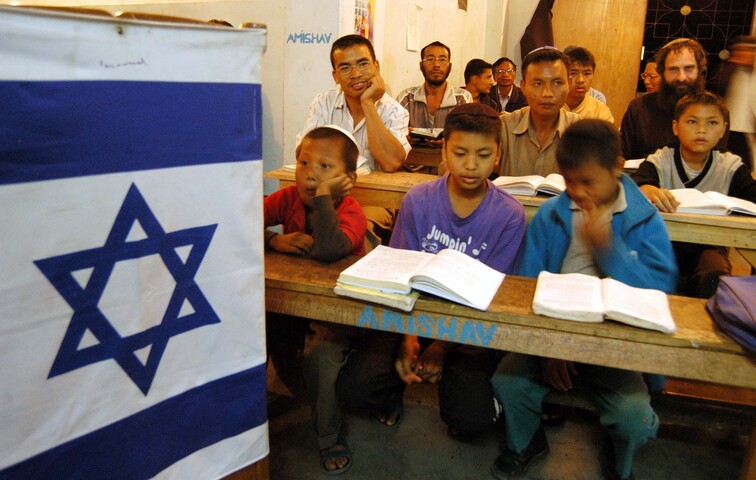
It is said that one sees more Israeli flags on Israel Independence Day in Papua New Guinea’s capital city of Port Moresby than in many Israeli towns (Parfitt 2016: 4). Aizawl —the capital of Mizoram and the state’s largest city—shares this character, perhaps not in the number of Israeli flags raised on that day, but in the names on storefront signs of shops and establishments that you see every day.
The Bnei Menashe phenomenon is the product of a process of reimagining historical myths and discovering that some of traditional Kuki-Mizo customs and practices had apparent similarities with biblical traditions. They turned to the legend surrounding Lost Tribes to validate their new identities.
By embracing the story of their Israelite ancestry, these communities are able to “restore dignity to their ancestors who had been denigrated by the missionaries”.
According to anthropologist Yulia Egorova, the Judaising movement among Kuki-Mizos was the outcome of their earlier Christianisation, but it can also be seen as a product of their dissatisfaction with Christianity and a desire to return to some of their pre-Christian traditions. By embracing the story of their Israelite ancestry, these communities are able to “restore dignity to their ancestors who had been denigrated by the missionaries” (Egorova 2015: 496). Historian David Vumlallian Zou makes the important point that the use of scripture in these types of arguments began only after the Mizo translation of the Old Testament became available (2010: 56–63).
Mizo poet and writer Mona Zote’s views on the issue are not inconsistent with these academic theories. Writing in 2005, she relates “the flutter over the Jewish Bnei Menashe question” to a misalignment between the specific form of Christianity that many Mizos embraced, and their pre-Christian beliefs and practices.
Mizos grew up under “John Calvin's gaunt shadow”—far away from the birthplace of Calvinism—adopting some of the “humourless” aspects of this version of Christianity such as its strict moral requirements, even though there is nothing in their own history to support such a rigid outlook. Nonetheless, the missionary encounter turned Mizos into “fervent Christians”.
Moreover, the Mizos, as Mizo historian Pachuau puts it, “are not ‘Mizos only’, but Mizo Kristian or ‘Christian Mizos’.” Whether they attend church or not, most Mizos belong to a church (Pachuau 2014: 137–138). It is not a surprise that they are both confused about their identity and aggressively proud of it, as Zote suggests. The claim of the lost tribe of Israel, she believes, is yet another sign of internal dislocation, which is caused by “religious obsession”. The Bnei Menashe, in her view, serves as a metaphor for a “subterranean crisis of identity” (Zote 2005: 203–212).
Becoming a “Lost Tribe”
A pivotal figure in the group's history was the Israeli Rabbi Eliyahu Avichail (1932–2015), who steered the Kuki-Mizo Judaizing movement in a direction that no one could have predicted. The picture one gets from a profile published in Degel Menashe, a web publication connected to the Bnei Menashe community in Israel, is that the community gratefully remembers him for his efforts “to reconnect them with their Jewish roots and facilitate their journey back to Israel”.
Indeed, Avichail became a strong advocate for the community, pleading with the Israeli government “to recognise their Jewish identity and facilitate their immigration to Israel”. Elitsur Haokip (alias Siekhogin), who was born in a village near Imphal and now lives in Israel, remembers Avichail as “the one who had found us” and “taught us to be Jewish” Haokip Interview 2022: 50–51).
Avichail was a follower of Zvi Yehuda Kook, the religious Zionist leader who supported the settler movement that arose when Israel took over Gaza and the West Bank in 1967. Rabbi Kook Yeshiva is Jerusalem where Avichail studied is described as the “intellectual bastion of modern Israeli Orthodoxy” (Halkin 2002: 8). During the 1980s and 1990s, Avichail visited Manipur and Mizoram several times, teaching “the rudiments of modern Israeli-style Orthodoxy in Aizawl and in Imphal (Halkin 2002: 57).” He also brought a few individuals to Israel and arranged for their training to become educators in Orthodox Judaism in Manipur and Mizoram.
Ruth Binyamin (b. 1943, previous name Lawmthangi), who was born in a village in Mizoram and has lived in Israel since 2001, narrates her journey to becoming an Orthodox Jew this way: “In 1982, Gideon Rei and Shimon Gin travelled to Israel to learn about Judaism. We had a donation drive for Gideon’s trip. Gideon came back with books and religious articles and taught us how to pray as Jews. Little by little, others left for Israel, too, and sent us more materials. Some came back to visit and taught us things. Every few years Rabbi Avichail came to visit and taught us too” (Binyamin Interview 2022: 120).
Eliyahu Avichail (1932–2015), an Israeli Rabbi, had a pivotal role in the group’s history, yet he took the Judaising movement among Kukis and Mizos in a direction that no one could have predicted.
Drawing on her 20-year experience of living in Israel, Binyamin says that by the late 1980s or early 1990s, the way they practised Judaism in Mizoram became a lot like how they do it now that they are in Israel. However, she points at an interesting difference: “Back then we celebrated all our holiday meals communally, not just the families the way we do in Israel” (Binyamin Interview 2022: 120).
In 1982, Avichail created the organisation Amishav (“My People Returns”). Its mission was to find lost tribes and “reconvert” them to Judaism so that the Messianic era could begin (Egorova 2015). Tamara Neuman, a political anthropologist, believes that by being strategic about his mission, Avichail was able to get the backing of influential Israeli religious and political figures. For example, in order to gain what amounts to an official “lost tribe” recognition, he chose groups that appeared to be similar to what settlers imagined the “original Jews” to be like (Neuman 2018: 156).
Evidently, Avichail made the right bet with Kuki and Mizo converts to Orthodox Judaism.
The Bnei Menashe began coming to Israel on tourist visas in 1989 with Avichail’s assistance. After completing their conversion studies at a yeshiva in Jerusalem, they officially converted to Judaism, became Israeli citizens, and settled there. However, since 2004 these activities have been taken over by Shavei Israel (Israel Returns), a new organisation that has expanded the opportunities for Kukis and Mizos that were willing to accept Orthodox Judaism, to learn Hebrew, and prepare for conversion. Shavei Israel’s assistance has been crucial for the Bene Menashe migration to Israel up until now (Egorova 2015).
Recognition and Later
Support for the relocation of the Bnei Menashe from India to Israel, their conversion to Judaism, and their settlement in Israel has increased significantly over the last 20 years. This has become possible because private philanthropies in the West and the Israeli government have made enormous resources (especially considering economic conditions in Manipur and Mizoram) available for the mission of “re-converting” the found “lost tribes” to Judaism and getting them to “return home” to Israel.
Consider this passage from an article in the New York Times published on 24 July 2005: “Finally, Eckstein rose to speak. He had an announcement. The lost Hebrew tribe of Bnei Menashe had been discovered—after two and a half millennia—in northeastern India. Its authenticity had been certified by the Sephardic chief rabbi of Israel. The tribe—6,000 strong—wanted to “return” to the Holy Land. Taking them and getting them settled would run to about $8 million, and Eckstein had already informed the government of Israel that he would pick up the tab.”
…[P]rivate philanthropies in the United States and the Israeli government have made enormous resources … available for the mission of “re-converting” the found “lost tribes” to Judaism and getting them to “return home” to Israel.
The reported event was a staff meeting of the International Fellowship of Christians and Jews, a Chicago-based philanthropy, then headed by Yechiel Eckstein, which receives a large portion of its funding from evangelical Christians. About 400,000 evangelical Christians had donated a quarter of a billion dollars to Jewish causes through this organisation during the previous eight years.
At that meeting, Eckstein informed his staff of the major financial commitment he just made to the Israeli government to cover the full expense of relocating the 6,000 members of the “lost Hebrew tribe of Bnei Menashe” from Northeast India to Israel. This came less than four months after the Sephardic Chief Rabbi of Israel announced his decision, which remains disputed till this day, to recognise the Bnei Menashe as zera Yisrael—literally, “seed of Israel”—or descendants of Israel.
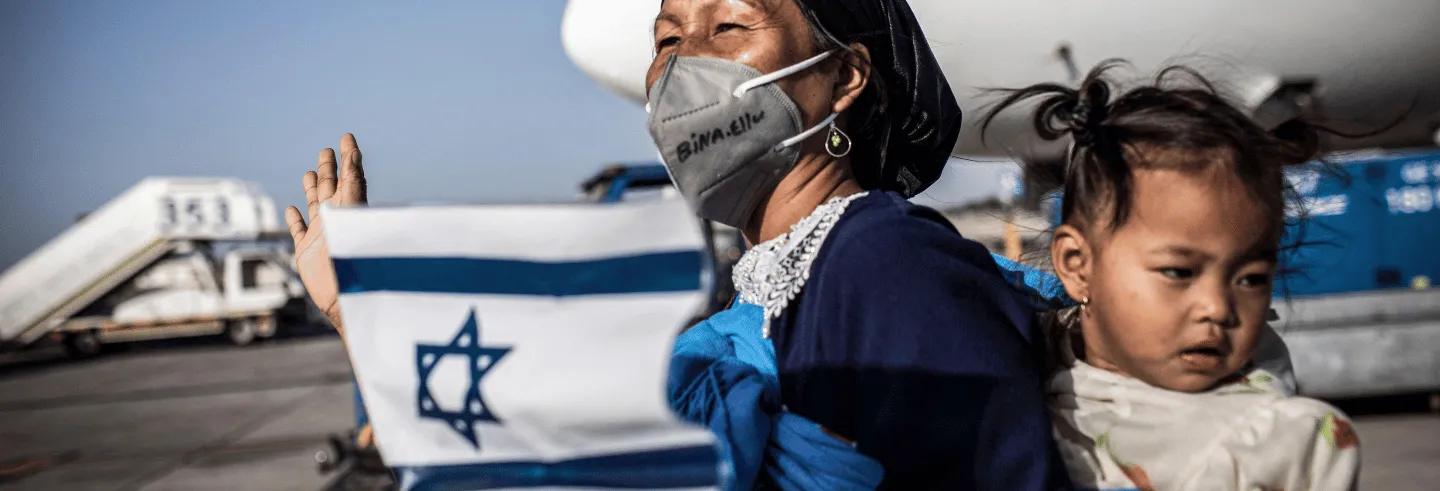
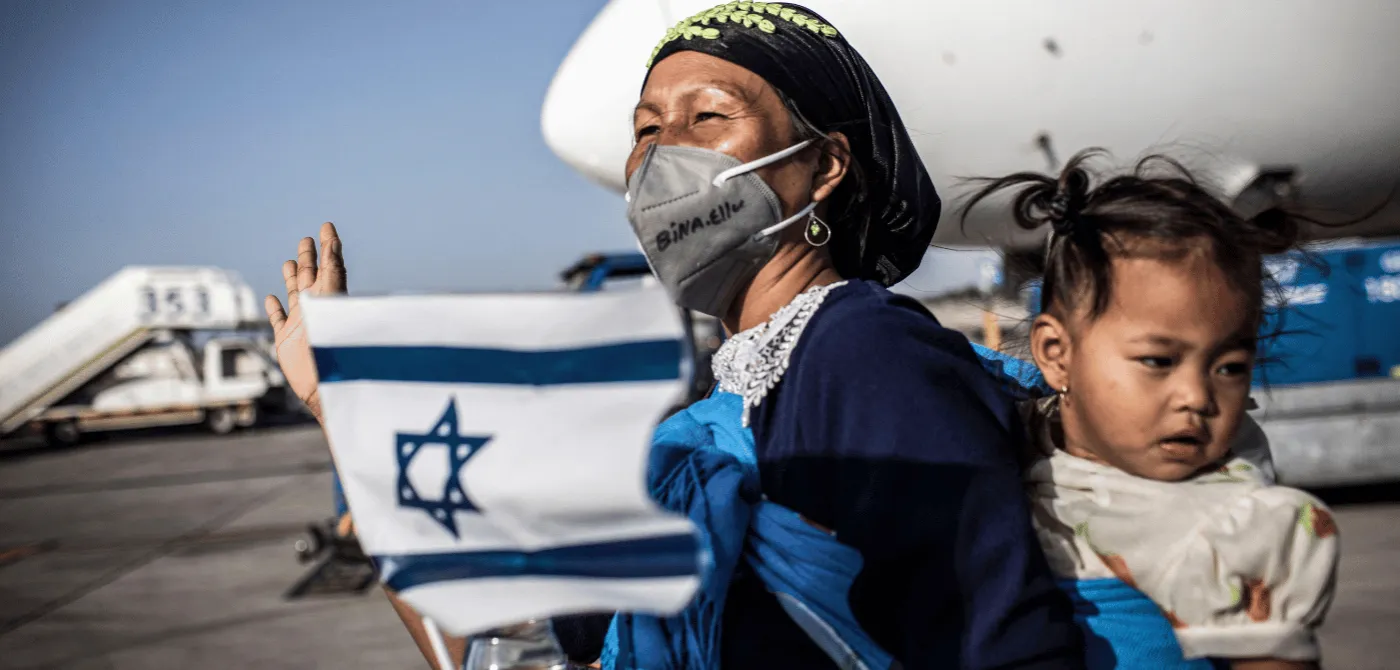
Fast forward to 2025. A plan to bring “all remaining 5,800 members of the Bnei Menashe community” from India to Israel by the end of 2030 was approved by the Israeli government in November of last year. There are reportedly already 4,000 of them living in Israel. The plan is to bring 1,200 of them from India to Israel this year, and the rest over the next five years.
Personnel from the Chief Rabbinate’s office will be sent to northeast India to conduct “background checks of community members and confirm their ties to Judaism and the local Jewish community”. Approximately $30 million has been earmarked to cover flights, housing, classes for conversion to Judaism, Hebrew instruction, and other special benefits. Prime Minister Benjamin Netanyahu described it as “an important and Zionist decision”.
The fact that the Chief Rabbinate, Israel’s highest rabbinic authority for Judaism under Israeli law, will be involved in bringing “the remaining 5,800 members” of the Bnei Menashe community to Israel, as well as the fact that the cost for classes for conversion to Judaism is included in the Israeli government’s budget, highlight the unusual way in which the migration of Bnei Menashe to Israel is managed. To understand it, one needs to look at Israel’s Law of Return.
The term “aliyah”, according to political theorist and legal scholar Ayelet Shachar, reflects the unique ideological standing that Jewish migration to Israel holds within Zionism. The Hebrew word has “particular and strong connotations of self-fulfillment and ascent”, which is not effectively conveyed by the English term “immigration”.
It bears emphasis that moving to and settling in Israel—to “make aliyah”—is conceived as a right of “every Jew”; hence the “right of return”. Such an open welcome can only be understood in the historical context of July 1950, when the Law of Return was adopted by the Israeli Knesset against the backdrop of the Holocaust, and of Mandatory Palestine (1920–1948), when there were restrictions on the number of Jews permitted to enter the territory.
In consideration of Indian sensitivity to mass conversion within its borders, Israel has chosen to organize the migration of Bnei Menashe to Israel in an ingenious way, with conversion to Judaism taking place at the Israeli end.
The Law of Return was designed to make it abundantly clear that nearly all Jews can now come and settle in the new state. It is no surprise that the question of “who is a Jew”—and thus eligible for the right of return—has been a contentious issue in Israel ever since its founding (Shachar 1999: 233–272). Since the Lost Tribe communities are not considered Jewish according to Jewish religious law, they cannot settle in Israel under the Law of Return without conversion (Egorova 2015). In response to this legal situation and in consideration of Indian sensitivity to mass conversion within its borders, Israel has chosen to organize the Bnei Menashe migration to Israel in an ingenious way, with conversion to Judaism taking place at the Israeli end.
It should be clear by now that the trajectory that the Bnei Menashe movement has been on, as it tries to establish itself as a recognised lost tribe in Israel, is largely due to outside help and attention, which they, undoubtedly, eagerly sought.
The last point becomes clear from an experience that Halkin writes about in Across the Sabbath River. He was a guest at a Bnei Menashe wedding in Israel. He found that everything about it—the canopy, the ceremony, and the singing and dancing—was modern Orthodox Jewish. “There was nothing Mizo in evidence except Mizos.” He admits to being saddened by the sight. But then he catches himself, remembering that the Bnei Menashe wanted it: “They were eager to try on their new identity, on which they had made a large down payment. . . Once more an old life had been abandoned like a village in the jungle. When all was said and done, Avichail was not much different from the missionaries” (Halkin 2002: 182).
It all began in 1979 when a group identifying as “Jews of northeast India” sent a letter to the head librarian at Hebrew University in Jerusalem asking for information about Judaism. The letter found its way to Avichail; he replied and got a response back. Three years later, he tried to go to Manipur and Mizoram, but he was forced to return from Kolkata since those areas were closed to all foreign visitors because of the Mizo unrest.
Avichail went back to Kolkata the next year after being assured that he would be given permission. Again, he was not. But this time, “a delegation of northeast Jews” came to see him in his hotel. He was “the first truly knowledgeable Jew” that the Kuki-Mizo visitors had ever met. They beseeched him to teach them everything they should know about their “new religion” (Halkin 2002: 55–56).
The rest, as they say, is history.
Fuzzy and Enumerated Communities
Figures like 6,000 and 5,800, supposedly the total number of Bnei Menashe in India (in 2005, and 20 years later), will startle those familiar with the Indian social realities. To borrow the vocabulary of political theorist Sudipta Kaviraj, Northeast India is not exactly a world of “enumerated or counted communities”—it is mostly a world of fuzzy and unenumerated communities (2010: 13). It is perhaps not an accident that we have been getting such precise Bnei Menashe membership figures from places where people “live in a world that is wholly, unsurpassably, classified, enumerated—a world securely distributed into tables” (Kaviraj 2010: 198–199).
…[T]here are two different ways of seeing the Bnei Menashe “community” and the choice we make has consequences for the personal and social lives of hundreds of thousands of Kukis and Mizos.
Indeed, there are two different ways of seeing the Bnei Menashe “community”; and the choice we make has consequences for the personal and social lives of hundreds of thousands of Kukis and Mizos. For Halkin, “The Bnei Menashe of India and Israel are a new Jewish community—unless, as it has been claimed, they are remnants of the oldest” (2022: vii).
Using the social science language of “constructivism”, one can say that this definition entails drawing strict boundaries between a relatively small group of actual and potential converts to Orthodox Judaism and a larger group: their co-ethnics. This larger group includes family members, participants in Judaic or partially Judaic religious movements, as well as practising Christians.
The larger group may be even larger geographically since the majority of Kukis and Mizos, as well as others in the Kuki-Chin-Mizo group, as I have indicated, share a broadly similar worldview (van Schendel 2025: 594). Many of the traditions, beliefs, and practices between the narrowly defined and the broadly defined group may be similar, including the belief in being a member of the lost tribe of Menashe; and peoples and groups have been moving from one side of the line to the other for a while, and will continue to do so (I borrow some of the vocabulary from Wimmer 2008: 970–1022). Achieving a clear differentiation appears to be the goal of what the Israeli government’s November 2025 decision calls “background checks of community members” to be conducted in Manipur and Mizoram to “confirm their ties to Judaism and the local Jewish community.”
Transborder Solidarities
In these circumstances I find Shillong-based Mizo journalist and environmental activist Linda Chhakchhuak’s observations regarding the 2005 recognition of the Bnei Menashe as “descendants of Israel” by the Sephardic Chief Rabbi of Israel remarkably interesting and provocative.
Mizos are now officially direct participants in modern Israel’s national dreams and nightmares.
“For as one can see the ‘recognition’ under Aliya Law has, in one stroke made a belief of a vague link between Israel and the Mizos, into a ‘historical reality’ and a political ‘fact’. Believer or not in Israelite ancestry, no person from the Kuki-Chin-Mizo tribes (called Mizos for convenience in this article) scattered across three countries of Burma, India and Bangladesh is left untouched by this development as it serves to sweep them all into the arc of the Jewish Diaspora. If they wish, they can learn Hebrew, the torah, convert and go home. That’s how personal it has become. Mizos are now officially direct participants in modern Israel’s national dreams and nightmares.”
Evidently, within the fuzzily conceived transborder community that academics (including this author) have only described using a vague and unsatisfactory phrase like the Kuki-Mizo-Chin group, there are organic intellectuals pondering the potential effects of an important decision made in distant Jerusalem on them. If we do not grasp such solidarities, it is because, as Arjun Appadurai points out in another context, “no idiom has yet emerged to capture the collective interests of many groups in translocal solidarities, cross-border mobilisations, and postnational identities”. It also reminds us that the nation-state is not the only game in town (Appadurai 1993: 411–429).
Sanjib Baruah (baruah@bard.edu) writes about the Indian Northeast. His last book, In the Name of the Nation: India and its Northeast, was published by Stanford University Press in 2020.