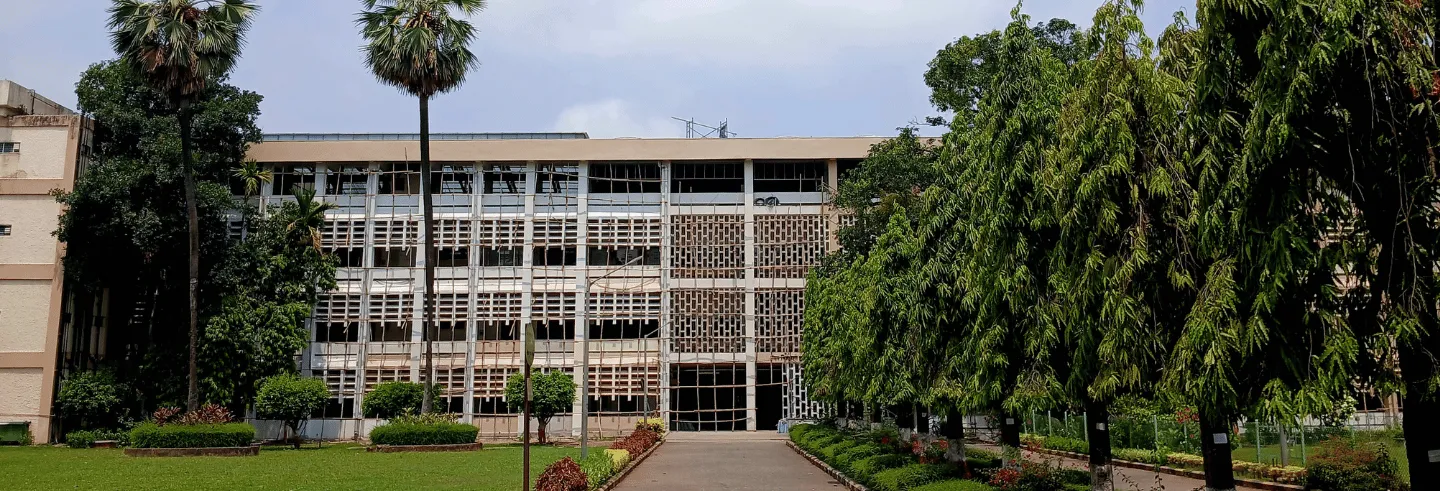
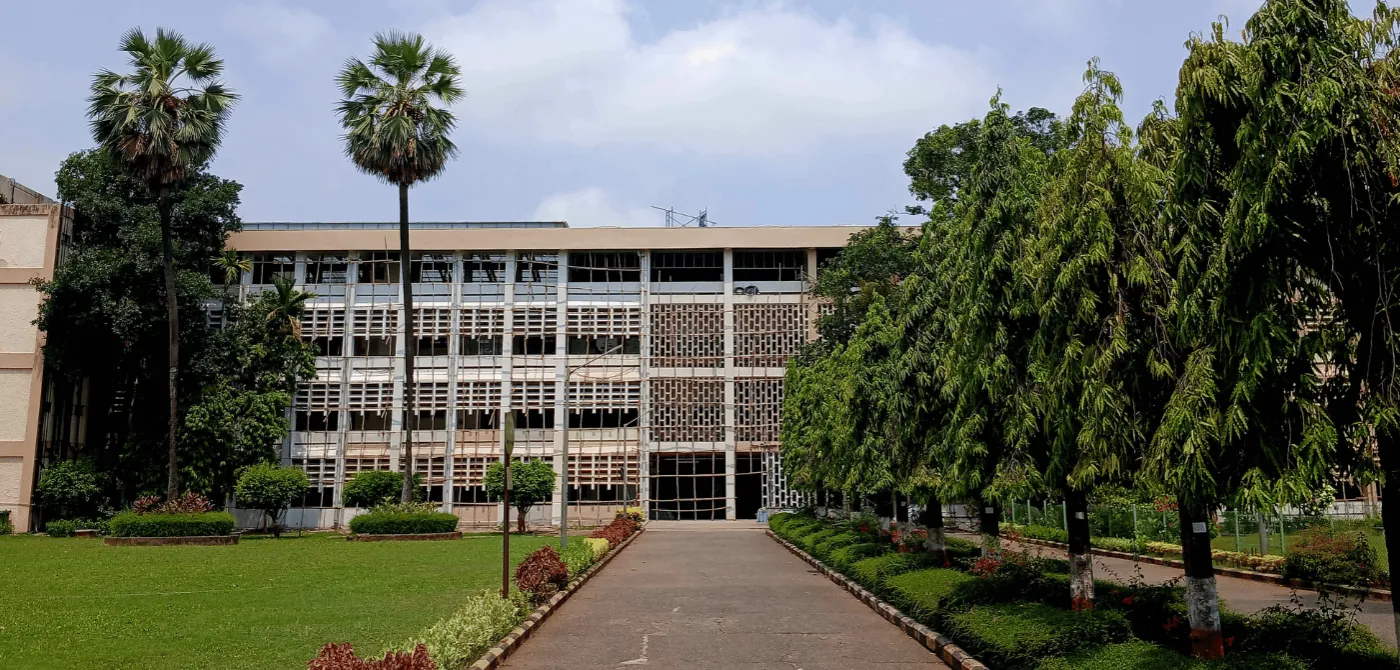



Sahil Wakode, a second-year B.Tech student at IIT Bombay, who belonged to the Dalit community, died by suicide hours after a professor accused him of cheating during a mid-semester examination in September. The charges remain unproven, and the events during the examination went against the institution’s formal procedure of invigilators not making a judgment on the spot.
We must think about how to establish alternative IITs, and other institutions of national importance for a large majority of caste-oppressed students.
He was a victim of caste discrimination. For caste-oppressed students, education is one of the very few ways to upward mobility. When Wakode was threatened by the invigilator (Thave and Smart 2026) with ‘destroying’ his academic career, he could not help but take his own life.
This case was the latest instance of caste-oppressed students dying by suicide at premier higher education institutions. In IIT Bombay itself, there have been two other instances: Darshan Solanki in 2025 and Aniket Ambhore in 2014. Despite protests in the past and now, little has been done to properly investigate the death and the caste discrimination students face. On the other side, alumni and faculty fora —overwhelmingly comprising upper-caste faculty—have come in support of the professor accused of caste discrimination against Wakode.
If the IITs persist in imagining themselves as institutions of exceptional ‘merit’ which is destroyed by the presence of caste-oppressed students, the question should not be about how to reform these Brahminical institutions. Rather, we must think about how to establish alternative IITs, and other institutions of national importance for a large majority of caste-oppressed students.
Caste Power and Casteism
The “things that are killing our Dalit students in premier universities – loneliness, isolation, depression – are not disjoint individual things but intrinsically linked to how our campuses are built on caste,” a columnist noted. Higher education institutions of national importance have long been dominated by upper castes. The IITs have not complied with constitutional mandates for reservations in faculty recruitment. Scheduled Caste faculty make up only 2.5% of 6,043 faculty positions across 23 IITs, against the mandate of 15 %, and there are just 21 faculty members who belong to the Scheduled Tribes, less than half a percent against the mandated 7.5%.
The collective caste power and privilege upper caste professors and alumni exercise over marginalised students in educational institutions are experienced as a form of casteism in the academy. At higher education institutions, SC, ST, and OBC students regularly experience indifference, humiliation, and hostility from faculty members and fellow students alike. The high dropout rates and deaths by suicide are predominantly linked to such caste violence. Between 2019 and 2023 (the most recent data we have), a combined 8,139 SC, ST, and OBC students dropped out of the IITs, government data show. Data also show that 62% of the 45 students who died by suicide at IITs between 2020 and 2025 were from SC, ST, and OBC backgrounds. It is striking to note that this proportion is higher than their mandated reservation of 49.5%.
It is important that the separate IITs for caste-oppressed be fully staffed by members of Dalit & Tribal communities, to prevent students from experiencing caste discrimination at the hands of Brahmin and UC professors...
The persistent caste discrimination and the alarming rates of dropouts and deaths by suicide suggest that IITs are exclusive educational institutions for generationally privileged upper caste students. This brings us back to the very fundamental question: what is to be done to ensure quality of higher education for caste-oppressed students in India when existing institutions neither support nor adhere to reservation policies or affirmative action?
The answer lies in establishing institutions similar to the Historically Black Colleges and Universities (HBCUs) in the United States. The HBCUs played a crucial role in enrolling and educating Black students from disadvantaged and low socioeconomic backgrounds at a time when educational institutions were racially segregated (Price and Viceisza 2023). They became spaces for Black intellectual, professional, and political development, and allowed for the community to organise during the Civil Rights Movement in the 1960s. Even after the end of legalised segregation in public education, HBCUs continued their historical mission of educating blacks while admitting students irrespective of race or ethnicity (Johnson et al. 2017).
Similarly, the establishment of Tribal Colleges and Universities (TCUs) in the United States from 1968 onwards remarkably improved the higher education status among American Indians and Alaska Natives in a short period of three decades (Pavel et al. 2001). Apart from enrolling students deprived of higher education, they also took in graduate students who had dropped out from other institutions, as well as sponsored community development programmes.
The parallels in India would be colleges and universities for Muslims, and for Women,1 which has been successful in promoting higher education amongst religious and gender minorities. Taken together, the experiences in the United States and India indicate that separate institutions do not intensify segregation based on race, gender, or religion; instead, they help to develop talent and confidence amongst Blacks, Indigenous Peoples, Muslims, and Women, groups that have historically been labelled as lacking merit and unworthy of higher education. Separate IITs and other institutions of national importance too can be effective for promoting social justice and for improving the educational status of historically caste-oppressed groups in India.
In 1945, Ambedkar founded the People’s Education Society (PES) to promote education amongst Scheduled Castes and Buddhists who had converted from the Scheduled Castes. The society established several colleges, including the Siddhartha Group of Colleges and the Milind Group of Colleges, largely in Maharashtra (BAWS 2014). Many Dalit leaders and bureaucrats from the state were products of these institutions. In recent times, these institutions have been severely affected by the shortage of funds from the government.
A more recent attempt came from the Telangana Social Welfare Residential Educational Institutions Society (TGSWREIS), which proposed to establish an exclusive Dalit university in Telangana to address the problem of rampant caste discrimination in education. The proposal was appreciated by the then chief minister of Telangana, K Chandrasekhar Rao. This plan was an ambitious upgrade of TGSWREIS’s existing project of running residential schools and undergraduate colleges for Dalit and tribal students. Students at these institutions had shown improved academic performance. Several alumni had gone on for higher education to the IITs and other premier institutions—where they had to confront caste discrimination, just like caste-oppressed students from elsewhere.
The fairness of academic competition also needs to be debunked, as there is no level playing field for those from disadvantaged backgrounds.
Hence, a demand for separate IITs should not be based on an argument of nurture, given the fact that the IITs inevitably discriminate against SC, ST, and other marginalised students. Exclusive institutions are effective for nurturing and protecting vulnerable groups, but they do not prevent students from experiencing caste discrimination when they join mainstream institutions.
One might also ask: while separate institutes may serve the purpose of educating caste-oppressed students, like HBCUs educating Black students, can they be substituted for top institutions, as there are no Black Harvards, or Black Cambridges, or Black Oxfords? Why should caste-oppressed students be discouraged from joining mainstream IITs by establishing separate IITs for caste-oppressed students?
If caste-oppressed students are constantly made to feel that they do not belong to mainstream educational institutions, there is a necessity to find alternatives for quality education without making them victims of discrimination and institutional murder. This is only possible when they have exclusive institutions, like IITs for caste-oppressed students. If separate universities could be established for Hindus (like the Banaras Hindu University), for Muslims (Aligarh Muslim University and Jamia Millia Islamia), for Women, and for the so-called Tribal universities (even though they are not fully Tribal or Indigenous), why not separate IITs for Dalits and caste-oppressed students? This proposal does not in any way discourage Dalits or caste-oppressed students from attending mainstream IITs, any more than Hindus, Muslims, Women, or Tribals are.
It is equally important that these separate IITs for caste-oppressed be fully staffed by members of Dalit and Tribal communities, to prevent students from experiencing caste discrimination at the hands of Brahmin and upper caste professors and administrators. It is no exaggeration to say that there are sufficient numbers of scholars and administrators from Dalit and Tribal communities who can successfully run these IITs (contrary to Brahmin and upper caste leadership of institutions like IIT Mandi or IIT Madras who openly promote pseudoscience).
A Meritless Argument
For all talk of ‘merit’, not a single IIT has broken into the top 100 list in the QS global rankings of higher educational institutions. The IITs reproduce what Bourdieu calls social hierarchies and cultural capital in terms of rendering good academic degrees, jobs, and alumni networks for privileged Brahmin and upper caste students, but also change the habitus of caste-oppressed Dalit and Tribal students. What the IITs do well is transforming generational caste privilege of UC into ‘merit’ (Subramanian 2019).
Alternative IITs and institutions of national importance for caste-oppressed students would counter the reproduction of caste inequalities.
Merit should not be merely reduced to performance without acknowledging socio-economic inequalities in educational opportunities in terms of family income, access to private education, or tuition facilities. Similarly, the fairness of academic competition also needs to be debunked, as there is no level playing field for those from disadvantaged backgrounds. It is difficult to have a fair education system in so-called neutral institutions because students come from different family backgrounds (Brown et al. 2016).
Alternative IITs and institutions of national importance for caste-oppressed students would counter the reproduction of caste inequalities. They would develop a pedagogy where the caste-oppressed would be an active producer of knowledge rather than becoming the subject of research. Drawing on Paulo Freire’s (2005) pedagogy of the oppressed, it can be envisioned that the caste-oppressed will not try to become new oppressors by overthrowing the Brahmin UC oppressors. Instead, the caste-oppressed will destroy the dehumanising caste hierarchy. It is only the caste oppressed who could emancipate both themselves as well as Brahmin and upper caste oppressors.
Jyoti Bania is an indigenous Scheduled Caste scholar from Assam who earned his PhD in Women’s Studies from Tata Institute of Social Sciences, Hyderabad. Ashok Danavath is a first-generation tribal scholar pursuing his PhD at the Amsterdam Institute for Social Science Research.
- 1
In this essay, we use 'Women' (in uppercase) to denote them as a marginalised gender identity rather than considering women only as gender; a sociological variable to resist and decentralise the conventional, hegemonic language.