



Roll Out of Special Intensive Revision
Article 324 of the Constitution of India provides that the superintendence, direction, and control of the preparation of electoral rolls for the conduct of elections shall vest with the Election Commission of India (ECI). Section 21 of the Representation of the People Act, 1950 deals with the preparation and revision of electoral rolls. It authorises the ECI to carry out a special revision of the electoral roll for any constituency at any time for reasons to be recorded.
If the SIR is founded on a legitimate purpose, are the measures adopted by the ECI proportionate to the object that is to be achieved?
In its order in June 2025 for carrying out a Special Intensive Revision (SIR) of Bihar’s electoral rolls, the ECI had noted that there had been large-scale additions and deletions to the electoral rolls over the last 20 years because of rapid urbanisation and migration. This had increased the possibility of duplicate entries in the electoral roll.
The ECI stated that it is also constitutionally obligated to ensure that only citizens are enrolled on electoral rolls. Accordingly, it had decided to carry out an SIR exercise for the entire country, starting with Bihar. Subsequently, an SIR has been carried out in phases to cover all the states and union territories of the country except Himachal Pradesh, Jammu and Kashmir, and Ladakh. They are proposed to be taken up after the census is completed in these hilly regions.
Issues Raised in Supreme Court
The Association for Democratic reforms and various other petitioners had challenged the SIR exercise in the Supreme Court. The key issues mentioned in these petitions are summarised here.
First, whether the ECI is empowered to carry out the SIR exercise. Section 21(3) of the Representation of the People Act authorises the ECI to carry out a special revision of electoral roll for “any” constituency or part of a constituency in such manner as it may think fit. The petitioners argued that this provision is for special revision of only a particular constituency and not for a state as a whole as envisaged in the SIR process.
Second, if the SIR is founded on a legitimate purpose, are the measures adopted by the ECI proportionate to the object that is to be achieved? Third, is the procedure violative of provisions of the Representation of the People Act and the Registration of Electors Rules, 1960?
The petitioners argued that enrolment on the electoral roll carries with it a presumption of citizenship and eligibility. Rule 21A of the Rules mandates that no name already entered in the electoral roll can be deleted without prior notice to the elector concerned and an opportunity of hearing. The petitioners argued that requiring all electors to again fill up the enumeration forms and deleting the names of those who fail to submit the enumeration forms is violative of these provisions.
Fourth, is the ECI empowered to scrutinise the citizenship status of persons seeking inclusion or continuation on the electoral roll?
Supreme Court on Bihar SIR
The Supreme Court after hearing the petitioners and the ECI upheld the Bihar SIR exercise and procedure followed in May 2026. The conclusion of the court for four main issues raised can be summarised as follows.
Any deletion of names on account of the opinion of the ECI that they are not citizens should be referred by the commission to the competent authority under the Citizenship Act, 1955 for adjudication.
First, interpretation of the word “any” in Section 21(3) of the Representation of the People Act as “only” for a particular constituency would be narrow and restrictive. The ECI is well within its constitutional mandate to carry out an SIR for “many” or “all” constituencies in a state. It is an exercise traceable to Section 21(3) read with Article 324 of the Constitution to fulfil the constitutional requirement of free and fair elections.
Second, the SIR exercise satisfies the requirement of proportionality. The measures adopted bear a rational nexus to the objective sought to be achieved, are not manifestly excessive, and are accompanied by sufficient procedural safeguards to prevent arbitrary exclusion.
Also read: Explainer: What is the Special Intensive Revision of Electoral Rolls? by Rangarajan R.
Third, while inclusion on the electoral roll gives rise to a presumption of validity, it does not impose a blanket prohibition on the powers of the ECI to undertake an SIR. The safeguards of notice and hearing under the Registration of Electors Rules are preserved in substance, and the process adopted by the ECI is within the statutory requirements. The documentation prescribed by the ECI, to which the Aadhar card was subsequently added as per the court’s direction, is based on intelligible criteria having a direct nexus with the objective of ensuring the integrity of the electoral roll.
Fourth, the ECI is empowered, in the exercise of its constitutional mandate, to undertake a limited enquiry into citizenship for the purpose of eligibility for inclusion on the electoral roll. It does not amount to determination of citizenship in the strict sense and is confined to electoral consequences alone.
Any deletion of names on account of the opinion of the ECI that they are not citizens should be referred by the commission to the competent authority under the Citizenship Act, 1955 for adjudication. If the authority holds that such deleted individuals are citizens, they shall be included on the electoral roll.
Comparison with Earlier SIR
Even after the Bihar SIR-related ruling, the Supreme Court has continued to hear petitions challenging the SIR process in other states and deletions because of this exercise. The SIR process has resulted in the deletion of around 13.3 crore voters across three phases. Around 2.7 crore (20%) were deleted due to death and 1.01 crore (8%) were flagged as duplicate entries. The significant portion of 9.5 crore (71%) fall under the Absent, Shifted or Others category. Many of these 9.5 crore voters could be eligible for re-enrolment on completion of the SIR process. So, a comparison of the current SIR process with previous SIRs conducted between 2002 and 2004 becomes important.
As for citizenship, the guidelines specified that the onus of proof of citizenship shall lie on the applicant who applies for inclusion of his or her name for the first time.
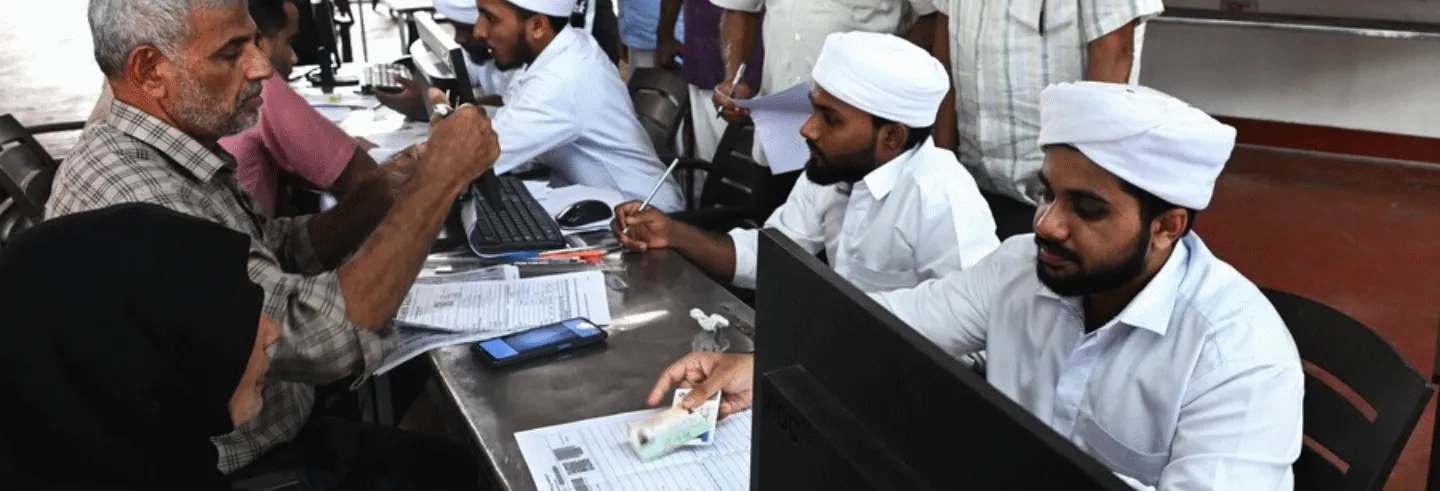
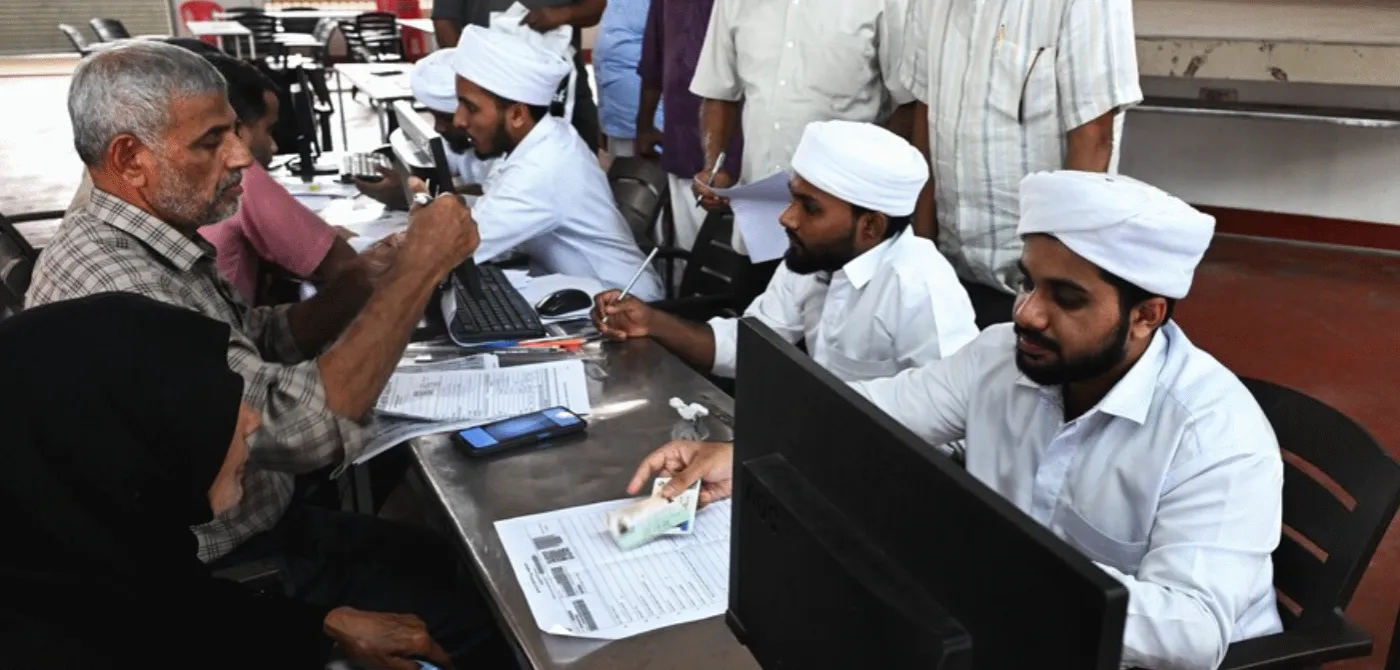
SIRs have been conducted on eight different occasions in the past with the last one conducted between 2002 and 2004. The key guidelines issued in May 2002 for the last SIR, which have a bearing on the issues raised about the current SIR, are summarised here.
First, an SIR requires enumerators to conduct door-to-door verification using a preliminary list generated from the existing roll. Elected panchayat members can be voluntarily involved in assisting during this process.
Second, detailed guidelines were provided for supervision. Supervisors were required to randomly check at least 25% of the households covered by enumerators. Where an enumerator reports to the supervisor that a particular house has been locked during repeated visits, the supervisor was to visit that house to verify the fact. Senior officers—Electoral Registration Officers (EROs), Assistant Electoral Registration Officers (AEROs), and District Election Officers—had to check a minimum 12%, 5%, and 2% of the households, respectively.
Third, as for citizenship, the guidelines specified that the onus of proof of citizenship shall lie on the applicant who applies for inclusion of his or her name for the first time. However, it also drew reference to the guidelines laid down by the Supreme Court in Lal Babu Hussain and Others (1995), which requires the Electoral Registration Officers to attach adequate “probative value” to their presence on the already existing rolls.
Fourth, electors who had shifted residence were treated like a “transfer” rather than a deletion. Their entries in the preliminary list were not erased but struck through and marked “S”. Enumerators had to record who reported the shift, in addition to the constituency or address to which the elector had moved. If an entire family had shifted, supervisors had to personally verify such cases.
Since all areas were enumerated at the same time, the shifted electors were enrolled at their new address during the same exercise. The Chief Electoral Officer acted as a clearing house to ensure that the old entry was deleted from the final roll. Only those missed at their new address had to apply during the claims and objections period.
Finally, it was categorically mentioned that claims and objections presented in bulk by any individual, organisation or political party should be refused and rejected summarily. The final roll should be prepared only after all claims and objections had been disposed of.
Key Issues with SIR
The key issues raised further about the SIR process are examined here.
First, electors who could not be found or who did not return or fill the form were excluded from the draft electoral roll, even if they had voted in previous elections. Unlike in 2002, those recorded as “shifted” were not enrolled at their new address through the same exercise. In the normal course, they would be required to file Form 8 (for shifting residence) at their new place of ordinary residence. If they are missed out, they would have to apply fresh through Form 6, which is meant for new electors.
This goes against the ECI’s own Manual on Electoral Rolls (2023), which requires that a shifted elector who can be traced should be served a notice, and in cases where they cannot be traced, a notice must be pasted at last known address in the presence of adult witnesses. The name can be deleted only after the notice period expires.
Software generated “logical discrepancies” that included spelling differences, more than six voters linked to one ancestor, and parent-child age gaps outside 15 to 45 years, resulted in arbitrary exclusion of lakhs of eligible voters.
Second, the requirements of supervision of the current SIR are not as elaborate as the last SIR. The notification before Bihar’s SIR mandates 10% random verification by supervisors and only requires regular monitoring meetings by Electoral Registration Officers with Assistant Electoral Registration Officers, supervisors, and Booth Level Officers to ensure that the work done is not superficial.
Third, the requirement on electors to trace themselves or a parent to the last intensive revision of rolls prepared almost two decades ago, or produce documents to establish citizenship, is perceived as shifting the onus of proving their qualification for inclusion on the rolls to common electors.
Fourth, software generated “logical discrepancies” that included spelling differences, more than six voters linked to one ancestor, and parent-child age gaps outside 15 to 45 years, among others, resulted in arbitrary exclusion of lakhs of eligible voters. Finally, there have been reports of filing of objection forms in bulk by individuals for removing names of electors from rolls at various places. To avoid filing of such objection forms in bulk on unsubstantiated grounds, the ECI only on 9 October 2026 issued instructions setting a cap of 10 forms that can be filed by an individual.
Apart from these procedural issues, there have also been legal issues that have been raised about the validity of a declaration attached to Form 6 (for enrolment of new electors), use of Form 6 for re-enrolment of electors deleted in the draft rolls, and the cumbersome procedure for disposal of a large number of appeals.
It is also pertinent to note that out of 83,000 appeals disposed of till August, the tribunals had allowed voters to be re-enrolled in around 75,000 cases.
The ECI has specified that no action would be taken on left out electors filling Form 6 when the form as per rules and the Representation of the People Act provide that it is a criminal offence liable for punishment. Several Supreme Court judgments have clarified that the ECI cannot give any direction in contravention of legal provisions. The ECI’s plenary power can be invoked only in areas left uncovered by law. It is a matter of debate whether the ECI can use its powers to condone or waive the violation of a laid down procedure.
After the Supreme Court raised questions about this issue, the ECI has come out with an instruction that voters in the Absent, Shifted, Deceased and Duplicate category can again submit the filled-in SIR form to the block-level officer for re-enrolment. It remains to be seen if the Assistant Electoral Registration Officers, Booth Level Officers, and even Booth Level Agents of political parties would show the same amount of energy in effectively carrying out this exercise for left out voters. It is to be noted that this procedure has been laid down by ECI only in States where the SIR exercise is still continuing and not in states where the final rolls have been published. Left out voters in such States will have to submit Form 6 for re-enrolment. This is another dichotomy in the process that has cropped up due to frequent changes and updates announced by ECI.
Another significant issue is the cumbersome appeal process that can be seen in West Bengal. The Supreme Court had ordered a special appellate mechanism in the state, which was initiated in March 2026. Appellate tribunals have been set up to dispose of appeals by Absent, Shifted, Deceased and Duplicate voters who claim to have been wrongfully left out of the electoral rolls.
However, out of more than 22 lakh appeals that have been filed for inclusion, only around 1.2 lakh had been disposed of till October 2026. It is also pertinent to note that out of 83,000 appeals disposed of till August, the tribunals had allowed voters to be re-enrolled in around 75,000 cases. This means that more than 90% of decided appeals have been ruled in favour of wrongfully deleted voters.
Way Forward
The right to vote is a crucial foundation on which our democracy rests. The SIR process along with its numerous changes announced from time to time have not satisfied the canons of simplicity and predictability that are foundational to any public procedure. Many opposition parties and civil right groups have demanded scrapping the entire SIR exercise because of the large-scale deletions that have happened. Considering the issues that this exercise has thrown up, such a demand cannot be dismissed as being only politically motivated. However, the exercise has been completed in many states and elections have been completed under the revised rolls, making such a demand practically inconsequential.
This Special Summary Revision should also be used to re-enrol voters who were wrongly missed out during the SIR process.
Nevertheless, the issues surrounding the SIR exercise need to be addressed and all eligible voters should be included in the electoral rolls in an expedient and timely manner. The following steps should be considered for this purpose.
There should be a detailed audit of the rolls finalised so far. Eligible claims for re-enrolment should be expedited, including through home visits, and the rolls have to be updated. The ECI has ordered a Special Summary Revision (SSR) in 14 states and three union territories with 1 January 2027 as the qualifying date. This is a routine exercise that is carried out periodically and before every general election under the provisions of the Representation of the People Act. This exercise should also be used to re-enrol voters who were wrongly missed out during the SIR process.
House-to-house enumeration should be mandatory wherever an SIR is underway, with voter rolls finalised only after resolving all claims and objections. Rather than shortcutting due process for upcoming state elections, the ECI can simply rely on Section 21(3) of the Representation of the People Act to conduct polls using the current rolls until the revision is properly done.
Rangarajan R. is a former IAS officer and author of Polity Simplified, a guide to the civil service exams.
The views expressed are personal.