



This paper draws attention to a disconcerting parallel between the historical evolution of Indian citizenship and that of the process by which the electoral rolls are revised and the Indian voter is identified. 1This paper is based on my Rajendra Vora Memorial Lecture, delivered in Pune on March 31, 2026. My thanks to Professors Suhas Palshikar and Rajeshwari Deshpande for the invitation. Both citizenship and the vote are today marked by similar exclusionary tendencies, in sharp contrast to the founding moment of the Republic, when the making of the electoral rolls as well as the legal provisions for citizenship were animated by an inclusionary impulse. In both, the exclusionary impulse targets very similar groups in our society, and it is no coincidence that these developments are occurring in a time of majoritarianism inducing a transition away from democracy.
Disenfranchisement is turning the vote into a dubious weapon of alienating citizens, not just from their political rights, but from citizenship itself.
It is common knowledge that the right to vote signifies who is included as a member of the demos. The vote is the primary political right of citizenship as membership of the polity because it stands for the right of adult citizens in a democracy to participate in the making of the laws by which they are governed and in determining the social, political, and economic organisation of society. As the core of democratic citizenship, the right to vote and participate in politics has come under attack in recent times, with disenfranchisement being remarked in countries as diverse as the United States and South Africa, Malaysia, and Zimbabwe. It is not surprising that electoral inclusiveness is lower in non-democratic regimes and electoral autocracies.
We are today witnessing this phenomenon on an unprecedentedly large scale in India. Disenfranchisement is turning the vote into a dubious weapon of alienating citizens, not just from their political rights, but from citizenship itself. This is occurring through an apparently innocuous administrative process—the Special Intensive Revision of the electoral rolls.
The revision of electoral rolls is a normal process in any democracy. The law provides for regular revisions to take account of both new voters as well as those who have died or moved away from the area where they were originally listed. This has been done through two types of processes, "summary revisions," conducted every year, and an "intensive revision," conducted every five years. In a summary revision, those eligible to vote, whose names do not figure on the electoral rolls, are required to fill up Form 6 to register themselves as voters. This would apply both to new voters as well as those who have shifted from another constituency. The intensive revision, undertaken every five years, is done through a physical house-to-house enumeration of voters by Block Level Officers of the Election Commission. Through these twin processes—summary and intensive—the electorate is expected to grow in size from one election to another. 2In the last General Election of 2024, there were 968.8 million voters registered across India, which represented an increase of about 8 percent from the number of registered voters in the previous General Election of 2019. In the decade and a half between 1998 and 2014, the electorate grew by 34.45 percent.
A new type of revision, called the Special Intensive Revision, was announced in October 2025. It has already been conducted in 9 states and 3 Union Territories, and is being implemented in 17 more states and 5 Union Territories. The Special Intensive Revision (SIR) is however projected to shrink, rather than enhance the electoral rolls by as much as 10 percent, or approximately 100 million voters. To make sense of this anomaly, it is instructive to situate the SIR in two parallel historical contexts: the ways in which the categories of citizen and voter have been constructed, and the way in which their relationship to each other has evolved.
In the first part of this paper, I will offer a brief history of citizenship law (including a brief account of the National Register of Citizens in Assam) and a parallel history of the voters' list. In the second part, I will discuss the SIR and its outcomes; and in the third and final part, I will flag similarities between the process being used in the SIR and the procedures envisaged in the National Register of Citizens and the National Population Register. Cumulatively, these will enable us to compose a picture of how the state has constructed and blurred the identities of citizen and voter to accomplish exclusion.
I
Universal adult suffrage was an idea to which the leaders of the Indian freedom movement were committed. 3We see this commitment echoed in a range of documents, from the Motilal Nehru Committee Report of 1928; the Karachi Resolution of 1931; and the Sapru Committee Report of 1945. Dr. Ambedkar argued forcefully that no qualification of education or property was acceptable because the suffrage itself would serve as an education. India's Constitution provided for universal adult suffrage regardless of gender, caste, religion, or tribal identity, making every vote count as equal to every other. It also provided for the most inclusionary principle of citizenship—jus soli—or citizenship based on birth on the soil of the country, regardless of parentage. In other words, the principles underlying both citizenship and suffrage were the same: universality and equality.
The work on the preparation of the electoral roll had already begun in September 1947, under the supervision of the Constituent Assembly Secretariat, and the first draft of it was ready just before the Constitution was enacted. As the historian Ornit Shani writes, Indians became voters before they were citizens (Shani, 2018: 5). In her book How India Became Democratic, Shani offers a rich account of the remarkable process of the making of universal adult franchise from 1947–1950, with the preparation of the draft electoral roll being based on the "anticipatory citizenship provisions" in the draft constitution. She shows how officials worked hard proactively to ensure the inclusion of the most marginalised groups, like pavement dwellers and domestic servants. The Constituent Assembly Secretariat played a key role in ensuring that Partition refugees could be enrolled simply on the basis of their intention to reside somewhere, as it was difficult for them—especially those in refugee camps—to fulfil the requirement of residential qualification. Similarly, the registration of women voters became challenging in the face of their reluctance to give their own names and give instead the names of their husbands or fathers. 2.8 million such women—who did not disclose their names—were excluded from voting in the first election. Contrast this with two contemporary facts: first, in 2024, the number of new women voters registered exceeded that of men; and, second, that the burden of disenfranchisement today, as a fallout of the SIR, is falling disproportionately on women.
One way or another, the term "illegal migrant" quickly and enduringly became the currency of political discourse, along with words like "infiltrators."
After Independence, the electorate expanded as did electoral participation, and the idea of democracy captured the imaginations of Indians in ways that came to be justly celebrated. In the First General Election, the voter turnout was 44.87 percent; in the most recent General Election of 2024, it was over 65 percent. There were phases when elections were seen as less than free or fair: in the days of what used to be called "booth-capturing"—party workers would just occupy a polling booth by force and stuff the ballot boxes with fake votes (Vaishnav, 2017). In the 1990s, many of these infirmities were rectified by a series of Chief Election Commissioners, who tried to strengthen the autonomy of the Election Commission of India, and the fairness and integrity of the electoral process. Paper ballots were replaced by Electronic Voting Machines between 1998 and 2001. These have produced their own controversies, but until the last few months, there has never been such widespread contestation over the franchise itself—with one singular exception.
This exception has arguably provided both the excuse and the template for exclusion across the length and breadth of the country. It emanates from the state of Assam where a powerful nativist movement led by students began in the 1980s, protesting against what they called the "swamping" of the state with "foreigners." This was a response to the entry, into Assam, of large numbers of immigrants in the aftermath of the 1971 war and the creation of Bangladesh. Many of these immigrants—numbering around 10 million—had acquired forms of what Kamal Sadiq (2010) has called "documentary citizenship" or paper citizenship, through what he described as "networks of complicity" and "networks of profit." These documents included ration cards and election cards, which had enabled them to vote in elections. The protest was fuelled by the fear that the immigrants were deciding the outcome of assembly elections, and culminated in a gruesome massacre, after which the students' organisations entered into the Assam Accord with the Rajiv Gandhi government.
To give effect to the provisions of the Assam Accord, two aspects of the citizenship law were amended in 1985. The first, relating to naturalisation, created categories of eligibility for citizenship based on the year in which a person had migrated. All those who came into Assam before 1966 were declared citizens; those who came between 1966–1971 were struck off the electoral rolls and asked to wait ten years before applying for citizenship; and those who came after 1971 were simply deemed to be illegal migrants. In 1997, the category of D-voters (doubtful voters) was introduced, with the Election Commission of India asking the Government of Assam to remove non-citizens from its voting list until their citizenship claim was established in the Foreigners' Tribunals. It is notable that the primary right of citizenship that came into question was the right to vote.
The second significant aspect of the 1985 amendment of the citizenship law was that it modified the provisions relating to citizenship by birth. Until then, anyone born on Indian soil could be an Indian citizen, regardless of their parentage. By this amendment, however, only individuals born before July 1, 1987, could be citizens regardless of their parentage. To be a citizen by birth, a person born in India between 1987 and 2003 must have one parent who is an Indian citizen. This signalled the first departure from the inclusionary founding idea of Indian citizenship.
The citizenship law was again amended in 2003, and this amendment had three notable features:
1. It made ineligible for citizenship any person born in India who had one parent who was an "illegal migrant" at the time of their birth. Since the term "illegal migrant" signalled the religious identity (Muslim) of many of the migrants from Bangladesh, it covertly introduced a religion-based exception into a religion-neutral law.
2. The Citizenship Rules were amended to exclude "minority Hindus with Pakistani citizenship" from the definition of "illegal migrants"; these minorities were destigmatised. The stigma of the term "illegal migrant” would no longer attach to Hindu migrants who had come in from Pakistan, into the border states of western India, Gujarat and Rajasthan. If the amendment to the Act smuggled in a religious category covertly by the term "illegal migrant," the amendment to the Rules did so explicitly by exempting Hindus from this category. One way or another, the term "illegal migrant" quickly and enduringly became the currency of political discourse, along with words like "infiltrators."
3. Finally, the 2003 amendment provided for a National Population Register and a National Register of Citizens. These provisions lay forgotten and unnoticed till December 2019.
The comprehensive amendments to the citizenship law in December 2003 provide us with the political and legal context in which the CAA 2019, the most recent amendment to the law on citizenship, was enacted, giving unambiguous voice to exclusion based on religion.
Meanwhile, in 2015, the Supreme Court asked for a court-monitored National Register of Citizens to be conducted in Assam. By the time it concluded in 2019, it showed how easily people could be deprived of their citizenship. 32.9 million people applied to be included in the Assam NRC. At the end of the first round, 4 million people were excluded. 3.6 million of them filed fresh claims for inclusion and, at the end of the second round, 1.9 million remained unauthenticated. Those who did not get validated in the NRC became vulnerable to being tried in the Foreigners' Tribunals and eventually even deported.
Though the breakdown of these numbers was never officially released, the Chief Minister of Assam, in a media interview in 2024, said that this figure of 1.9 million included 0.7 million Muslims (i.e., 1.2 million non-Muslims). 4The remaining included, the Chief Minister said, 0.5 million Bengali Hindus, 0.2 million Assamese Hindus and 0.15 million Gorkhas. That left 0.35 million people unaccounted for (Scroll.in, 2024). This contradicted the expectations of the most vocal champions of the NRC, the presumption that Muslims would be preponderant among the undocumented immigrants, as even larger numbers of Hindus were excluded (especially in areas inhabited by indigenous people).
In a society with historically low levels of documentation, and in a region prone to natural calamities like floods, it was hardly surprising that poor people could not provide documentary proof of their ancestry. By contrast to undocumented nationals, immigrants were better documented at least with "paper citizenship"—simply because the precarity of their condition made them more likely to acquire documents with the willing complicity of those issuing them.
Even as the adjudication of claims moves up slowly from one level to another, it entails disenfranchisement and disqualification for welfare and other government benefits, apart from huge legal costs that poor people, who are the most undocumented, cannot afford.
To assuage the anxieties of the excluded Hindus, the central government introduced another amendment to the law on citizenship, that would reinstate them as citizens on the basis of their religious identity. This was the Citizenship (Amendment) Act 2019, which assured fast-track citizenship for migrants belonging to non-Muslim faiths, on the grounds that they had experienced discrimination (which there was no requirement to prove) as religious minorities in three neighbouring countries: Pakistan, Afghanistan, and Bangladesh. Only migrants belonging to the Muslim faith would have no recourse to the CAA. 5It was only in May 2024 that an official press release announced that the first set of citizenship certificates under this law were issued to 14 applicants. Another 350 persons were reported to have been granted Indian citizenship by e-mail. These are clearly not anywhere near the numbers (in thousands and millions) used to justify the political rhetoric around the CAA.
In the winter of 2019, even as the protests against the CAA had begun, there were bewildering mixed signals about the twinning of the CAA and the NRC based on the NPR. On the one hand, Parliament was told that the "chronology" was important—first the CAA, then NPR, and finally NRC. Just a few days later, Parliament was told that the government had not yet taken any decision to prepare the National Register of Indian Citizens at the national level. It was announced that the collection of data for the NPR would begin alongside the Census 2021 in April 2020, but Covid-19 led to both being postponed. The work on the census has just begun, but it is no longer yoked to the NPR, as the work of the NPR could potentially be accomplished by the SIR.
The National Population Register is a register of usual residents, not of citizens, but of people who have lived in a particular area for a period of six months and who anticipate living in the same place for the next six months. It is the prerogative of the local sub-registrar to identify "doubtful" persons or to put down as "doubtful" persons that other non-doubtful persons in the locality identify as "doubtful." It is not hard to imagine the flourishing of a robust rent-seeking economy in the manufacture and certification of papers. Those on this list who get authenticated would appear on the NRC; those who remain “doubtful” would have to follow a process of trying to prove that they legally exist through appeals, first in the Foreigners' Tribunals and then through the courts.
Even as the adjudication of claims moves up slowly from one level to another, it entails disenfranchisement and disqualification for welfare and other government benefits, apart from huge legal costs that poor people, who are the most undocumented, cannot afford. In the final analysis, there is the prospect of incarceration in detention centres, and maybe deportation or statelessness.
Today, the entire country—except the state of Assam—is projected to undergo the Special Intensive Revision of electoral rolls. However, the spectre of a nationwide NRC has not altogether disappeared. Indeed, it could be argued that the Special Intensive Revision of the electoral rolls is an NPR/NRC by other means.
I turn now to the parallel story of the historical evolution of the voters' list and its relationship to citizenship. In countries like the USA, it is up to the individual voter to apply to be registered to vote. In India, by contrast, the responsibility for making the voters' list as inclusive as possible was placed, at Independence, on the Election Commission of India. Over the decades, enumerators have been sent house-to-house and village-to-village to update voters’ lists. However, the distinction between registering an individual as a voter and the determination of the individual's citizenship was scrupulously maintained. In the aftermath of the Partition, for instance, refugees had to file two separate declarations—one for citizenship, the other for voting.
Technically, the responsibility for registering voters is that of the ECI, while the determination of who is or is not a citizen is the prerogative of the Ministry of Home Affairs. This distinction has occasionally been blurred, inviting intervention by the judiciary. In 1984, deciding a petition challenging the electoral rolls in Assam, on the grounds that large numbers of migrants from Bangladesh had been included in them, the Supreme Court ruled that the ECI would have the power to decide "individual cases raising issues of citizenship" as it went about its constitutional task of preparing the electoral rolls (Inderjit Barua & Others v. Election Commission of India, AIR 1984). In 1995, however, the Supreme Court was called upon to adjudicate a clutch of petitions challenging the large-scale deletion of the names of voters from the electoral rolls: including the deletion, in the Greater Bombay area, of as many as 167,000 people, mostly Muslims, suspected to be foreigners; and the deletion of voters from two Muslim-dominated constituencies in Delhi, in one of which as many as 18,000 voters' names were removed. In deciding these cases, the Supreme Court ruled that, in disenfranchising the entire population of particular localities, without conducting an inquiry into the citizenship of individual voters, the ECI had exceeded its constitutional limits (Lal Babu Hussein & Others v. Electoral Registration Officer, 1995. AIR 1995). 6The Court insisted that any deletion of voters' names must meet the twin requirements of "procedural fairness" and "principles of natural justice."
Both these verdicts have been repudiated in the most recent judgement of the Supreme Court in Association of Democratic Reforms & Ors. v. Election Commission of India & Ors. (2026). 7The Association for Democratic Reforms (ADR) challenged the SIR in the Supreme Court, and drew attention to the fundamental difference between the 2025 exercise and the previous revision, undertaken in 2003, a difference that had been concealed from the Court. Interestingly, the 2003 order has been cited by the EC as the basis of the 2025 exercise, but it is not available even on the EC's own website, or even in the EC's own affidavit to the Court (Dasgupta, 2025). In its verdict of May 27, 2026, the Supreme Court has effectively endorsed the constitutionality of the power of the ECI to determine citizenship, as a precondition to being registered as a voter. We discuss this judgment in greater detail in Section III of this paper.
II
Let us turn now to the scale and the demographic pattern of disenfranchisement since the SIR began to be implemented.
As a general rule, the size of the electorate is expected to be more or less the same as the size of the adult population. In seven states, the electors to population ratio decreased from 98.7 percent before the SIR to 90.3 percent after the SIR was conducted. It has been estimated that approximately 65 million voters or 8 percent of the electorate have been deleted from the electoral rolls across the states and union territories where the SIR has been conducted, and it has been estimated that 10 percent of the electorate will have been removed from the rolls by the time the SIR is completed.
The SIR was first conducted in the state of Bihar, before the Assembly elections of November 2025. More than 6.5 million voters were initially struck off the list. Until the Supreme Court's intervention forced the ECI to include Aadhaar as an identity document, the list of required documents included birth certificates, property papers, matriculation certificates, etc. none of which were available to over 20–30 million poor but legitimate citizens—not illegal migrants—who became vulnerable to losing their right to vote, as also their entitlements to welfare, and above all their citizenship. Eventually, the SIR in Bihar resulted in identifying less than 500 "illegal immigrants" even as it excluded 4.4 million legitimate citizens, with disproportionate deletions of women (1.6 million women, especially below the age of 40) and Muslims.
Over the decades, [in India] enumerators have been sent house-to-house and village-to-village to update voters’ lists. However, the distinction between registering an individual as a voter and the determination of the individual's citizenship was scrupulously maintained.
The outcomes of the SIR in West Bengal have been particularly controversial. 9.1 million voters were struck off the electoral rolls. This figure included about 6.4 million "routine" deletions (ASDD: absent, shifted, duplicate, deleted), along with another 2.7 million voters who came under the category of "Under Adjudication." The new voters added were just 0.188 million, which indicated a 300 percent rate of deletion over addition. The 2.7 million voters "under adjudication" were treated as doubtful voters on the basis of an AI-driven process that led to the invention, by the Election Commission, of an altogether new category for these deletions: "logical discrepancy". Such discrepancies could include spelling errors in the names of voters' parents, or a suspicion that the age gap between one's parents and oneself is too small or too large, or an insufficient age gap between a voter and their grandparents. These are extremely subjective criteria with no legal basis. Individuals thus marked could apply to 19 judicial tribunals which had not been given office space even a fortnight before the election began, and the likelihood of their going through 2.7 million applications before voting was clearly remote. Approximately 2.5 million filed appeals, and the number of appeals heard and decided till the middle of May 2026 was just 6581. Of these, the names of 4043 (or 62 percent of the wrongful removals) were reinstated on the electoral rolls, though they had by this time lost their right to vote in the elections of April 2026. This, a Supreme Court judge hearing the matter said blithely, was not a permanent exclusion—they could always vote in subsequent elections. Around 65 percent of the 2.7 million were Muslims. The percentage deletion of women also far exceeded the percentage of male voters deleted. The implications of these numbers for other states in which the SIR has already been conducted are sobering.
It is also telling that the total number of routine (ASDD) deletions and the number of Under Adjudication voters together exceeded the final margin of victory in 150 out of 294 constituencies. In 100 of these seats, the BJP was the clear beneficiary—it had won only 19 of these seats in the previous election of 2021 (Bhattacharya, 2026).
The two groups most adversely affected in Bengal were the Matua community and the Muslims. The Matuas are Dalit refugees by origin, for whom documentary citizenship is the ultimate security. Every party has courted them, the local BJP has given them "Hindu identity cards" on payment, supposedly to enable them to get citizenship under the CAA. However, to avail of the CAA 2019, they had to declare themselves as migrants who had entered India from one of three countries, before December 2014. But giving a legal declaration to this effect would amount to admitting that they are foreigners who came to India due to religious persecution in their originating country. This would naturally bring their existing documentation—from voter cards to ration cards—into question. In the SIR, it further meant that they could not be "mapped" or linked with legacy, and could not prove that they existed on the electoral rolls in 2002. Their deletion from the voter rolls thus became an anxiety compounding their citizenship precarity.
Muslims constitute 27 percent of the population of West Bengal, but account for 34 percent of deleted voters. SIR-induced deletions in Bengal have been analysed as being concentrated in constituencies that either have a majority Muslim population or have a history of in-migration. Disenfranchisement based on "logical discrepancies" occurred overwhelmingly in constituencies with a sizeable Muslim population; and the calendar being followed for the process of appeals and arbitration was so tight that it became nearly impossible for this to be done before the start of the voting. Not just voters, but also many candidates, including incumbent MLAs and Ministers, had their status as voters questioned, making them ineligible to contest the election.
Women voters have been found to be disproportionately affected wherever the SIR has been conducted, even in states where there were more women voters registered than male voters. 8The gender ratio has dropped by 2 points in Tamil Nadu and 14 points in Kerala (see Shastri and Yadav, 2026). Women voters faced challenges similar to those they faced in the Assam NRC: the burden of providing legacy data and legacy linkages, to show that their ancestor was a resident before 1971, and to establish their being a descendant of this ancestor, failing which they became D-voters, sent to the Foreigners' Tribunals. Women in Assam could frequently not produce educational certificates, or certificates of land ownership, or marriage certificates (Sabhapandit and Baruah, 2021). In any case, the change of name and address upon marriage made it that much harder for them to "mapped" on to their parents.
This dismal record compares poorly with the remarkable efforts made to enrol women after Independence. We could expect it to have adverse implications for the political participation of women, which had increased in recent times, and was expected to get a fillip with the reservation of legislative seats for women in years to come.
In the current phase of the SIR, other states have also witnessed deletions, with Tamil Nadu and Gujarat seeing large-scale deletions of 7.4 million and 6.81 million voters respectively. 9Madhya Pradesh, Rajasthan, Chhattisgarh, Kerala and Goa have also experienced a notable reduction in the size of their electorates. As Yogendra Yadav (2025) writes, "A crude instrument of indiscriminate mass disenfranchisement has now been refined into a precision weapon for targeted exclusion."
In the next section, I will identify four concerning aspects about the process by which this mass disenfranchisement is being accomplished, and flag some of the ways in which they resonate with the aims and the procedures of the NPR/NRC.
III
First, while it is a constitutional fact that only adult citizens have the right to vote, the question is who decides who is or is not a citizen, on what basis and by what legal process? According to the law, it is the Union Ministry of Home Affairs that decides issues of citizenship, while the limited power of the Election Commission is to register citizens as voters, based on a range of documents. The Election Commission can, as the Supreme Court ruled in 1984 and 1995, query the citizenship of putative voters in individual cases, and flag their concerns to the competent authority under the citizenship law, but it cannot arrogate to itself the power to decide the question of who is and who is not a citizen.
In its own 2003 guidelines, the ECI stated that it was "not the job of the enumerator to determine the citizenship of an individual” 10The 2003 guidelines (which are no longer available on the ECI website) said, "It is not the job of the enumerator to determine the citizenship of an individual. However, they have the power and responsibility to exclude any person on the basis of the qualification for registration regarding age or ordinary residence. Age can be verified with reference to, but not restricted to the birth certificate, school or college certificate, passport, wherever available, baptism certificate, etc." (Shivasundar, 2025). and an inquiry into citizenship was permitted only in limited cases, as the SC had instructed in 1994. In the SIR 2025, however, the ECI began to question the citizenship status of each voter, and began to adjudicate based on that rather than an individual's voter status. 11The rules say, "Electoral Registration Officers or EROs will refer cases of suspected foreign nationals to the competent authority under the Citizenship Act, 1955. For these purposes, AERO shall exercise ERO's powers independently u/s 13C (2) of the RPA, 1950" (Shivasundar, 2025). It even claimed, in its submission to the Court, that it had the constitutional and legal authority to "scrutinise whether a proposed elector fulfils the criteria for being registered as a voter in the electoral roll, which includes, inter alia, an assessment of citizenship …. Such scrutiny is constitutionally mandated and crystallised by virtue of RP Act 1950" (The Wire, 2025). Initially, it turned down the suggestion to include the Aadhaar, EPIC cards, and ration cards as valid documents, essentially arrogating to itself the power to determine citizenship which belongs, by law, to the Ministry of Home Affairs. The fact that the EC's exercise of these powers was not challenged by the Ministry of Home Affairs provoked the speculation that it does so with at least the silent consent of the latter.
In January 2026, the Supreme Court reminded the Election Commission that it did not enjoy untrammelled powers to conduct this exercise, that its SIR order did not clearly state that the exercise was also about illegal immigration, nor did it state that verification of citizenship was one of the reasons for conducting the exercise (Times of India, 23 January 2026). In its judgment in Association of Democratic Reforms & Ors. vs Election Commission of India & Ors., the Supreme Court ruled, first, that the formal determination of citizenship "falls within the exclusive domain" of the Competent Authority under the Citizenship Act, viz., the Ministry of Home Affairs; and that such determination cannot be undertaken by the Election Commission. However, the Court said, since "citizenship is a condition precedent for enrolment" as a voter, the Commission has to satisfy itself that the persons included in the electoral roll meet "this threshold requirement." It is therefore "undoubtedly empowered to examine questions bearing upon citizenship." Its decision is however limited to electoral purposes, does not have finality on the question of citizenship and is therefore subject to judicial review. Even if someone cannot participate in the electoral process in the current election, they are not deprived of their claim to citizenship, a matter that would be determined by the Competent Authority, which should decide it before the next election in the state or the constituency (ADR v ECI, 2026: paras 173–179). It thus endorses the SIR by saying that the data placed on record "does not disclose a level of disenfranchisement so widespread or systemic as to indicate a constitutional infirmity in the design of the exercise" (Ibid., para 95). With this judgment, notwithstanding the promise of future adjudication and the upholding of the fiction of separation between voter and citizen, the Court has effectively bestowed upon the Election Commission anticipatory power over the determination of citizenship.
With this judgment, notwithstanding the promise of future adjudication and the upholding of the fiction of separation between voter and citizen, the Court has effectively bestowed upon the Election Commission anticipatory power over the determination of citizenship.
Secondly, before the SIR, there existed a presumption of validity regarding voters on the electoral rolls, and the Booth Level Officer (BLO) had to visit a house three times before marking a voter as absent (Devadasan, 2026). The SIR removes the presumption of validity and places, on all voters, the onus of registering afresh. As such, under the SIR, the BLO has the power to delete voters and to determine citizenship claims. The BLO is typically a grassroots level representative of the Election Commission, a local government or semi-government official, like an anganwadi worker, a patwari, a postman, a midday meal worker, someone who has familiarity with the local electors and is a voter in the same area, whose local knowledge can help in updating the electoral roll. As recently as 2023, the EC gave BLOs discretionary powers to verify people who did not have documents—such as homeless persons or migrant workers or sex workers—to determine who an "ordinary resident” is (Mathur and Sriraman, 2025). This was in line with the historically inclusive process followed for registering voters.
The onus of the house-to-house verification of voters has always rested on the enumerator or BLO. In the SIR 2025, however, the BLO was tasked with distributing enumeration forms but not to conduct house-to-house verification. The onus was now placed on the voter to fill the form, even if they were already on the list. Though no additional proof of citizenship was expected of those already on the list, their failure to submit the enumeration form would result in their being deleted from it.
Under the SIR, the BLOs have one month in which to visit every voter in their booth multiple times, to distribute enumeration forms and guide people on how to fill these, then collect the completed forms and upload all the data in digital format. There is extensive fieldwork involved along with long hours of data entry work. In November 2025 alone, 30 BLOs had died by suicide in multiple states. Some of them left heart-rending notes and videos testifying to the extreme mental pressure of work that they could not cope with, and the fear of suspension. One BLO ended her life after being reprimanded because the internet being slow, she could digitise only 35 of the 90 forms she had to upload (Jafri, 2025).
Thirdly, there is the vexed question of the burden of proof. The Citizenship Act 1955 provides no independent mechanism for identifying aliens. If someone is suspected of not being a citizen, it is the state that has to prove the allegation. The burden of proving that someone is not a citizen lies on the state. This is in contrast to the Foreigners' Act 1946, which places the burden of proof on the individual charged with being a foreigner, and is also the case in the NRC, which effectively places an entire population under suspicion of alienage.
As in the NPR-NRC, the SIR too places the burden of proof on the individual voter suspected of being an illegal migrant or non-citizen. Thus, according to the NPR, the NRC, and now the SIR, it is the responsibility of the individual to provide documentary proof of their citizenship. If they cannot provide such proof, they are vulnerable to being dubbed as non-citizens who would need to establish and prove their claim of citizenship before a tribunal.
Finally, recall the provision of the NPR and the NRC mentioned earlier—a complaint about an individual being "doubtful" can be filed by anybody who is themselves "not-doubtful." Until 2022, an objection about someone's eligibility to be a voter could be filed by a voter of same booth or the BLO. In 2022, the Election Commission amended its Form 7 to state that such objections could be filed by anyone from the same assembly constituency. Further, as in the NRC, a person can submit any number of objections. In the SIR, if these are more than five in number, they must be reviewed by an Electoral Registration Officer.
Unsurprisingly, this has encouraged a form of vigilantism. In Madhya Pradesh, in January 2026, the Election Commission called for objections to the draft voters' list it had published. Just short of the deadline for objections, BLOs in Indore were inundated with bulk complaints against voters. One of these was an 81-year-old Muslim, born in Indore in 1945, who has voted in every election since he came of voting age, and has never stepped out of the country. It turned out that there was a pattern in these Form 7 objections: they were filed overwhelmingly against Muslim voters, and they were invariably filed—and owned and acknowledged as such—by workers of the ruling party (Barnagarwala 2026; Kar and Narayan 2025).
The same phenomenon has been observed in other states as well. In Bihar, a submission for the deletion of 78,384 Muslim voters, was made on the letterhead of the BJP state headquarters in Patna, and in the name of the personal assistant of the BJP MLA from that constituency. The claim was that none of these 78,384 voters were Indian citizens. This number, it should be noted, is much higher than the margin of victory in the previous assembly election: 10,114 votes against the total votes polled of 0.208 million. Deleting 80,000 voters from a list of approximately 0.2 million would guarantee victory for the party in question. When the political stakes are high, the incentive for vigilantism is likely to be strong.
Today, the entire country—except Assam—has either undergone or is projected to undergo the Special Intensive Revision of electoral rolls. The stated reason for Assam's exclusion from this exercise is that it has already undergone an NRC, but the reality is that the NRC there has been quietly disowned even by the government that commissioned it because its results were politically inconvenient. Repeating the SIR in Assam would only create difficulties of, first, reconciling the NRC with the SIR; and second of putting the electorate—including and especially the supporters of the ruling party—through the same vexatious process all over again. Such an exercise would carry the political cost of alienating not just voters but also supporters. Assam is the state that most effectively demonstrates how the identities of citizen and voter have been politically intertwined in ways that are very far removed from the original, inclusionary conception of citizen and voter that independent India started life with.
IV
The link between citizenship and suffrage carries with it the premise of at least political equality. In his famous closing speech at the end of the Constituent Assembly's deliberations in November 1949, Dr. B.R. Ambedkar had spoken eloquently about how political equality would be endangered if social and economic inequality were not rectified. Instead of addressing social and economic inequality to strengthen political equality, we have a situation in which political equality itself is being undermined. Indeed, political inequality is being actively produced by a weaponization of the vote.
The most disturbing aspect, reported from several states, is the large-scale abuse of Form 7 filings by Booth Level Agents belonging to the BJP and targeting Muslim voters.
The implications, for India's constitutional democracy, of the relationship between the citizen and her vote being mediated by faith, are troubling. Over the last several years, faith has begun infiltrating the domain of citizenship, and even the law on citizenship (Jayal, 2019). Now, faith is disrupting political equality and disrupting also the relationship between the citizen and her vote.
The burden of this largest exercise of disenfranchisement in the history of the Indian republic falls disproportionately on disadvantaged groups, especially Dalits, Muslims, and women. Mass disenfranchisement on the scale that we are witnessing constricts citizenship and undermines democracy. A study of 50 years of data on electoral inclusiveness in electoral autocracies has shown that formal and informal forms of disenfranchisement are associated with democratic backsliding and ethnic nationalism. 12In Myanmar, for example, the Rohingyas were disenfranchised by simply invalidating their ID cards. Autocratic regimes may keep up the pretence of legally inclusive universal suffrage, but manipulate the right to vote depending on the political context—they may restrict the right when the outcome of the election is uncertain, or they may attempt to over-register voters to claim mass support. Voter suppression and voter inflation have been the subject of political debate in India and elsewhere. The congruence between this mix of political imperatives, driven by an ethno-nationalist vision that seeks homogeneity through exclusion, with the primacy accorded to a certain religious identity, is unmistakable.
This paper has highlighted India's stellar, even exemplary, history of inclusiveness in shaping both citizenship as well as the franchise, in which its democracy was anchored. Today, that progressive history is being repudiated, by adopting a narrow-minded vision of citizenship, and treating the vote as a discretionary privilege bestowed by the state rather than a right.
As the vote becomes a proxy for citizenship, the listing and indeed curating of voters has become a method of sorting citizens. Like a sieve that separates the wheat from the chaff, the SIR is sifting citizens from non-citizens, and there is a legitimate concern that those it is identifying as non-citizens belong overwhelmingly to disadvantaged social groups and minorities.
The relationship between citizenship and the vote is being inverted: from citizenship being the condition of the vote to the vote becoming an instrument for sifting citizens, for inclusion and exclusion, and for casting doubt on the citizenship of citizens, especially those who bear identities that are increasingly, at the behest of majoritarian politics, being disparaged in society.
V
Postscript
In the months since this essay was written (April 2026) and published (July 2026), the SIR has acquired a stubborn permanence. As further evidence of mass disenfranchisement has piled up, the Supreme Court has remained steadfast in its disinclination to give credence to it, or even acknowledge a concern. Analyses of the election result in Bengal demonstrated a positive correlation between the volume of deletions and the swing in the vote share against the incumbent TMC. It was also noted that Form 7 requests (for exclusions) had a 97.5% success rate, as compared to Form 6 requests (for inclusion) which were successful only half the time. In what was interpreted as a heartening development, in the small percentage of appeals decided by the appellate tribunals—1 lakh out of 38.1 lakh appeals—90% of deleted voters were restored to the rolls, showing that legitimate voters had indeed been disenfranchised. However, the Election Commission reminded us that celebrations would be premature because, at the current rate of disposal, it would take twelve years to decide all appeals.
Meanwhile, on September 23, based on leaked internal records of the ECI, an Indian Express investigation exposed friction within the commission. It showed that many of the controversial decisions of the ECI had been made unilaterally by the CEC without the mandatory consultation with his two colleagues. In substantive terms, the investigation revealed egregious violations of procedure in the addition and deletion of names; and the centralisation of access to the voter database through the restriction or denial of access to Electoral Registration Officers, bringing the integrity of voter software into doubt. The Supreme Court remained unmoved even as fresh petitions were filed challenging the SIR and seeking the removal of the CEC. The ostensibly autonomous status of the ECI as a fourth branch institution came under further suspicion when ruling-party spokespersons began defending its conduct in the media.
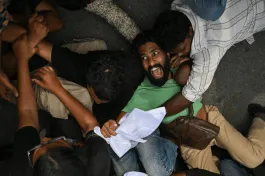
In October, protests by the Cockroach Janata Party and student movements catalysed and brought together a broad coalition of civil society along with what had until then been uncoordinated voices of the opposition parties. Tens of thousands of protesters appeared on the streets, demanding the removal of the Chief Election Commissioner, Gyanesh Kumar. The official response to their protests was police brutality and mass detentions, including of opposition MPs. The ECI claimed, in an affidavit to the Supreme Court, that there had been no irregularities in the process. At the time of writing, the demand of the opposition parties and the student movement for the resignation of the Chief Election Commissioner, and for the scrapping of the SIR, remains unmet and 130 million voters remain disenfranchised.
13.3 crore citizens remain disenfranchised, something that can only be rectified by the scrapping of the SIR, and a return to the electoral rolls that obtained previously.
Minor concessions have been made to placate protesters (and possibly the court). These are mostly in the nature of window-dressing measures, such as a special drive to enrol new voters in Delhi or the resumption of the customary annual Summary Revision. In parallel, however, the pattern of mass deletions has been repeated in the most recent experiences of the SIR in Karnataka, Uttar Pradesh, and Delhi: the disproportionate exclusion of women and Muslims; and, often related to the latter, the large-scale misuse of Form 7 by Booth Level Agents of the BJP. In Bihar and Bengal, women were over-represented in the ranks of the deleted, especially in areas that had a significant population of Muslims or Scheduled Castes or Scheduled Tribes.
Karnataka saw the deletion of one crore voters, approximately 18% of the electorate. For every male deleted, two female voters were struck off the list. In Delhi, 54% of voters were declared doubtful or deleted. An investigation by The Reporters’ Collective showed that election officers in Uttar Pradesh had been forced to sign forms to delete 85,854 voters without any reason being specified, as is mandatory under the law. A few days later, the Chief Electoral Officer of UP ordered the deactivation of the ECINET login IDs of (outsourced) computer assistants across the state, on account of complaints of manipulation resulting in the deletion of 13,150 voters in Pilibhit.
The most disturbing aspect, reported from several states, is the large-scale abuse of Form 7 filings by Booth Level Agents belonging to the BJP and targeting Muslim voters. In Bengal, Muslims account for 4 out of every 5 voters deleted. These filings typically exceed the maximum number allowed but the cap is ignored as these objections are processed. In Karnataka, the Chief Minister alleged that 13,000 Muslim voters had been targeted in just one district, as a result of complaints from BJP party agents. There is no evidence so far of even a token attempt at rectifying this brazen attempt at undermining the citizenship of existing voters.
Likewise, the most contentious aspect of Form 6—forcing voters of long standing to declare that they have never before voted—has been modified only prospectively, after millions have signed the false declaration. The Chief Justice of India offered the verbal reassurance that nobody who had signed this would be prosecuted for perjury, but the Goa bench of the Bombay High Court has since held that a false declaration in Form 6 does make voters open to prosecution.
Meanwhile, despite the Supreme Court ruling that the SIR cannot be used for other purposes, the electoral roll continues to be instrumentalised to deprive people of access to welfare benefits such as cash transfers, subsidised rations, government scholarships, passport renewals, and residency certificates, among others. In fact, the Union Minister for Panchayati Raj has announced that Aadhaar cards will no longer be the basis for welfare payments, which will now be based on voter IDs (the EPIC card with biometrics).
The ECI thus remains tarnished but thoroughly protected, and the exclusionary tendencies of the SIR continue unabated and unmitigated. 13.3 crore citizens remain disenfranchised, something that can only be rectified by the scrapping of the SIR, and a return to the electoral rolls that obtained previously. This would undoubtedly be messy in terms of bringing into question the legitimacy of all state assemblies and state governments elected since November 2025, but it would have the merit of reinstating citizens as voters and ensuring the integrity of forthcoming elections.
Reproduced with permission. The paper was first published in Indian Politics and Policy, Vol6 No 1, Spring 2026.
Niraja Gopal Jayal holds the Avantha Chair at King’s College, London, UK.