




The global economy is experiencing a major shock from the disruption of about 20% of its energy supplies, the severest according to the International Energy Agency (IEA), which is the result of Iran closing the Strait of Hormuz in retaliation to attacks by the United Staes and Israel. India imports about 90% of its oil and 60% of its gas. The price of crude oil was about $65 a barrel before the attacks, and it is now trading at around $95 a barrel.
Policy-making is not a science and is not easy. But the consequences of getting it right or wrong are serious.
The adverse impact is already being felt. Liquified petroleum gas (LPG) has been in short supply, causing hardship to many ordinary people. Retail oil and gas prices have been raised repeatedly. The nation has been warned of difficult days ahead with appeals for austerity. The analogy with Covid-19 has already been made, with the implication that we should prepare for pain and wait patiently for the storm to blow over.
The anxiety about the coming months has been exacerbated by trends in the economy before the external shock. The rupee has been depreciating and is trading at around 95 for a dollar. Foreign institutional investors (FIIs) have sold more than $30 billion of stocks held by them in the Indian market. Rising foreign direct investment (FDI) inflows, which reached almost $85 billion in 2022, have declined to around $73 billion in 2026.
The wholesale price index (WPI) rose to 8.3% in April and further to 9.7% in May, creating expectations of higher inflation. Inflationary expectations tend to be self-fulfilling. The higher import cost of oil and gas will increase the current account deficit, which will have adverse consequences. Share prices have fallen more than 10% this year. This negative wealth effect is likely to moderate growth in consumption and investment.
Pessimists fear that India could be heading for another crisis of the 1991 type. Each dimension of the set of problems the country faces warrants analysis, a weighing of options, and deciding what would be the best course of action. Policy-making is not a science and is not easy. But the consequences of getting it wrong are serious.
The immediate crisis is on the energy front. First, it is necessary to accept that the demand for energy is essentially inelastic. Hence, an increase in prices would only have a marginal impact on demand and it is not an effective policy instrument. But price increases do act as cascading inflationary triggers in the economy. Demand can, however, be reduced substantially by the government assuming leadership and driving the transition away from imported gas and oil. The potential here is huge. Gas and oil have to be viewed independently.
The policy goal of increasing the share of gas in the energy mix from 6% to 15% because gas is a cleaner, lower carbon emitting intermediate energy source needs to be reversed. It makes sense to continue meeting the full needs of industry with domestic gas and imports, at a blended price without any subsidy. Industrial production would not be adversely impacted.
But the supply of gas for transport can be stopped immediately as all the vehicles using compressed natural gas (CNG) can run on petrol. All cooking can be done on electricity. It is also cheaper if electricity rates are below Rs 8 per unit. As in the case of light-emitting diodes (LEDs), a government agency of the central/ state government could do bulk procurement of induction stoves to get lower prices and supply them to households through the power distribution companies (discoms), recovering the cost in instalments and weaning away households from LPG for cooking.
Energy security and price stability would increase substantially, and vulnerability would decline when the use of gas and oil declines.
Extension of piped gas supply for cooking needs to stop. Existing consumers need not be given subsidised supply and should be charged the same price as all industrial consumers. The price signal may get them to move to electricity for cooking. Plans for new liquefied natural gas (LNG) terminals and long-term take or pay contracts need to be reviewed and revised downwards.
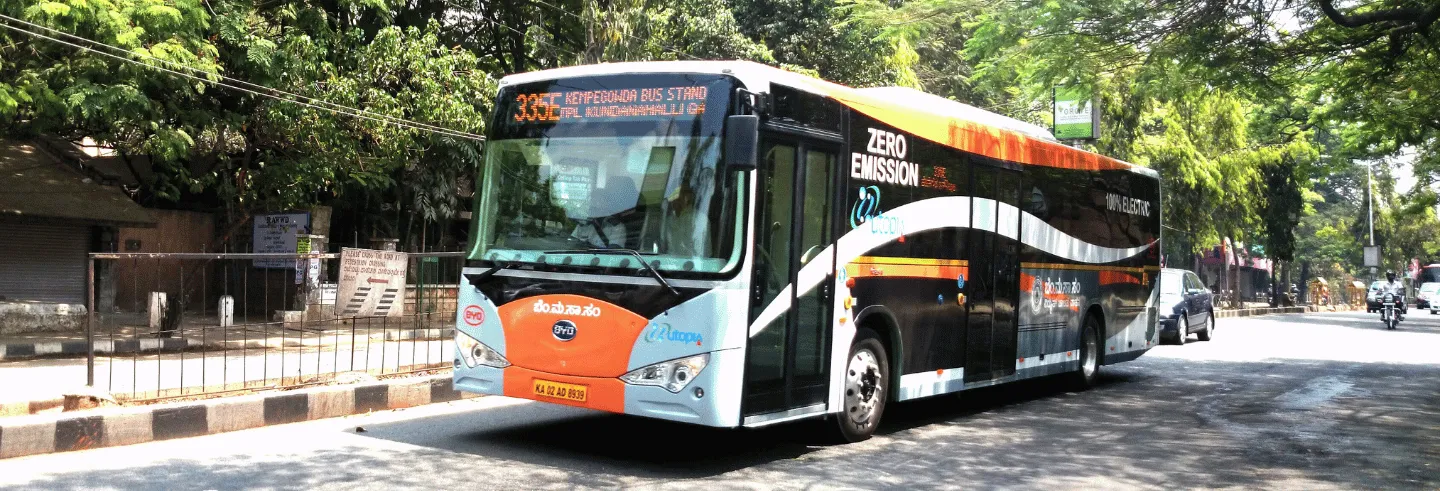
The Prime Minister has already called for the greater use of electric vehicles (EVs). A phased mandate of restricting the registration of new commercial vehicles to EVs only would make a huge impact. Electricity demand would increase substantially while imports of oil and gas would decline. Hence a major effort to improve the reliability of round-the-clock power supply is called for with investments in generating capacity as well as in carrying capacity.
This can be done without difficulty and only needs focus. Energy security and price stability would increase substantially, and vulnerability would decline when the use of gas and oil declines.
To insulate the economy from cascading inflation, it would be desirable to avoid further increases in the retail prices of diesel and petrol. Once inflation gathers momentum, the painful medicine of increasing interest rates and forcing a downturn in the economy may become necessary. Avoiding inflation should precede the normal response of increasing prices to cover the increase in purchase costs.
How do we meet the additional cost? The easiest way would be for the government to lower taxes because the oil companies cannot take a sustained hit on their finances. The government could seriously try to reach a consensus with the states to bring diesel and petrol under the goods and services tax (GST).
Though this would increase the fiscal deficit, it would enable the lowering of retail prices. Inflationary expectations in the market would be arrested. Choosing a higher deficit, though going against conventional wisdom, would be the better choice. It would deliver a stimulus to the economy and uplift market spirits and sentiment, mitigating the downturn.
There is speculation about when more than Rs 100 will be needed to buy a dollar. A rising current account deficit due to the higher import of oil and gas can be expected to add to the downward pressure on the exchange rate. Markets also have a tendency to overshoot. So, it is difficult to see when and at what level the present depreciation phase will end.
The experience of recent decades across the world has one clear lesson. Global financial market forces are far too powerful for most central banks to be able to halt such depreciation episodes. Many have tried and failed after losing substantial sums of their foreign exchange reserves buying the domestic currency. The sensible policy response would, therefore, be to let the exchange rate move in the market even if it goes down some more.
The settled view in the political class, the intelligentsia, and the general public for decades has been that a strong currency means a strong economy and depreciation means a weak economy. This view is mistaken.
India has been experiencing cycles of steady appreciation of the real exchange rate followed by market-driven correction through a sharp depreciation, with adverse consequences for manufacturing.
What matters for the economy is the movement of the real exchange rate. The concept of the real exchange rate has yet to be commonly understood. To explain with a simple illustration, if inflation in India in one year is 6% and in its trading partner, the US, is 2%, and the exchange rate in the market remains the same, the rupee undergoes a real exchange rate appreciation of 4%, which is the difference in the inflation rates of the two economies. In the market, imports become cheaper and exports more expensive by 4%. The business case for domestic value addition, both for the domestic and the export market, is adversely affected by 4%.
Therefore, the movement of the real exchange rate has a huge impact on the economy. According to the global macroeconomic database, CEIC Data, India’s real exchange rate in 2024 was 18% higher than what it was in 2005. In real terms, many of the prevailing import duties had become negative. This has been a major cause of India’s disappointing performance in manufacturing. That the country still had some industrial growth is a tribute to its entrepreneurs.
The East Asian economies understood the critical importance of the exchange rate. They artificially depreciated their currencies, made their exports of manufactured goods cheaper, increased market share in the Western economies, and industrialised rapidly. This policy facilitated the phenomenal export-led growth of South Korea and China in recent decades. Both countries followed the earlier example of Japan.
To keep their currencies artificially low, their central banks kept buying dollars and built up huge reserves. The US finally took note of this, reacted, and forced them to end this unfair trade practice. But by then they had transformed themselves into globally competitive manufacturing economies and had become major exporters.
India decided in the early 1990s after its economic reforms to follow the Western practice of letting the markets determine the exchange rate, which, on the face of it, is a sensible policy. However, since then, India has been experiencing cycles of steady appreciation of the real exchange rate followed by market-driven correction through a sharp depreciation, with adverse consequences for manufacturing.
The periods of steady real exchange rate appreciation had nothing to do with factors such as rising productivity and increasing export surpluses. India has been sui generis in getting rising capital inflows through growing remittances from Indians working overseas. These remittances have risen steadily from $12 billion in 2000 to $135 billion in 2025-26.
Our stock market with rising share prices has been attractive to foreign fund managers. They invest for short-term gains with share prices going up, while the nominal exchange rate remains steady and the real exchange rate appreciates. They choose to leave when they expect the market to correct the unsustainable appreciation and make windfall gains. When they exit together, share prices fall steeply and the Indian investor loses. We have been through these cycles in the past. Their exit exacerbates the market correction of depreciation that we have been seeing in recent months.
There is a political economy dimension to all this. This needs to be explicitly recognised. The wealthy Indian gains with real exchange rate appreciation. His children’s education and holidays overseas cost less.
This provides the government and the Reserve Bank of India (RBI) the opportunity to make an overdue policy course correction and declare their intention of preventing real exchange rate appreciation in the future. They would need to clearly explain and communicate why this is necessary. The appreciation of the real exchange rate and the benefit of course correction has entered the narrative. This is a big positive.
A clear policy posture would create the right expectations for market participants, and domestic value addition would begin to rise. Further, the benefit from maintaining the real exchange rate increases the greater the value addition within India, for both the domestic and export markets.
Artificially depreciating the exchange rate as the East Asians did to industrialise rapidly and catch up is not being suggested because times have changed. The West led by the US would not permit it. But there can be no rational argument of “unfair” practice if the central bank acts to only prevent real exchange rate appreciation.
The RBI would end up increasing our foreign exchange reserves by discreet small periodic interventions in the market. These incremental interventions should not have the inflationary impact that is usually apprehended. Further, the Indian economy has acquired greater depth, and more expensive imports have less of an inflationary impact now when compared to earlier periods.
There is, however, a political economy dimension to all this. This needs to be explicitly recognised. The wealthy Indian gains with real exchange rate appreciation. His children’s education and holidays overseas cost less. The repayment burden of dollar debts of large corporates becomes lower in real terms. Importers and traders who sell imported goods gain as these become cheaper in real terms and increase market share. The real exchange rate hardly features in policy discussions though the sensible correct view has been repeatedly expressed over decades by economists and policy-makers.
The fall in the Sensex has depressed market sentiment. Investors are losing wealth. For them, the economic downturn is real and steep. Nothing can, however, be done to get share prices to rise in the short run. The magnitude of the fall is far beyond the ability of the Life Insurance Corporation (LIC). which in the past was occasionally used to shore up the share prices of individual firms. The current developments do warrant a reconsideration of some of our settled policy positions.
Over time, share price increases in India had lost correlation with the growth in the business of firms—that is, with the growth in their assets, turnover, and profits. We have been experiencing a classic asset price bubble, in which valuations lose correlation with intrinsic value. Savings, instead of being used for real asset creation and jobs, have instead been going towards inflating share prices, exacerbating this bubble.
Speculative FII investments for short-term gain do not benefit us. Rather they harm us. We need FDI rather than FII.
Now that the bubble has burst, it is a good time to go back to the drawing board and think afresh, debate, and consider ways of getting private savings into asset and job creation rather than speculative investments creating asset price bubbles.
Should we do away with the tax benefit for share price capital gains and tax them at the normal income tax rates? Should we restrict tax breaks only to investment in initial public offerings (IPOs), startups and funds dedicated to providing fresh equity to these? Should public financial institutions like the LIC recalibrate their investment policies. Should the incentives for retail investors be realigned? There are no easy answers. But this sense of a crisis does create the space for a meaningful discussion on different ways of going forward.
There is a frequently used maxim: a crisis is a good time to get hard decisions for reforms from a political executive that has been driven to the wall. This is what some “reformers” hope for. But this is clearly undemocratic. A crisis is, however, a wake-up call for revisiting settled policies, having transparent discussions on new ideas, and for creating a political consensus for changes. These could, hopefully, over the medium term take us to a higher growth trajectory of sustained gross domestic product (GDP) growth rates of over 8%.
To illustrate, we needed to go out of our way to attract FIIs in the early 1990s when we were just recovering from a severe foreign exchange crisis. The rationale for this has ended. Our foreign exchange reserves have grown and are large enough. We should be able to cope with the increase in the current account deficit due to the sudden increase in the import bill of oil and gas. There is at present no need to try and attract FII investment with tax breaks. Speculative FII investments for short-term gain do not benefit us. Rather they harm us. We need FDI rather than FII. We need to ask ourselves hard questions and seek honest answers as to why the business case for new private investment, including FDI, is not stronger.
We needed depth in our stock market in the early 1990s. The tax incentives for investment in the stock market made good sense. This is no longer the case. These tax breaks favour the wealthy and exacerbate inequality. There is a good case for withdrawing these and for treating capital gains as income, which is taxed accordingly.
Those seeking tax breaks would then have an incentive to invest in startups, IPOs, and funds dedicated to providing these with equity. And this is what India needs to take it to a much higher level now that we have a vibrant startup ecosystem.
This is the time when it may be easier for the political class to recognise that one fundamental political economy contradiction in India is between the state supporting the consumer, especially the wealthy ones, on the one hand, or the producer and the job creator on the other hand. So far, the balance has been tilted in favour of the former. It is time for a major course correction in favour of the latter.
This makes rational sense for the political class. Inadequate job creation is reaching dimensions that are putting social stability at risk. New policies could give us higher and more inclusive job-creating growth.
Ajay Shankar is a distinguished fellow at The Institute for Studies in Industrial Development (ISID). He has been Secretary, Department of Industrial Policy and Promotion, and was part of the group of Secretaries that prepared the stimulus packages which led to the recovery from the impact of the global financial crisis of 2008.