



Sustainable agriculture has been making headlines across India, particularly with the launch of the National Mission for Natural Farming in November 2024 and the growing emphasis among national and state leaders on promoting natural and organic farming practices. This marks a significant shift in rhetoric since the Green Revolution of the 1960s and 1970s, which advocated the intensive use of synthetic pesticides and fertilisers alongside the implementation of high-yielding crop varieties.
India reportedly has the largest number of certified organic producers in the world and ranks second globally for total organic cultivated area.
While Green Revolution rhetoric and practices continue to dominate many agricultural institutions in India today and government support for conventional chemical-based agriculture is ongoing, the rise of natural and organic farming suggests there is growing recognition that something needs to change (R.S. Raina 2020; R. Raina et al. 2022). Nonetheless, despite growing policy interest in expanding natural and organic production, far less attention has been paid to the demand side—particularly whether consumers can readily access and afford sustainably grown /foods.
Natural farming is a form of sustainable agriculture that avoids synthetic chemicals in favour of locally sourced inputs and traditional practices. Naturally farmed products are not currently regulated in India, although a new voluntary Participatory Guarantee System (PGS) certification for natural farming has recently been introduced (NCONF 2025). Organic farming is similar to natural farming in its rejection of synthetic inputs; however, it does not require the use of locally available ingredients or traditional practices. The term organic is legally regulated in India, requiring farmers and traders over a certain size to be certified under either the National Programme for Organic Production (NPOP) or the Participatory Guarantee System of India (PGS-India) programme (FSSAI 2021).
The evidence on the potential benefits of organic and natural farming is contested. Advocates of organic and natural farming suggest that these practices have the potential to enhance farmer livelihoods (Seufert and Ramankutty 2017; Crowder and Reganold 2015), reduce consumers’ exposure to harmful pesticides (Bradman et al. 2015; Hyland et al. 2019; Lu et al. 2006), and increase the sustainability of the food system. For example, organic and natural farming allegedly have better soil and water health outcomes (Kremen and Miles 2012; Seufert and Ramankutty 2017; Tuomisto et al. 2012), allow for higher levels of biodiversity (Berger et al. 2025), and generate less nitrogen-related greenhouse gas emissions (Lynch et al. 2011).
India reportedly has the largest number of certified organic producers in the world and ranks second globally for total organic cultivated area, although the actual number of farmers implementing organic practices may be less in practice (Willer et al. 2025). 1The World of Organic Agriculture report (Willer et al. 2025, 340) cites the Agricultural and Processed Food Products Export Development Authority (APEDA) for the 2.4 million organic producers figure for 2025 and also mentions that 1.9 million farmers are certified under the PGS. However, the underlying data for the 2.4 million figure is not available on the APEDA website. The APEDA cites Willer et al. for the 2.4 million figure in their publications (CRISIL and APEDA 2024). While the accuracy of the numbers is unclear, India nonetheless appears to have a significantly higher volume of producers with organic certification than other countries, with the second highest country (Uganda) having only 0.4 million organic certified farmers. While there is a substantial export market for these products (32% of total organic production), the domestic market for these products remains small (CRISIL and APEDA 2024). India makes up only 1% of total global demand for organics and is ranked 49th globally for per capita organic consumption (Willer et al. 2025; CRISIL and APEDA 2024). The number of farmers using natural methods and the market size for naturally farmed products are less clear, but are estimated to be even smaller.
As a result of the small size of the market for sustainable products, many organic and natural farmers report that one of their major challenges is finding a buyer for their products (Azam et al. 2019; Seufert et al. 2023; Vashishat et al. 2021). Yet there has been little research examining the state of the market for these products, particularly whether sustainably grown products are widely available and how affordable these products are.
Availability and Affordability: When interviewing both consumers and farmers around India, I heard very different perspectives on the availability and price of organic and naturally farmed foods and beverages. Many consumers reported that they did not purchase these products because they were not easily available and they were too expensive. For example, one consumer based in Hyderabad explained: “It’s very hard for me to get fresh quality produce which is organic in India … and the few brands that do sell organic produce are very niche and unreasonably expensive.”
How could it be that farmers were reporting insufficient demand and prices that were too low, while consumers were reporting insufficient supply and prices that were too high?
And yet, when I spoke to farmers, I found that many of them struggled to find a buyer, and particularly a buyer who was willing to pay them a premium price above the standard market rate for conventionally-grown crops. How could it be that farmers were reporting insufficient demand and prices that were too low, while consumers were reporting insufficient supply and prices that were too high?
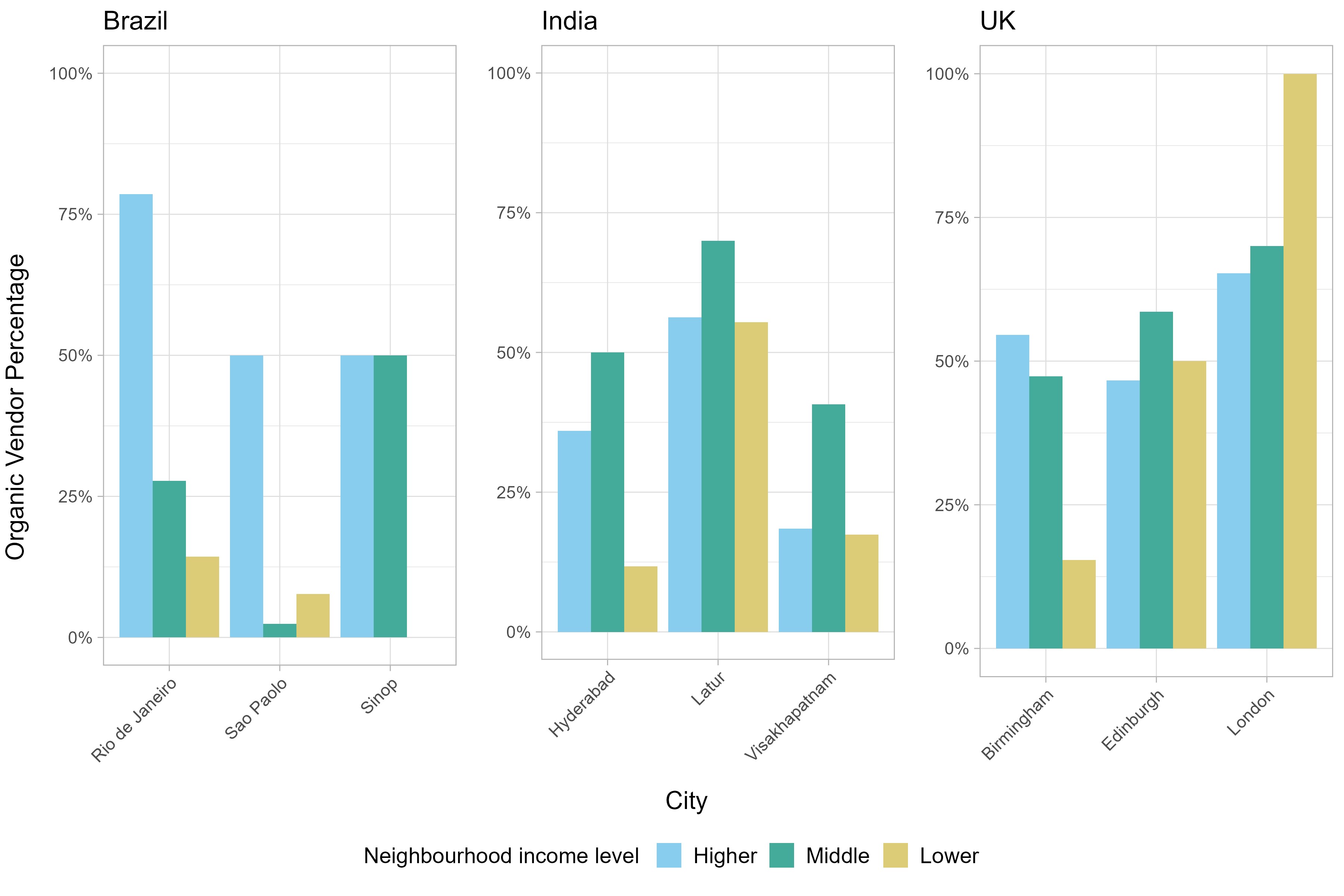
Along with a group of colleagues from around the world, I set out to find the answer by conducting a survey on the availability, price, and marketing characteristics of sustainably produced foods and beverages across India, Brazil, and the United Kingdom (UK) (recently published in Frontiers). We selected nine cities across the three countries (including Hyderabad, Visakhapatnam, and Latur in India) and surveyed one high-, middle-, and low-income neighbourhood per city. We walked along every street and surveyed every retailer that sold foods or beverages for home consumption (from a list of 14 staple products). Retailers included supermarkets, kirana shops, and mobile vendors, for a total of 808 retailers globally. In the sections below, I summarise our key findings for India and how this compares to the global market.
Only 32% of all the retailers we surveyed in India (487 total) sold at least one sustainable food or beverage. This was significantly lower than the UK, where 59% of retailers sold a sustainable product (Figure 1). Contrary to our expectation that larger cities would have higher availability, Latur had higher availability of sustainable products (59%) than Hyderabad (22%) or Visakhapatnam (23%). This was mainly because of a commonly available local milk brand called Natural Milk, which appeared to refer more to the local and relatively unprocessed nature of the milk than to any use of natural farming methods.
Figure 1: Proportion of Sustainable Vendors by Neighbourhood Income Level, Split by Country and City (n = 808 total vendors)
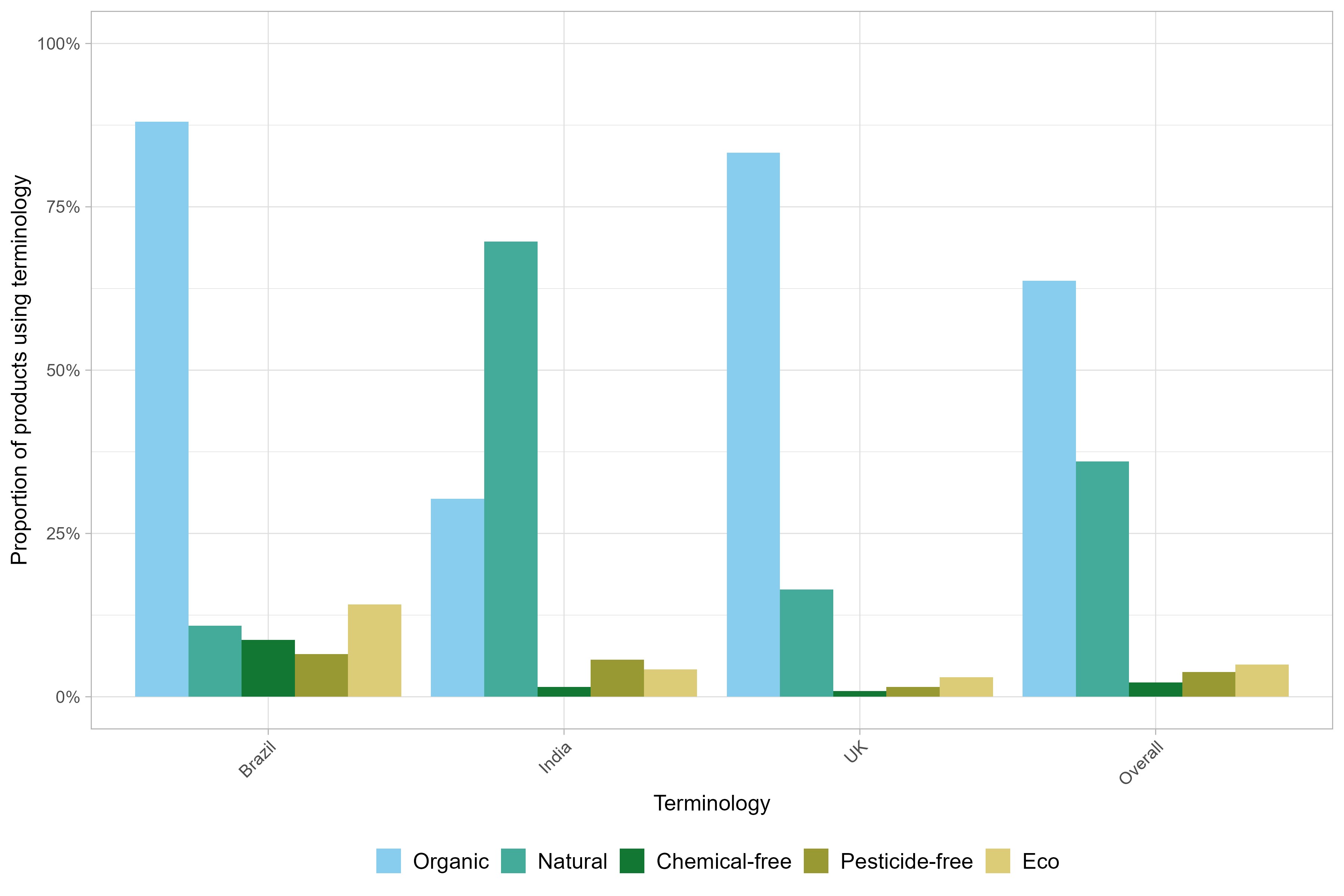
Products labelled with the term “natural” were much more common than organic in India, contrary to the UK and Brazil, where organic was the most common (Figure 2). However, products labelled as “natural” did not typically appear to be associated with natural farming. Rather, the term was used as a marketing characteristic, such as on the popular Brooke Bond Red Label “Natural Care” tea.
Figure 2: Proportion of Sustainably-Produced Products Using Each Term Overall and By Country (n = 691 sustainable products)
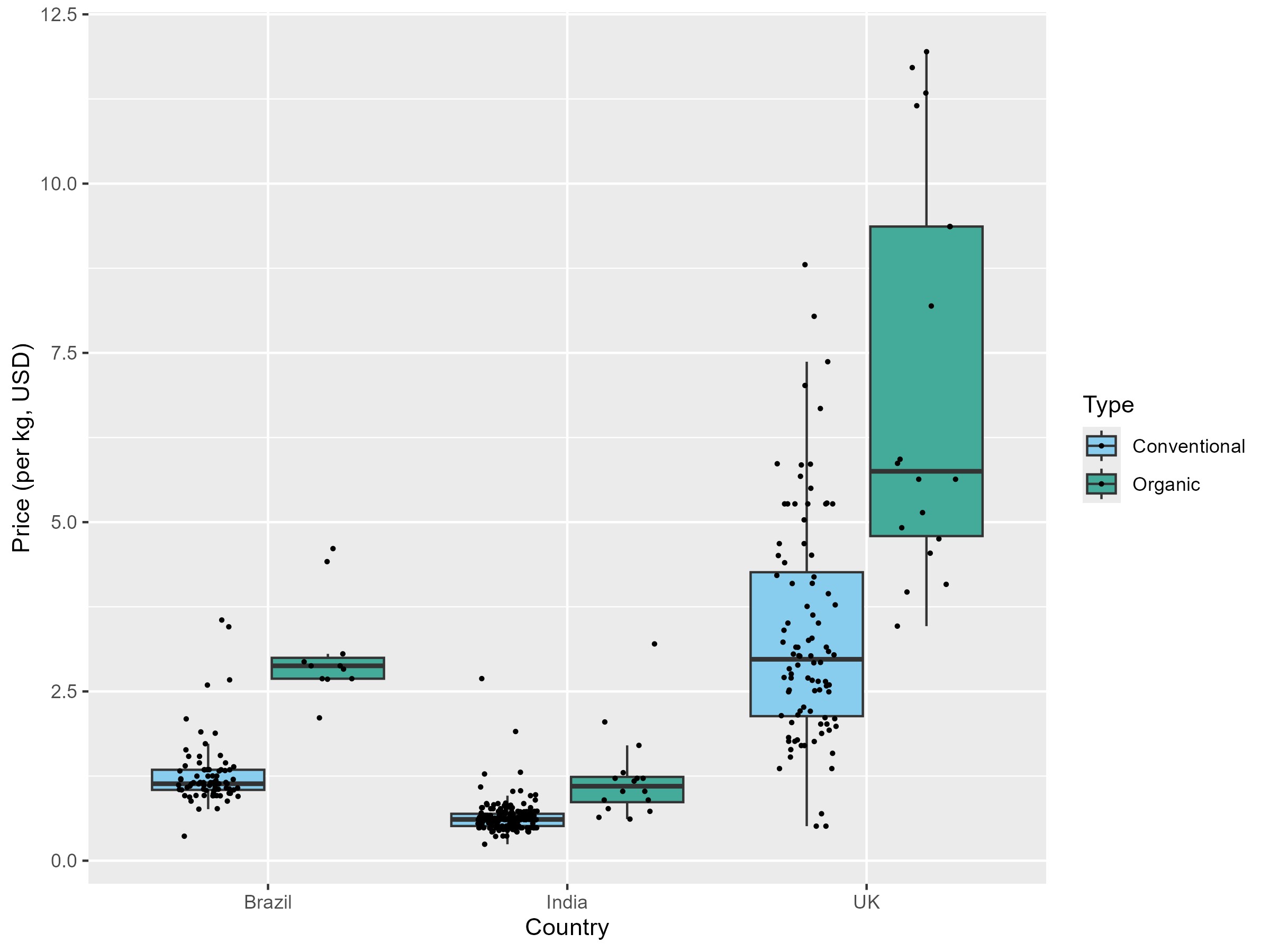
For price data, we focused on one staple crop (rice), gathering data on both sustainable and conventional rice. We found that the price of sustainably produced rice was approximately double the price of conventional rice. This was the case across all cities, neighbourhood income levels, and even within the same retailer (Figure 3).
Figure 3: Boxplot of Sustainable and Conventional Rice Prices (USD/kg) by Country (n = 51 for sustainable rice vendors; n = 378 for conventional rice vendors)
The low overall availability of affordable organic and natural products across all the included countries is concerning, given that studies have shown that consuming organic products can lower consumers’ exposure to harmful pesticide residues (Bradman et al. 2015; Hyland et al. 2019; Lu et al. 2006). Safe food should be available to all consumers, irrespective of their income level.
Farmers should certainly receive a premium price for their products, both because they are offering a higher-value product that is safer and arguably more sustainable, and to compensate them for the risks they are taking in switching away from synthetic chemicals. But consumers should not be forced to choose whether to pay double the price for a safer product. Certainly, premium products can be a part of the solution, as some consumers are willing to pay more for products with premium packaging and quality. But organic and natural food does not inherently have to be more expensive to the consumer.
Studies have shown that food produced with synthetic chemicals is artificially cheap. It does not reflect the “true cost” of production, with all of the associated environmental and health impacts (Puri and Pingali 2024). Moreover, chemical-based foods benefit from substantial government support for production and marketing.
Only 2.5% of India’s total agricultural area is dedicated to organic production, and organic products must be stored, processed, and transported separately to ensure they are not contaminated by conventional chemicals.
On the production side, the Government of India allocated Rs 1.71 lakh crore (~USD 19.6 billion) to subsidies for synthetic fertilisers in 2025-26, typically spending 100 times more on synthetic fertilisers than on organic inputs (Paul et al. 2023). On the marketing side, the Government allocated Rs 1.37 lakh crore (~USD 15.7 billion) to food subsidies in 2025-26, the vast majority of which supports conventionally produced grains, with only a small proportion allocated to millet procurement and distribution in select states.
Conventional food also benefits from economies of scale, while organic food remains a niche. Only 2.5% of India’s total agricultural area is dedicated to organic production (CRISIL and APEDA 2024), and organic products must be stored, processed, and transported separately to ensure they are not contaminated by conventional chemicals. As such, while organic food is not necessarily more expensive to grow at the farmer end, getting organic food to the end consumer is far more costly, resulting in higher prices at the consumer end.
Overall, the current agricultural production and marketing system tends to favour chemical-based farming. To promote a healthier and more sustainable food system, the government and civil society could consider gradually shifting existing supports towards enabling organic and natural farming and marketing to increase the availability of affordable sustainable products.
Building Trust
The consumers I have interviewed across India indicated that trust is a major barrier to purchasing organic and naturally farmed food. Over the past several years, media reports on incidences of organic fraud have abounded, and a key organic trade deal with the US fell apart in 2021 over reported issues with fraudulent organic certificates. Our survey highlighted some of the trust-related challenges consumers face when making organic food purchasing decisions in the retail environment.
We found that only one-third of sustainable products sold by the retailers surveyed in India had a certification logo on them. This was substantially lower than the rate of certification in Brazil (89% of sustainable products) and the UK (78%). This is likely due to the higher proportion of “natural” products in India, for which a dedicated certification scheme did not exist until mid-2025.
Previous surveys of Indian organic consumers have suggested that health is one of the key reasons consumers choose to buy organic products.
Certification has emerged as an important way to build trust among consumers in the absence of direct purchasing relationships with farmers. Yet the growing range of certification logos available on packaging may cause confusion. Our survey found a range of certification logos, including NPOP-related logos (India Organic and Jaivik Bharat), USDA Organic, and EU Green Leaf.
Interestingly, PGS organic logos were not prominent, which suggests a limited consumer-facing marketing approach for PGS certified products. Given that PGS was implemented with the intention of providing a more affordable and inclusive option for small and marginal farmers, efforts to boost the market for PGS-certified projects are important.
The relative absence of PGS organic products in the marketplace—even almost a decade after its launch—offers an important lesson for the future implementation of PGS natural certification. If PGS certified farmers are to find a profitable market for their products, a more intentional effort to educate consumers and get the products on retail shelves will be essential.
Importantly, research has shown that consumers around the world are becoming confused by the growing variety of terms and certification logos used to advertise sustainably-grown food (Abrams et al. 2010; Kuchler et al. 2020). Confusion over the difference between terms like organic, natural, and pesticide-free can lead to mistrust.
To build consumer trust, particularly in the wake of claims of fraud over the last few years, the sector would benefit from an information campaign aimed at educating consumers about the authenticity of the certification process, the meanings of different terms, and the benefits of consuming sustainably grown products.
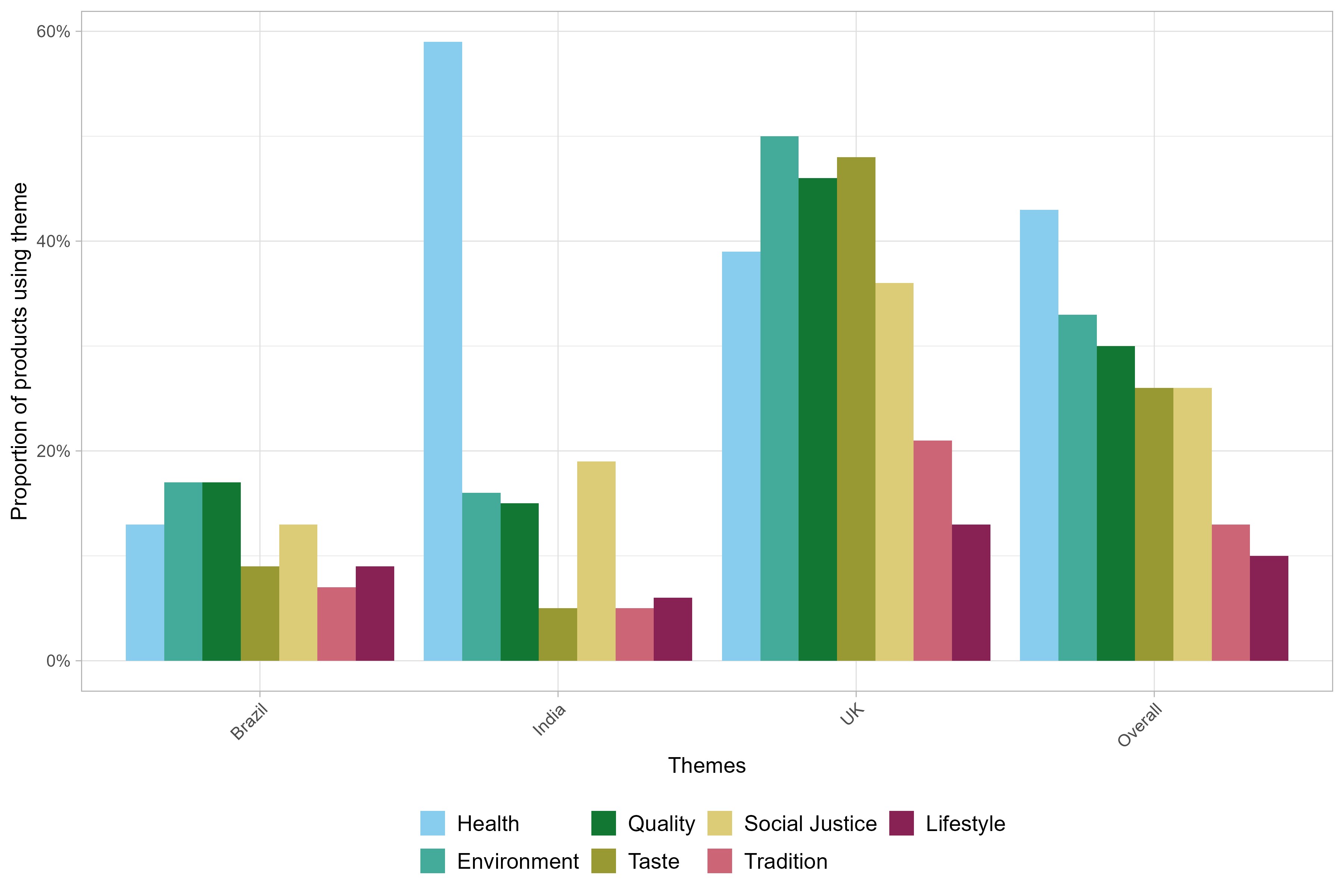
Previous surveys of Indian organic consumers have suggested that health is one of the key reasons consumers choose to buy organic products (Dangi et al. 2020; Prakash et al. 2018; Sekhar et al. 2021; Tandon et al. 2020; Wankhede and Rajvaidya 2021). The organic industry appears to have capitalised on that demand, with health being the most prominent theme displayed on packaging in India (Figure 4).
By comparison, sustainable products in the UK included claims about the health benefits of products alongside other themes such as the environment, social justice, quality, and taste. Future marketing and information campaigns aimed at boosting domestic consumer demand for organic and naturally farmed products in India could therefore benefit from an emphasis on the health benefits of shifting to chemical-free consumption.
Figure 4: Proportion of Sustainably-Produced Products Displaying Each Theme Overall and By Country (n = 691 sustainable products)
Need for a New Approach to Marketing
India’s efforts to promote organic and natural farming have largely focused on production, yet our findings show that a major barrier lies in the market. Without stronger consumer demand, reliable retail availability, and clearer trust-building measures, sustainable farming will remain difficult to scale.
Our survey highlighted that the availability of sustainably produced foods and beverages is relatively low in India. Additionally, the growing variety of terms, certification logos, and marketing approaches may be leaving consumers confused and unsure what to trust. In the absence of trust, the fact that sustainable products are approximately double the price of conventional products is likely to act as a major deterrent to the typical consumer—although a small subset of high-income, health-oriented consumers may still be willing to pay the premium price.
Encouraging a transition towards a more sustainable food system will require both production and demand-side interventions. Currently, much of the emphasis has been on shifting farmers to organic and natural production, with limited research and policy focus on the market side. Yet farmers require a strong, assured market for their products to ensure their sustainability and profitability.
Efforts to increase consumer demand could include a public information campaign to educate consumers about the certification process and highlight the potential health benefits of switching to organic and natural consumption.
The government is currently one of the largest buyers of conventionally produced crops in the country, so could offer a strong market signal and enable economies of scale by shifting procurement towards organic and naturally grown foods. This would also increase access to affordable and safe food for consumers accessing subsidised food through the public distribution system (PDS) and other public nutrition programmes.
Boosting consumer demand for organic and natural products is also imperative. This will require multi-stakeholder efforts, including public, private, and civil society actors, to develop and implement a coordinated strategy that encompasses both organic and naturally farmed goods. Efforts to increase consumer demand could include a public information campaign to educate consumers about the certification process and highlight the potential health benefits of switching to organic and natural consumption.
This could build on the Government of India’s history of effective public service advertisements (Kayal et al. 2021; Rabindranath and Singh 2024). Existing marketing supports such as organic mandis and minimum support prices could be extended to organic and naturally farmed products, as is already being piloted in some states.
The time to shift towards a more resilient and sustainable food system is now, given growing climate-related risks and other shocks to the food system. Organic and natural farming can play an important role in this shift—but only if supported by a robust, trusted, and accessible market.
Alexandra Sadler is a researcher at the University of Essex, having recently completed her PhD at the University of Edinburgh. Her PhD research focused on sustainable food system transitions, with an emphasis on markets for organic and naturally-grown food in India.