



A biology teacher conducting Class 12 practical examinations at a senior secondary school encountered a telling pattern. In a batch of 25 students, seven or eight had not submitted their laboratory files. When called to perform the practical examination, most could not execute basic procedures. More strikingly, in the viva voce, they could not answer elementary questions about the experiment they were supposedly conducting. They had no grasp of the basics.
Many of these students spent their days in full-time National Eligibility cum Entrance Test (NEET) coaching, putting in eight to 15 hours daily. But the board practical exam laid bare what coaching could not hide. Gaps in basic understanding remained that speed drills and pattern recognition could not fill.
Teachers describe this situation as increasingly common across senior secondary schools. It is not simply that students are absent from classrooms. The system has restructured itself so that classroom absence has become rational, even expected.
Restructuring of Schooling
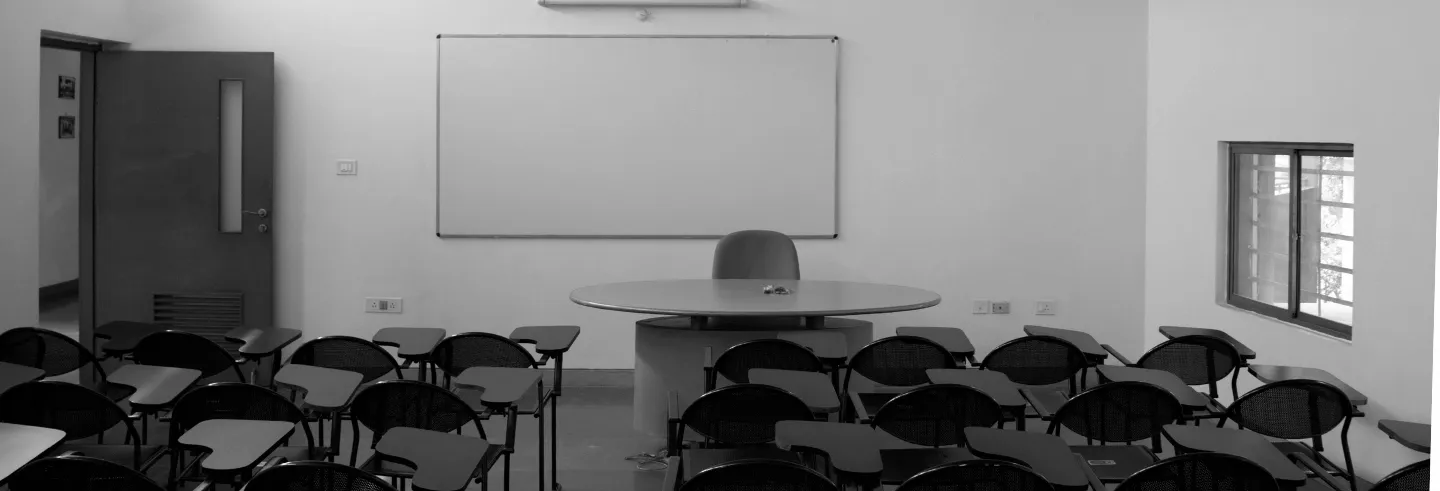
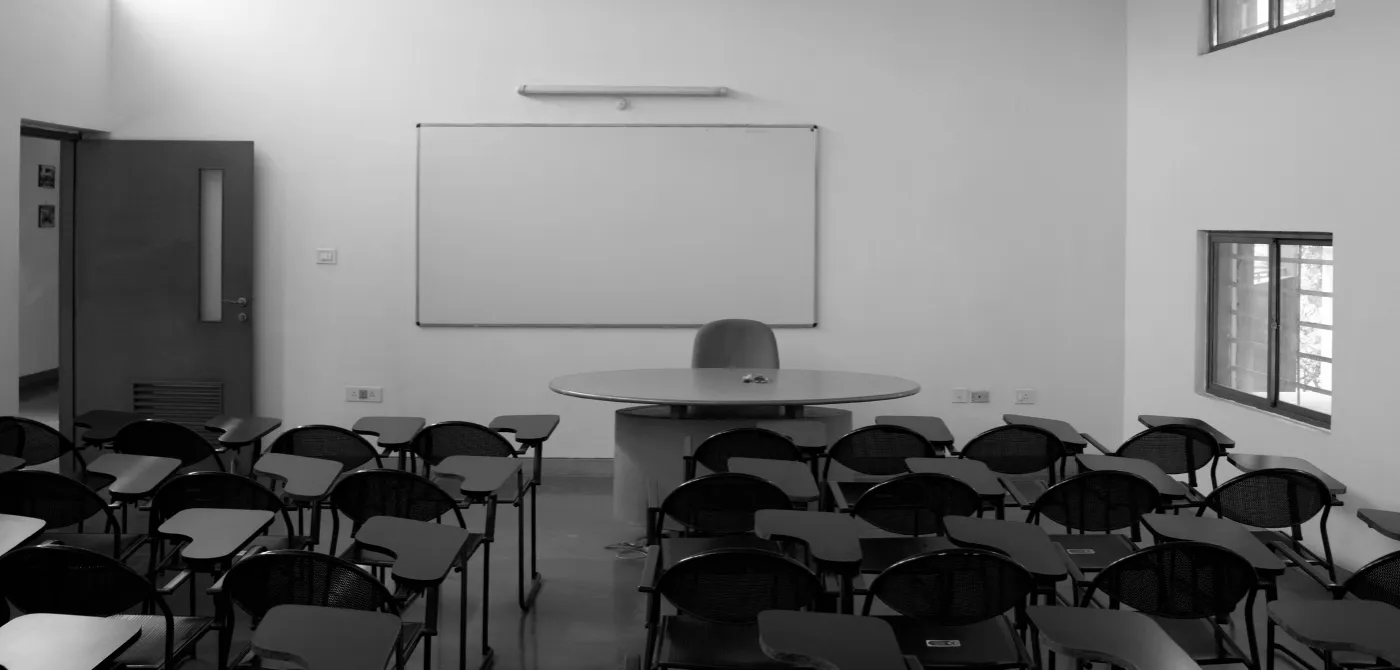
On paper, most senior secondary schools in India appear to function normally. Attendance registers are filled; laboratories are listed on timetables; and eligibility requirements for board examinations are routinely met. Inside many schools, however, everyday learning is increasingly organised around absence. Classrooms run at half strength, science labs remain unused, and teachers plan lessons for students who rarely arrive.
The quiet emptiness is not due to indiscipline or neglect. It comes from a basic change in how schooling works. Competitive entrance exams have become the primary path to higher education and good jobs. And so, for many students, staying enrolled matters more than actually attending.
They prepare full-time for the Joint Entrance Examination (JEE) and NEET and school remains a formality. Learning now happens at coaching centres instead. What appears as disengagement from schooling reflects a deeper reorganisation of incentives in a system where access to higher education and stable employment is tightly rationed through competitive examinations.
Once JEE, NEET, or similar tests function as gatekeepers to access, classroom time begins to feel expendable.
Sociological analyses of credentialism illuminate this shift. Randall Collins argued that modern labour markets increasingly rely on educational credentials as gatekeeping devices (1979). When access to desirable employment is limited, qualifications acquire positional value, a point earlier articulated by Fred Hirsch in his discussion of positional goods (1976). In India’s competitive entrance examination regime, professional degrees function in precisely this manner. The examination does not merely test competence; it allocates scarce opportunity.
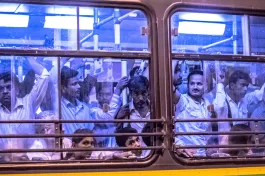
Teachers describe this arrangement simply as “dummy schooling”. Students are officially registered, fees are paid, and attendance is marked, but most days are spent at coaching centres or studying independently at home. Families see this as a practical decision in a system where entrance examinations alone determine access to medical colleges, engineering institutes, and other pathways to economic opportunity. Once JEE, NEET, or similar tests function as gatekeepers to access, classroom time begins to feel expendable.
According to a 2025 National Sample Survey (NSS), 27% of school-going students in India take private coaching, with participation rising to 37% at the senior secondary level. Competitive entrance examinations now draw well over a million candidates annually. These figures indicate the scale at which examination-oriented preparation operates.
Weak Foundations
What Annual Status of Education Report (ASER) data reveal is not simply low performance but also a persistent gap between formal enrolment and actual learning. In 2024, only 44.8% of Class 5 students in government schools could read a Class 2-level text, and fewer than a third could perform basic division (Pratham 2024).
Reading improves by Class 8, but arithmetic does not. Among adolescents aged 14 to 18, the problem becomes practical. Fewer than half could do routine calculations such as reading time, estimating weight, or working out a discount (Pratham 2023, 2024).
These reports describe a situation in which students remain formally enrolled but fall behind in actual learning (Pratham 2023).
And this problem is not new. Two decades ago, education researcher Geeta Kingdon documented that despite near-universal primary enrolment, “learning achievement levels are seriously low” (2007). High enrolment has continued to mask weak learning outcomes.
When more than half of Class 5 students cannot read at a level expected of eight-year-olds, families reasonably fear that traditional classroom progression will not adequately prepare them for entrance exams that operate at a different pace. Secondary education is increasingly organised around the anticipation of competitive entrance examinations, which now shape institutional incentives more powerfully than classroom-based learning.
Entrance Exams
Dummy schooling does not appear out of nowhere. It makes sense in a system where entrance exams control access to higher education and good jobs. Dummy schooling is not just a regulatory gap or individual misstep. Instead, it is what happens when examinations become more consequential than classrooms.
Sitting in both systems at once exposes a basic mismatch. Schools work through concepts progressively, lesson by lesson across the year. Coaching institutes concentrate preparation on high-weightage topics and examination patterns, organising sessions around extended classroom hours supplemented by three to four hours of independent study daily.
Schools, in turn, require six to seven hours of attendance. Students attempting both find themselves stretched between two competing timetables whose demands do not add up. Subjects such as Physics and Biology bear the strain most visibly. The same material must be studied twice, under approaches that barely overlap. When something must yield, classroom attendance does.
Coaching institutions increasingly influence how academic preparation is structured, redefining what counts as legitimate preparation.
Educational ethnography shows that coaching centres gain social legitimacy by paradoxically mimicking formal schooling practices while simultaneously critiquing and undermining them (Gupta 2022). Achala Gupta, in her ethnographic study of tutoring in India, documents how “shadow education takes its place as a mainstream system of education delivery alongside schools, [so] formal educational institutions lose their status as sacred and primary centres of teaching and learning” (2022).
What is happening in India fits a pattern seen elsewhere. Mark Bray’s work across Asian education systems showed that private tutoring expands wherever examinations tightly control access, starting as extra help but steadily becoming the primary site of preparation (1999). In many contexts, such systems begin as supplementary support.
In India, the scale and intensity of competitive entrance testing have pushed coaching from the margins to the centre of how students actually prepare. Coaching institutions increasingly influence how academic preparation is structured, redefining what counts as legitimate preparation. Students absorb this hierarchy.
Schools claim to prepare for examinations, but coaching centres claim to determine outcomes. Absence from school becomes institutionally normalised.
Intensive Coaching
Evidence from national assessments highlights the constraints of intensive coaching for students with weak foundations. The 2023 Beyond Basics survey by ASER, which assessed adolescents aged 14 to 18, found that high enrolment does not translate into everyday competence. Among 14 to 16-year-olds, enrolment exceeds 90%, but only around half of the respondents could complete routine calculations such as reading time, adding weights, or applying the unitary method (Pratham 2023).
ASER reports describe this as a situation in which students remain formally enrolled but fall behind in actual learning (Pratham 2023). Classroom instruction often fails to consolidate basic skills during the primary years, leaving gaps that persist into adolescence. Difficulties that emerge at the Class 5 level therefore continue into senior secondary schooling, where they become harder to address.
Research on social mobility shows that even as the economy has grown and new opportunities have opened up, rural and poor children still struggle to reach them, even when they finish secondary school.
The reason is structural. Coaching assumes fluency and speed, but many students entering coaching centres carry foundational weaknesses. When students arrive at coaching centres without secure reading skills or basic arithmetic, the intensive format offers speed but not the time to build understanding. In a regular classroom, mistakes get noticed and corrected, reading improves through daily practice, and practical skills accumulate over time.
For most families, this is not really a choice. Coaching is what you do when one exam stands between your child and a secure future.
What becomes visible in classroom settings, however, is the limit of this approach. In the biology practical examination discussed earlier, students engaged in full-time NEET preparation were unable to answer basic questions about experiments they had studied in theory. Long hours of coaching had familiarised them with exam formats, but not with the practical reasoning required in the laboratory. As a result, gaps that originate earlier in schooling remain unresolved and become harder to address once students withdraw from regular classroom learning.
Hidden Dropouts
Enrolment data masks a deeper problem. While 92% of 14–16-year-olds remain formally enrolled, this proportion drops sharply as young people age. By age 18, only 67.4% are enrolled (Pratham 2023). But enrolment numbers obscure a more troubling reality. Many of those who are nominally enrolled are doing so as “dummy students”, formally on the rolls but not meaningfully in classrooms. They are counted in official statistics as learners, even as their actual learning is happening elsewhere.
For families facing high stakes and limited options, the choice looks practical. Entrance exams decide who gets into medicine, engineering, law and other routes to stable incomes. When one test seems to decide a student's future, spending on coaching feels rational and even necessary. And this sits atop a deeper inequality.
Research by Anirudh Krishna on social mobility in India shows that even as the economy has grown and new opportunities have opened up, rural and poor children still struggle to reach them, even when they finish secondary school (2014). Rural students make up only about 11–34% of engineering college enrolments in his sample, although roughly 70% of Indians live in rural areas. When schooling is weak and opportunity structures are narrow, families treat coaching as a parallel route.
The students who do best in this system are rarely those who simply work harder. Bourdieu’s concept of cultural capital points to why (1986). Comfort with abstract reasoning, familiarity with timed competitive formats, and confidence under examination pressure are not qualities that coaching can manufacture from scratch. They accumulate over years in households where the right kind of education has always been within reach.
Examination systems appear to test all students on the same terms. In practice, they reward preparation that was never equally available.
What receives less attention is what disappears in the process. When schooling is reduced to credentialling and coaching for test optimisation, the spaces where foundational gaps can actually be repaired simply cease to exist for those students. The classroom, with its slower pace, iterative feedback, and built-in repetition, is where such gaps are bridged. Once students withdraw entirely, that pathway closes.
Systemic Trap
Dummy schooling operates within a structural trap shaped by competitive scarcity. Entrance examinations have come to dominate educational incentives, while institutional capacity and classroom-based learning have not expanded at a comparable pace. For families, this arrangement is rational. In a tightly filtered system, concentrating effort on the examination appears prudent. For learning as a collective good, the consequences are more troubling.
As long as examinations remain the primary mechanism for allocating access to professional mobility, incentives will continue to pull students away from classrooms.
Schools cannot compete with coaching on speed or exam alignment because they serve a different function, building conceptual foundations over time. Once that slower pace is reframed as inefficiency, schools lose pedagogic legitimacy. Classroom learning shifts from being central to being peripheral. Entrance examinations cease to function merely as terminal assessments. They become the organising principle of secondary education.
The National Education Policy 2020 recognised this distortion. It called for a shift away from high-stakes, single-point examination systems toward holistic, competency-based assessment, and proposed Board examinations be redesigned to test core conceptual understanding rather than rote recall (MoE 2020). The structural incentives driving dummy schooling, however, remain intact.
What the National Education Policy 2020 does not address is the more basic problem. There are simply not enough seats in the institutions families want and far too many students competing for them. When the underlying allocation regime is unchanged, pedagogic reform at the margin is unlikely to dislodge the coaching system’s primacy.
As long as examinations remain the primary mechanism for allocating access to professional mobility, incentives will continue to pull students away from classrooms. Dummy schooling is not an isolated irregularity. It is an institutional adjustment to a credential-driven allocation regime.
Randall Collins warned that when credentials expand faster than opportunity, education risks becoming a mechanism of social sorting more than social transformation. The trajectory visible here suggests a similar pattern. Selection grows sharper, while the space for sustained classroom learning contracts.
Addressing this will require more than regulatory enforcement of school attendance. It demands a rethinking of how access to higher education is allocated and whether entrance examinations, in their current form, are the right instrument for rationing opportunity in a system where foundational learning remains so uneven.
Expanding institutional capacity, strengthening classroom-based assessment and reducing the concentration of life-chances in single high-stakes tests are not technical adjustments. They are the conditions under which classroom learning can reclaim its function.
(The teacher accounts cited in this article are drawn from interviews conducted by the author with senior secondary school teachers in Kanpur, Uttar Pradesh, in February 2025.)
Rahul Verma is a sociology educator and independent researcher. His work focuses on education systems, labour precarity, and institutional analysis. He writes on public policy and social issues.