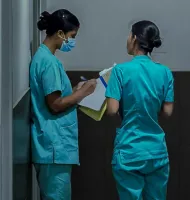
Every NEET leak sparks outrage. Yet the bigger question remains unanswered: who gains, who loses, and how does India’s most consequential examination shape access to medicine?
Dummy schools—where students remain enrolled but attend coaching centres—is not a regulatory failure but a structural outcome. When entrance exams control access to higher education, classroom…
Patent filings in India are surging in number, but these are being driven by a few private universities responding to distorted incentives that prioritise quantity over quality. Without significantly…
Caste operates as lived reality in universities, where forward-caste dominance produces a manufactured civic sense that delegitimises Dalit-Bahujan-Adivasi assertion. This critique of opposition to…
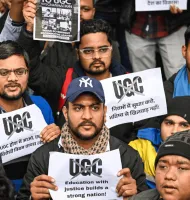
The UGC’s controversial 2026 Equity Regulations, now kept in abeyance by the Supreme Court, contained ambiguities and provisions for stringent sanctions without clear safeguards. The debate narrowed…
West Bengal’s dropout rate for secondary schooling is the worst in India, despite similar rates in lower grades. Early marriage, migration and frequent natural disasters play a role.
A rapid expansion in medical colleges has been justified by India’s poor doctor-to-population ratio. The shortage of doctors, though, might be an invented figure.
Elite American universities have historically shaped the country’s ideological consensus, but they no longer control discourse or the interpretation of events. The framework they established has…
Frugal science expands traditional science by prioritising inclusion and practical capability over cost. But structural biases and lack of institutional support hinder its growth. Mainstreaming…