
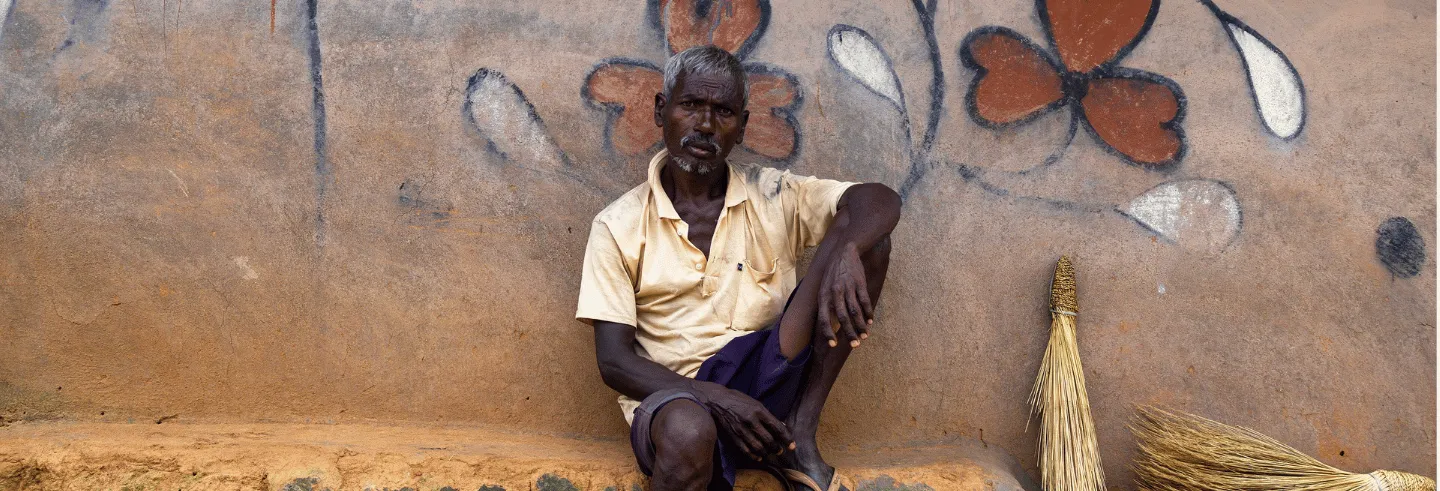
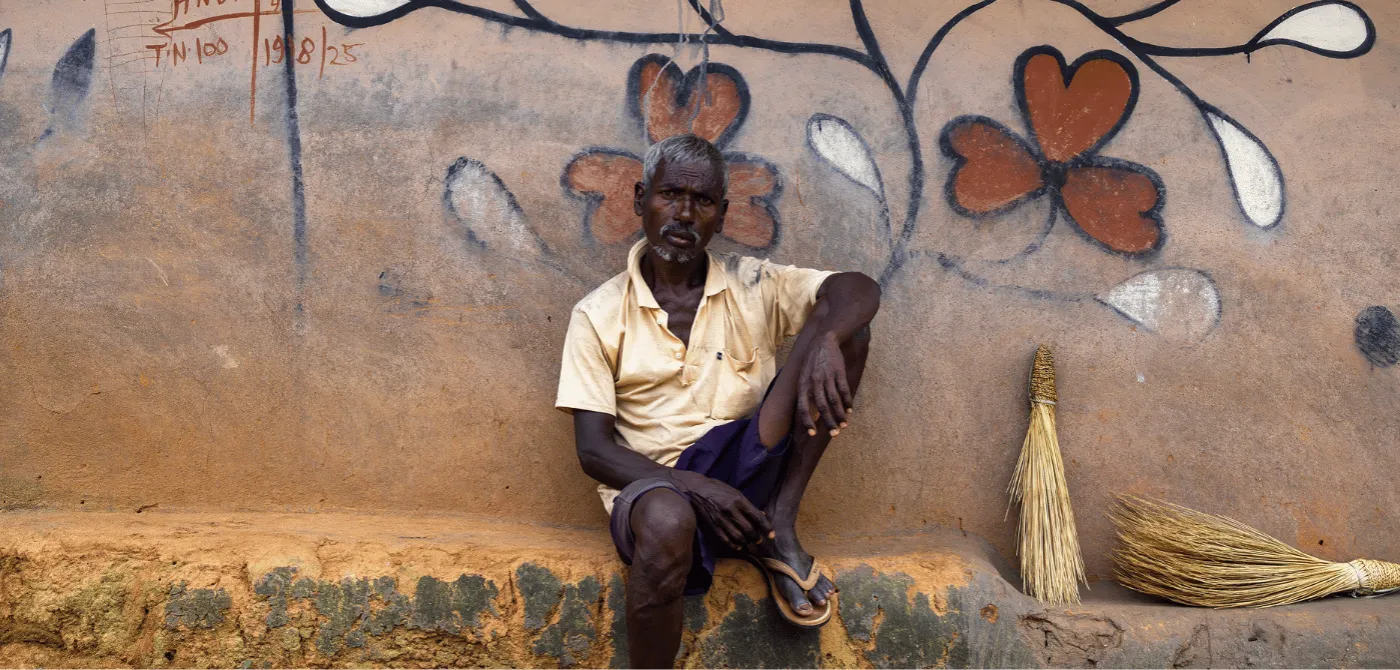



It had been a decade since her husband’s death, but Bimla Godsora, a 70-year-old Ho Adivasi from Jharkhand’s West Singhbhum district, received neither a widow pension nor an old age pension. She could not apply for the former because she lacked her husband’s death certificate. Her Aadhar card incorrectly recorded her as being below 60, making her ineligible for the latter.
The SIR’s reliance on documentary proof becomes particularly troubling, as it risks reinforcing the unequal relationship that many Adivasis have long had with the state.
Bimla eventually obtained her husband’s death certificate in 2021 and enrolled for a widow pension with the help of an Adivasi activist. Yet her woes did not end immediately. Kamal, an activist who helped her with the documentation, recounted what happened at the bank when she went to withdraw her pension. “Her Adhar card spelt her name incorrectly. The letter ‘V’ had been entered instead of ‘B’. The staff said they couldn’t complete the KYC without correcting the mistake, so they wouldn’t release the money.” It took another round of protests by Kamal to persuade the bank officials to give Bimla her money.
During my fieldwork in Jharkhand, I encountered many similar stories. Pension applications were delayed because names differed across documents. Ration cards were cancelled because biometric authentication repeatedly failed, Voter identity cards listed wrong ages or misspelt names. Aadhaar cards issued with mistakes that later became near impossible to correct without obtaining multiple documents and repeated visits to various government offices. Such errors in the government-issued documents often have profound consequences for poor and elderly citizens like Bimla, leading to their exclusion from welfare programmes and denial of benefits that are, at times, essential to their survival—a pattern documented not only in Jharkhand but across India. Everyday bureaucracy thus reveals itself not merely as an instrument of governance but as a site of structural violence, where documentation and paperwork mediate access to rights, recognition, and state benefits.
The Election Commission’s Special Intensive Revision (SIR) extends that same logic to the right to vote. By requiring citizens to establish their eligibility through official documents, it shifts the burden of proof onto those whose relationship with the state’s paperwork has always been the most precarious. After the conclusion of the first phase of SIR enumeration in Jharkhand , 14.03 lakh voters, or 5.3 %, remained unmapped to the 2003 electoral roll. Another 45.55 lakh voters were found to have “logical discrepancies”, while 3.66 lakh had “demographic similar entries”. Combined, about 63 lakh currently excluded voters will be served notice by ECI for a hearing, granting them seven days to submit the relevant documents. Although 75 % of voters have been reported to be mapped, booth level officers (BLOs) are apprehensive that numerous surname discrepancies between current and 2003 electoral rolls could cause some initially mapped voters to be omitted from the draft roll.
The mapping exercise under SIR has further implications for married women in rural Jharkhand: lack of access to mobile phones and the internet for many necessitates travelling to natal homes to obtain their parents’ electoral documents from 2003. Single women or widows estranged from their in-law families, meanwhile, face significant challenges in accessing land titles or electoral documents required for SIR mapping. The burden of spending additional resources, time, and effort to obtain these documents might lead to the disproportionate exclusion of women voters, a pattern already evident across seven states, where 23 lakh women voters were found to be missing from the electoral rolls after SIR.
It is about how bureaucratic errors acquire lives of their own, accumulating over decades until they determine who receives welfare, who is recognised by the state, and increasingly, who is permitted to vote.
The fear is that Jharkhand will see an iteration of the uncertainty post SIR in other states, where the exercise has resulted in the deletion of millions of names from electoral rolls. In Bihar and West Bengal, those excluded from SIR electoral rolls, particularly the socio-economically poor and marginalised, already face the loss of rights and entitlements, and services accorded based on citizenship as a result of state-led measures. Around 3 % of ration card holders in Bihar have been removed based on the electoral roll prepared after the SIR exercise conducted last year. In West Bengal, the chief minister announced in his first cabinet meeting that those excluded from the electoral roll would lose access to subsidised rations under the PDS as well as other state sponsored welfare benefits. Although the order has not been put into effect, many poor families, mostly from minority and lower-caste, continue to live in under constant uncertainty and fear of not just losing access to subsidised ration and cash transfer, but also losing citizenship status and being labelled as illegal immigrants.
The difficulty in accessing government offices and the inability to navigate their bureaucratic labyrinths could therefore contribute to disenfranchisement on a much larger scale in Jharkhand, particularly when voters are flagged for “logical discrepancies” i.e. spelling errors in names or inconsistent age entries, as were found in West Bengal, Bihar, and other states. Besides, in Jharkhand too instances of wrongful mass deletion of voters by a BLO targeting Muslim families and demands for bribes for processing the enrolment forms have recently surfaced.
Yet the problem runs deeper than the practical difficulties of obtaining documents or navigating government offices. In Jharkhand bureaucratic exclusion was often sustained by a more pervasive attitude of indifference towards Adivasis.
Block-level officials routinely blamed the supposed “backwardness,” and “lackadaisical” attitude of Adivasi communities for the absence of schools, healthcare, and other basic infrastructure in Ho villages, rather than see the state’s own developmental failures. Such perceptions did more than express personal prejudice. They shaped how officials respond to documentary errors, delayed applications, and welfare claims, normalising the exclusion of Ho families by portraying them as less deserving of state support.
Bureaucratic indifference, in other words, was not simply the product of individual prejudice or administrative inefficiency. It reflected a much longer history in which Adivasis have been viewed through a paternalistic lens that cast them as “primitive” populations to be administered differently rather than as equal citizens entitled to rights. It is against this backdrop that the SIR’s reliance on documentary proof becomes particularly troubling, as it risks reinforcing the unequal relationship that many Adivasis have long had with the state.
If documentary imperfections become grounds for disenfranchisement, millions of India’s most marginalised citizens risk paying the price for mistakes they neither made nor had the power to correct.
Since colonial times, documentary regimes have rendered the state illegible and inaccessible to India’s disadvantaged groups, making access to government offices challenging and often intimidating. Under SIR, these longstanding bureaucratic burdens risk acquiring entirely new political consequences. The issue is therefore not simply who appears on the electoral roll, but what it means when documentary records—so often incomplete, inaccurate, or difficult to correct—become the basis on which democratic participation itself is determined.
For decades, voting has been one of the few institutions through which millions of India’s poorest and most marginalised citizens have participated as political equals. SIR risks making that participation contingent on navigating the same documentary regime that has long governed already fraught access to pensions, rations cards, and other basic entitlements. Linking welfare provisioning to inclusion in electoral rolls can only worsen their fate.
While the Supreme Court has reiterated that exclusion from electoral roll cannot itself determine citizenship status, the court’s approach in the SIR proceedings has been described as an instance of “judicial evasion”. By failing to adjudicate a substantial constitutional question in a timely manner, the Court effectively allows the executive branch of the state to carry out activities that are under challenge, eventually creating a fait accompli with serious consequences on the ground. The implications of such an approach on citizenship are evident in what Niraja Jayal Gopal (2026) observes: through its judgement the court has “bestowed upon the Election Commission anticipatory power over the determination of citizenship,” following a logic similar to that of NPR-NRC, whereby “SIR too places the burden of proof on the individual voter suspected of being an illegal migrant or non-citizen”
Bimla Godsora’s story is not simply about an incorrect date of birth or name. It is about how bureaucratic errors acquire lives of their own, accumulating over decades until they determine who receives welfare, who is recognised by the state, and increasingly, who is permitted to vote. If documentary imperfections become grounds for disenfranchisement, millions of India’s most marginalised citizens, who have historically borne the greatest bureaucratic burdens, risk paying the price for mistakes they neither made nor had the power to correct.
Jay Prakash Sharma is a sociocultural anthropologist and a postdoctoral research fellow at the Center for the Advanced Study of India (CASI), University of Pennsylvania, USA.