





The Himalayan region has been experiencing unprecedented disasters during the last few decades. Data on disaster events and economic losses show that the Himalayan states have in the past few years been affected in a disproportionate manner and in greater degrees. The increasing intensity and scale of natural disasters in the Himalayan is an indication that the region is disproportionately affected by climate induced disasters. Studies on climate change predict that a growing frequency of disasters as global temperatures rise.
Yet, India’s financial outlays for disaster management remain backward looking and are skewed towards the non-Himalayan states.
The Vulnerable Himalayas
The western parts of the Indian Himalayan Region (IHR), stretching from Jammu and Kashmir to Uttarakhand, are vulnerable to earthquakes, landslides, floods, forest fires and glacial lake outburst floods (GLOFs). The eastern region, spanning Sikkim to Arunachal Pradesh, is largely prone to floods, land erosion and landslides. Most parts of the Ganga and Brahmaputra river basins are liable to floods. Three-quarters of the 0.42 million sq. km of India’s land prone to landslide hazards are in the Indian Himalayas, according to a landslide map prepared by the National Remote Sensing Centre (NRSC).
These inherent vulnerabilities of the Himalaya are further accelerated by climate change and increasing anthropogenic activities. The IPCC Fourth Assessment Report in 2007 had warned that Himalayan glaciers are receding much faster compared to other glaciers in the world. It attributed increasing temperature, land-use change and anthropogenic pressure on these glaciers for faster recession of glaciers.
The Himalayas saw nearly a quarter of the 409 disaster events in India between 2001 to 2025, recorded by the EM-DAT database of Centre for Research on Epidemiology of Disasters, which tracks worldwide disaster events from 2000 onwards and which is the closest we have to a public dataset of such events. The proportion increases if we include the 69 disasters in the same period which overlapped the boundaries of Himalayan and non-Himalayan states of India.
Figure 1:Disaster Events in India, Region-wise
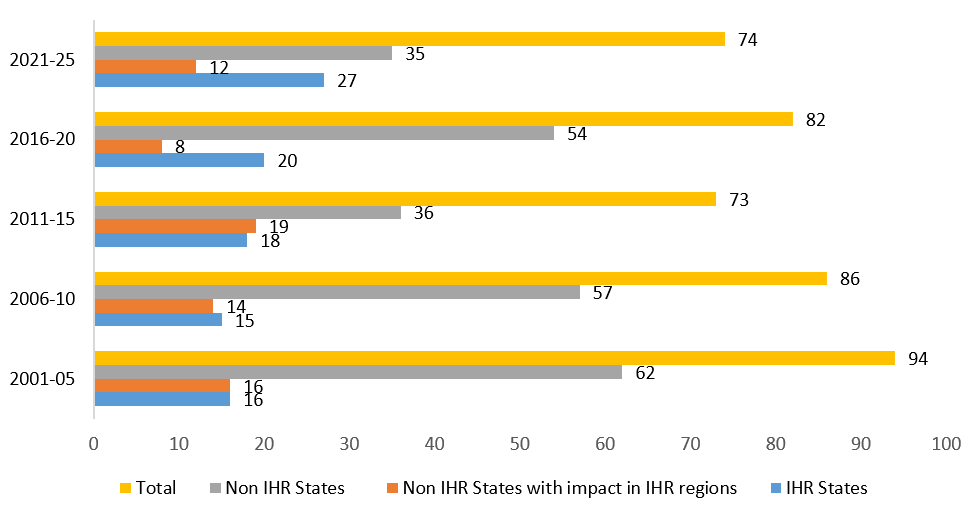
More worrying is that the number of disaster events affecting the Himalayan region have gradually increased. As Figure 1 shows, in 2021–2025 they made up more than half of total disaster events recorded in India during the period. The impact on humans has also increased many fold in this period. EM-DAT records show that the Himalayan region accounted for 63.4% of total human life loss from 2020 to 2025 (Figure 2). The share of these states in the prior two decades was just 9.4%.
Figure 2: Effects of Natural Disasters
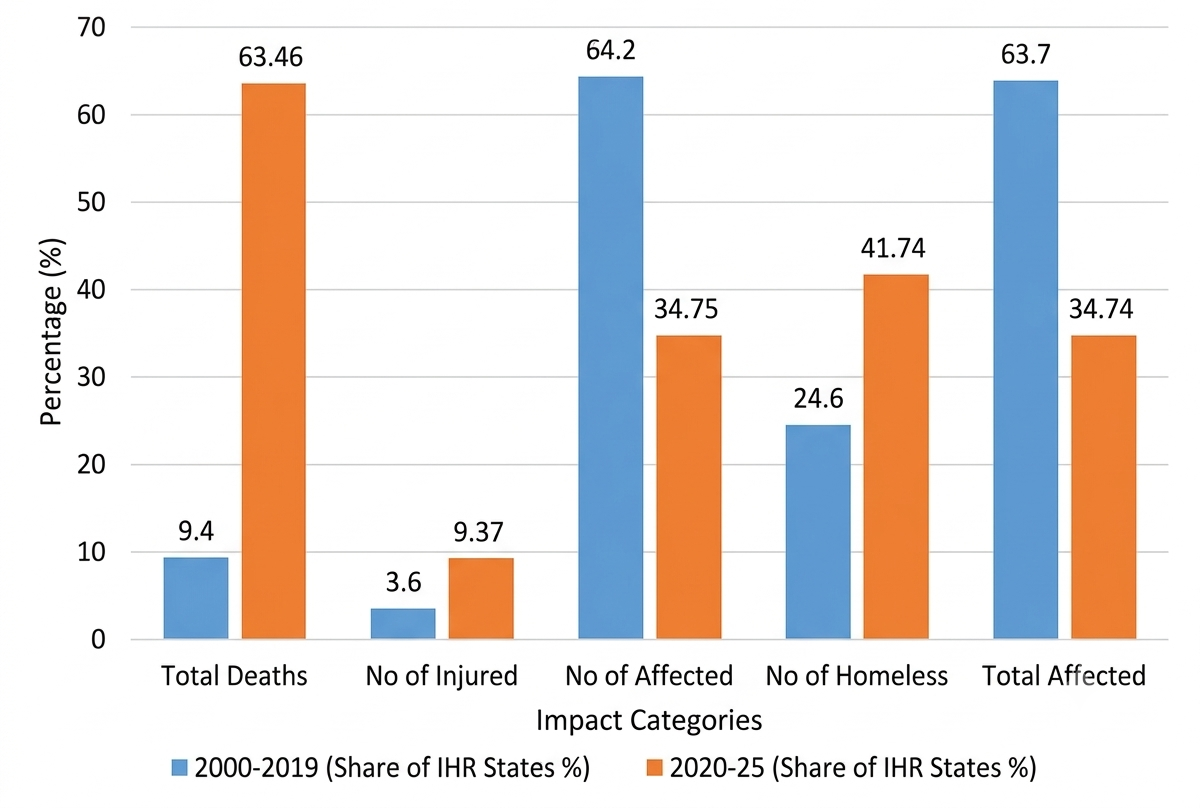
Note: Numbers of affected people is gross, to account for multiple disaster events affecting the same people.
The EM-DAT database also reveals that the share of injured and otherwise affected people have increased in the Himalayan states in the last five years. The region accounted for 41.74% of total homelessness and 34.74% of total people affected in any manner due to disasters in India It has recorded 36% of total disaster events and shared the burden of 63.46% of human life loss.
Financial Preparedness
According to EM-DAT, India lost economic wealth worth $162.63 billion (approximately Rs. 11.15 lakh crore at 2026 prices) during the 2000–2025 period. The IHR accounts for 13.88% of total economic damage. However, with the increase in intensity and scale of disasters in Himalayan region, the ratio of economic damage of IHR has also increased significantly in the last few years.
Figure 3: Total Economic Damage (crores of rupees)
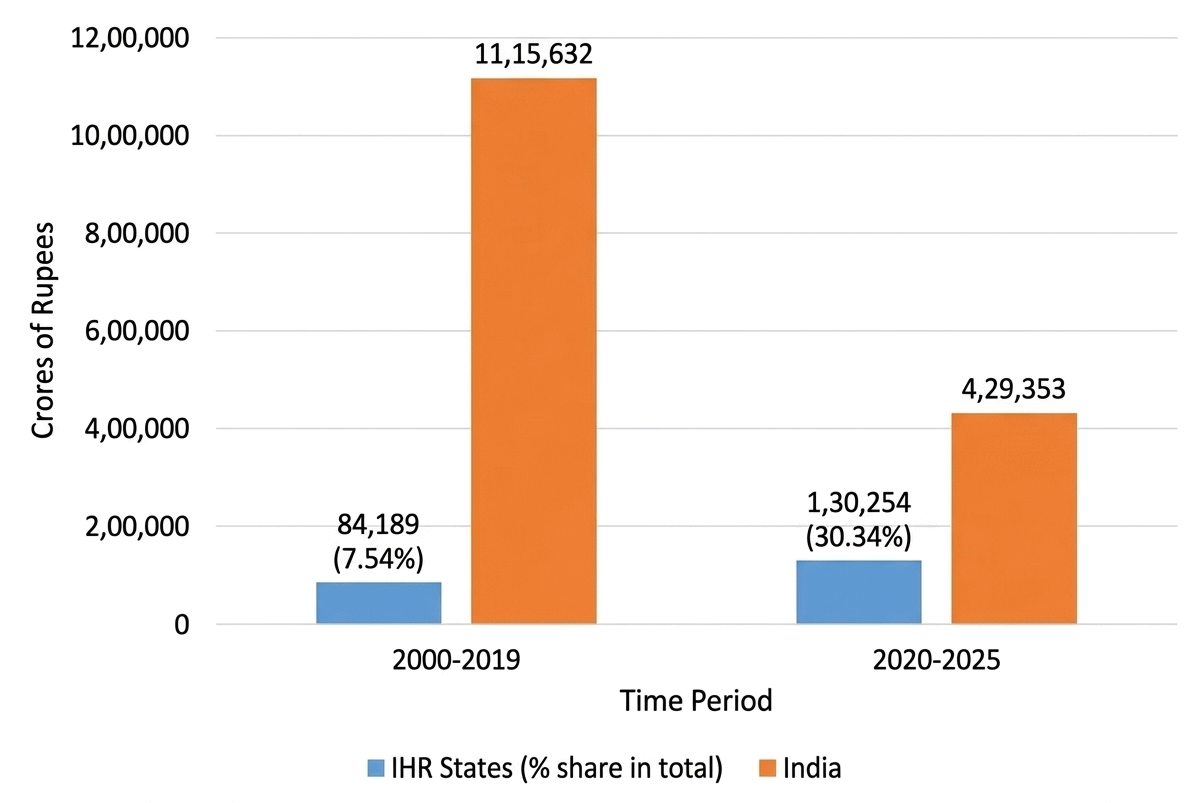
Figure 4: Allocations for Disaster Management (crores of rupees)
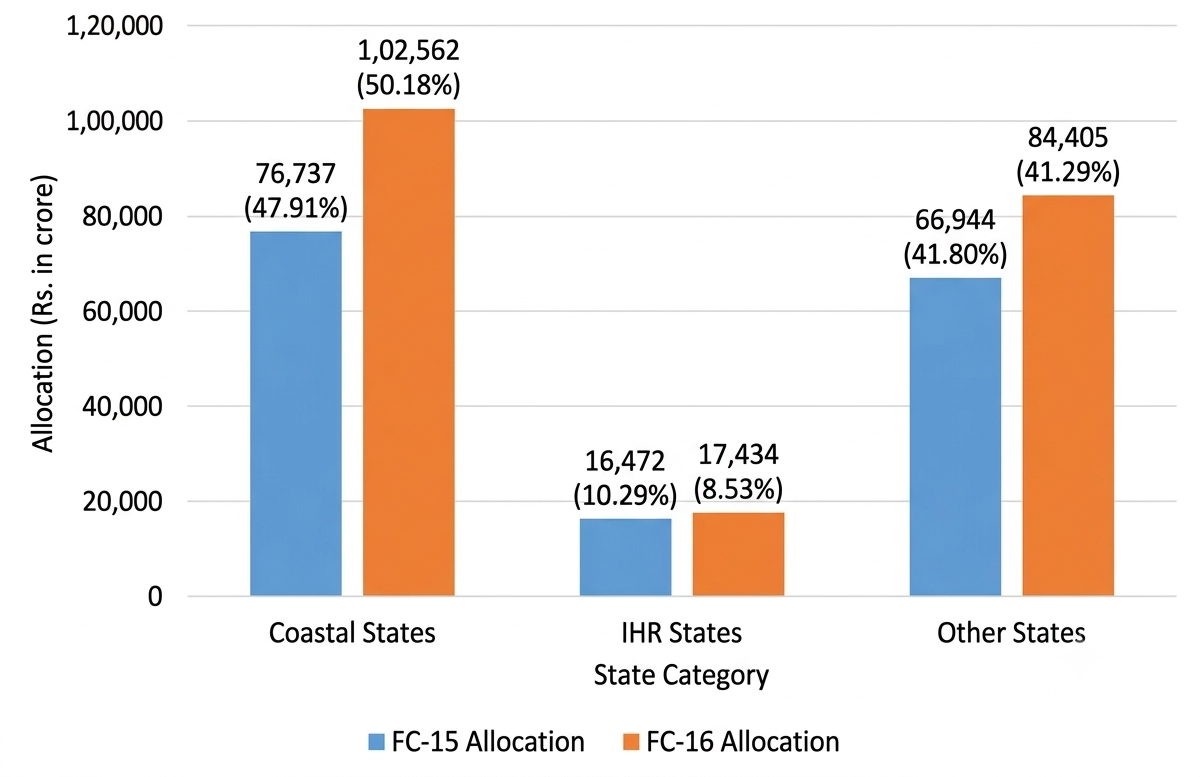
Despite their rising vulnerability, the share of Himalayan states in the funds for disaster management has declined to 8.52% in the 16th Finance Commission period (2026–2030) from 10.28% in 15th Commission period (2020–2025).
Figure 5: Financial Preparedness to Manage Disasters
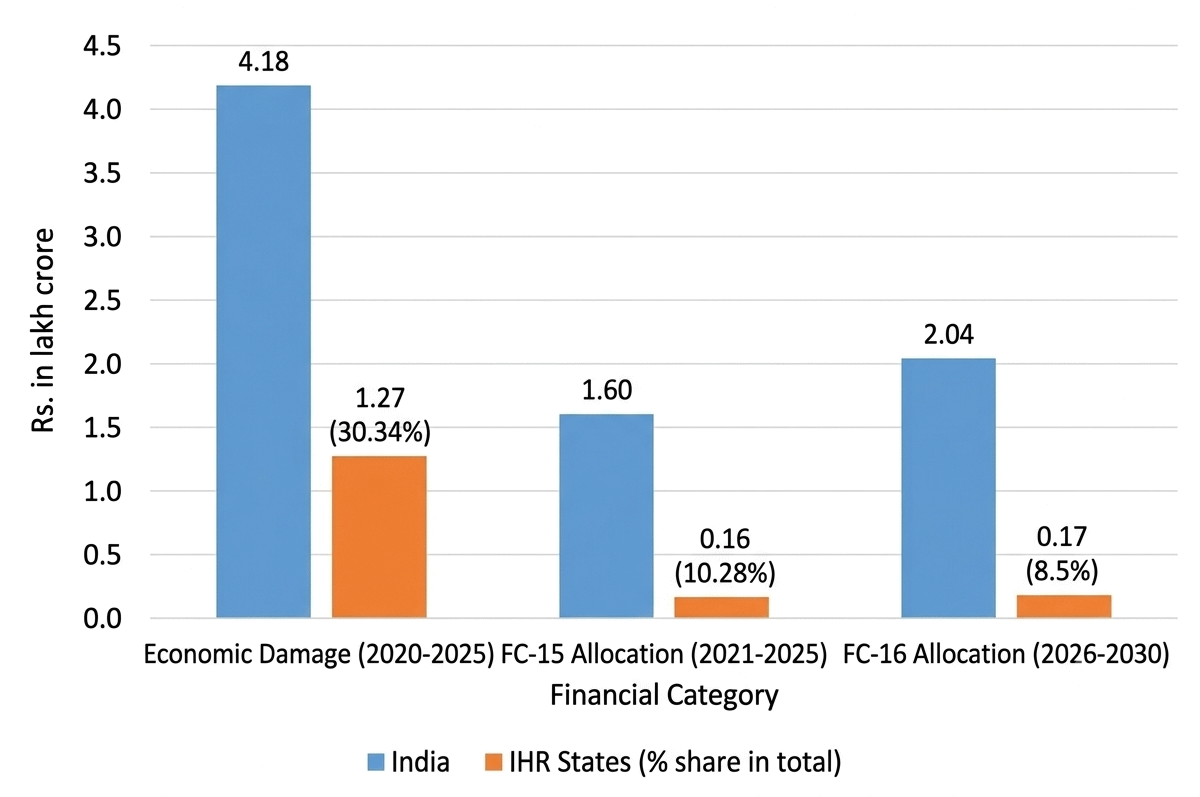
This is due to the Sixteenth Finance Commission’s allocation formula. It uses two parameters: the Disaster Risk Index (DRI), with 30% weight, and states’ average disaster-management expenditure over the previous 10 years, with 70% weight. The disproportionately high weight given to expenditure history disadvantages smaller states, as the Himalayan states are, whose expenditure has historically been low because of smaller allocations.
Conclusion
In the last few decades, several investments have gone into disaster preparedness in the Himalayan states, including creating disaster management funds, disaster response forces, research and implementation institutions. However, with the rise in incidents of disasters and further accelerated by climate change and anthropogenic pressure, the region's preparedness needs to be updated, strengthened and further invested. One of ways to meet this goal is to increase funds in accordance with increasing economic, ecological and human loss in the Indian Himalayan region.
Data suggests that the scale and intensity of the disaster has tremendously increased in Indian Himalayan States and UTs. However, supply of adequate finances to manage these disasters remained an ignored policy area. While the loss of livelihoods, ecology and lives to natural disasters in Himalayan states is disproportionately high, available finances to them remain negligible.
Jeet Singh is a policy researcher associated with Rajiv Gandhi Institute for Contemporary Studies, New Delhi.