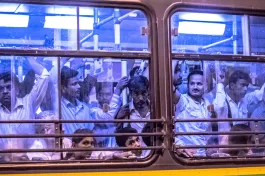

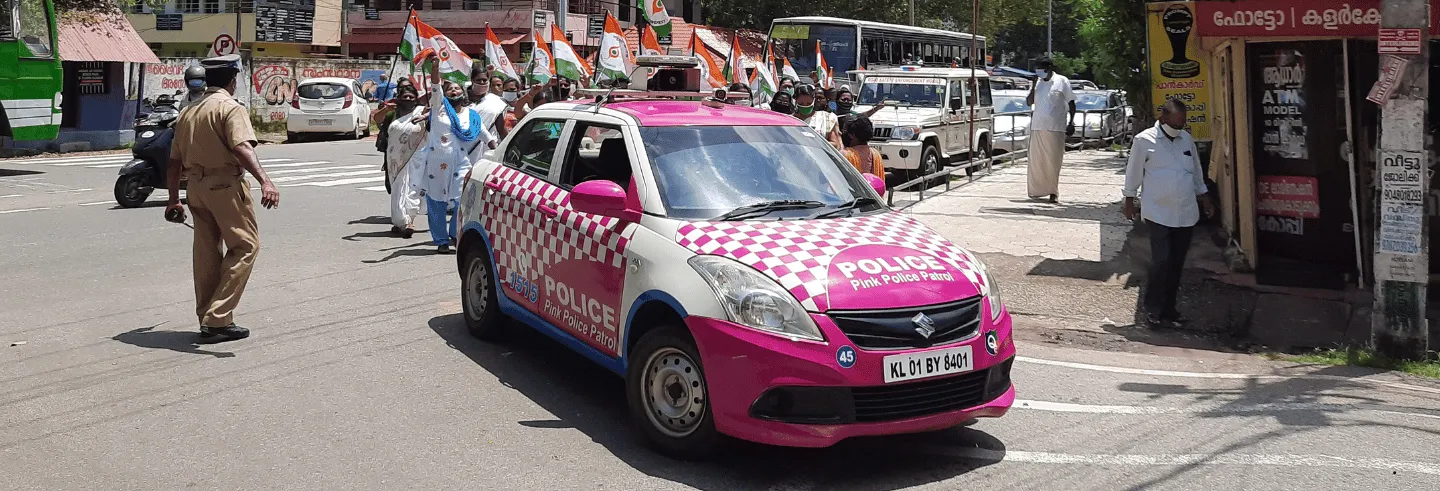



The proposal for women-only pink buses by the Kerala State Road Transport Corporation (KSRTC) has once again brought the issue of women’s safety in public spaces to the fore in Kerala. At first glance, the pink bus project feels reassuring—buses staffed only by women, reserved for women passengers, along with a pink taxi service for last-mile travel. For many women who plan their daily routines around routes, timings, and possible risks, such a service may offer a small sense of comfort.
Kerala’s Pink Initiatives
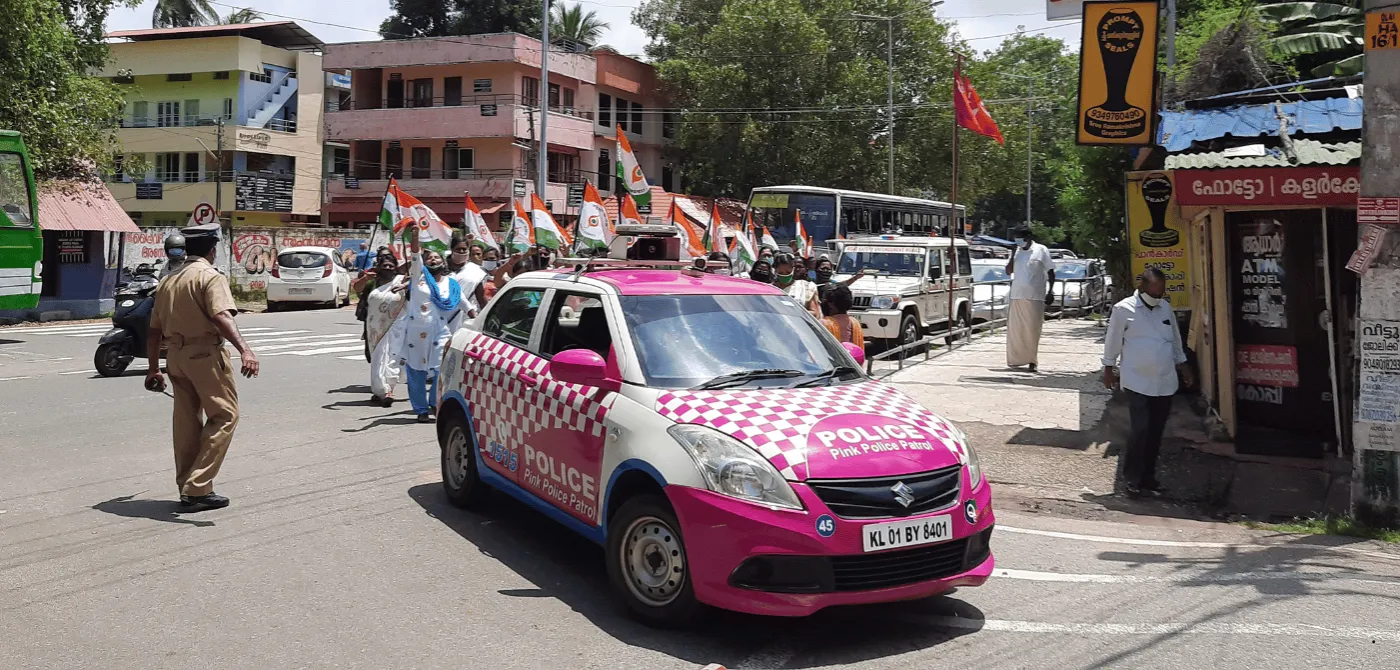
This proposal is also part of a broader pattern. Over the years, Kerala has introduced several “pink” initiatives under the Kerala Police, including Pink Police Patrols, Pink Help Desks, Pink Autos, Pink Janamaithri Beat, Pink Shadow, and Pink Romeo. All these efforts point to something women have always known from experience—public spaces do not feel the same for everyone. For many women, going out is never completely carefree. They often think about which route to take, what time to travel, and whether a place will feel safe.
These pink initiatives can provide immediate relief. The presence of women police officers at a bus stand, for instance, can change how a place feels. A women-only bus may allow passengers to travel without the constant alertness that crowded buses often demand. For a student who wants to stay back for evening tuition, or a nurse returning home after a late shift, these measures make certain journeys feel easier and safer.
At the same time, these steps also show how the state usually responds to women’s safety concerns—by creating separate or protected spaces rather than making the whole system safer. Building and running fully functional police stations with sufficient numbers of trained women officers across the state takes time and resources. However, starting a pink police unit randomly or opening a pink help desk is much quicker and more visible. Women themselves understand this difference. Even where pink units exist, many still file complaints at regular police stations. They know that the legal process finally moves through the main system. A complaint might start at a pink desk, but it soon enters the same bureaucratic channels, which are still largely run by male officers.
The pink bus mirrors the same dilemma. It may feel safer for those who use it. But it also suggests, in a quiet way, that regular public buses are still not safe enough. Thus, instead of making travel better for everyone, it creates a separate option for women. The real problem is not the service itself, but what it might slowly lead the public to accept—that women’s safety has to be arranged through special services rather than being something the whole system naturally provides.
Creating new forms of separation
The pink innovation is not unique to buses in terms of public transportation. When IndiGo, India’s largest airline, introduced pink seats in 2024, women passengers could choose seats away from men, and many people initially welcomed the move. It recognised a discomfort that many women quietly experience while travelling. But soon, the idea faced criticism not just because it commercialised women’s safety by charging more for the pink seat. Many argued that instead of addressing or punishing those responsible, the policy simply reinforced segregation between women and men.
In a way, it accepted the problem rather than solved it. The message seemed to be that men will behave this way, so women should protect themselves by choosing the pink seat. If they choose not to, then the risk of harassment becomes their responsibility.
In that sense, it raised a familiar question—do such measures solve the problem, or just manage it by creating new forms of separation? It was eventually withdrawn, leaving behind the uncomfortable truth that symbolic solutions can reveal the depth of a problem without resolving it. In practice, suspending passengers for misbehaviour could cost the airline more in the long run. Instead, the pink seat option allowed it to make extra money from women who wanted to avoid such situations. At least in the KSRTC plan, women are not asked to pay extra.
Free bus travel for women
Another scheme that has been in recent election campaigns in different states is free bus travel for women. Though it differs in nature from the pink seat project, the project has already been introduced in states like Tamil Nadu, Karnataka, and Delhi. The scheme is based on the belief that free bus travel will help many women, especially the poor, meet everyday needs. Yet, critics question the financial sustainability of these schemes, given that the public transport departments in many states are already financially unstable. More importantly, the critical question is whether free bus travel, in itself, makes travel safe and comfortable for women.
In Kerala, the Congress, which is currently in the opposition, has put forward a similar proposal in its campaign for the state assembly election on 9 April 2026. But the question remains whether we should rely on schemes such as free bus travel for women or the Pink Bus scheme to improve women’s mobility and safety, or instead focus on making public transport itself safer for everyone.
This is not a story about just Kerala or India. Many cities around the world have tried women-only transport as a response to harassment. In Tokyo, women-only coaches were introduced during rush hours. In Mexico City, authorities introduced separate metro cars and buses for women. These measures helped in the short term. More women began using public transport, and many said they felt safer during their daily commute.
But the cities that achieved more lasting change treated such “pink” measures as temporary steps. Over time, the focus shifted to making the entire transport system safer for everyone—through better lighting, surveillance, staffing, and stronger action against harassment. Instead of relying only on separate spaces, the aim was to restructure the system itself.
Women do not travel in the same way everywhere, even within the same state. The daily routine of an office worker in Kochi is very different from that of a woman in rural Wayanad or Kasaragod. In cities, the worry may be about getting home safely after dark, finding a well-lit bus stop, or catching the next bus on time. In many rural areas, the problems are more basic—buses that come only a few times a day, a long walk to the road, and the discomfort of waiting in the dark, alone.
Need for gender mainstreaming
Scholars in feminist geography have long argued that urban space and mobility are not gender neutral but are shaped by social relations and everyday power structures (Hanson 2010; Massey 1994; Fainstein 2010). These studies have shown that women often use cities differently from men. Her daily travel is rarely a single long commute. Instead, it usually involves several short trips, going to work, dropping children at school, buying groceries, visiting clinics, and managing other everyday responsibilities. These movements are also shaped by concerns about safety. Many women, in such a situation, think carefully about which route to take, what time to travel, and which form of transport to use, depending on where they feel safer.
Thanks to these insights, some cities have started paying closer attention to gender in urban planning, trying to design transport systems, streets, and public spaces that better reflect how women actually move through the city.
A frequently cited example is Vienna, which adopted a gender-mainstreaming approach to transport and infrastructure planning in the 1990s. Instead of creating separate services for women, the city looked at the small, everyday things that make travel feel uncomfortable or unsafe such as dark bus stops, hidden stops, long wait times, and routes that did not align with people’s daily routines.
It improved lighting, made bus stops easier to see, ran buses even during quieter hours, and planned routes so that they connected better with schools, hospitals, shops, and workplaces. India can adopt this approach by focusing on small, everyday safety improvements, such as better lighting and route planning, and making safety a standard part of the system rather than a special feature.
Work to be done
So, the pink buses alone cannot solve the problem in a place. They may help for now, but people also need safer bus stops, simple ways to report problems, staff who respond properly, and a general change in how people behave in public spaces. Otherwise, the pink solution may remain a small fix for a much larger issue. Having women police officers, bus drivers, and conductors on patrol matters. When young girls see women in these roles, it fosters pride and a sense of belonging, gradually shaping inclusive perceptions of public spaces.
Kerala often takes pride in its achievements in health, education, and social development, and with good reason. Yet the fact that it still needs pink safety measures also tells us something important. Equality may exist on paper, but everyday experiences can be very different. If women feel safe only inside a pink bus or near a pink help desk, then the wider public space is still not equally comfortable for everyone.
Nevertheless, the pink bus is a sign that the state recognises the problem. The real question is whether we can reach a stage when such special arrangements are no longer necessary. Until then, pink carries two meanings—it offers some comfort for now, but it is also a reminder that there is still work to be done.
K. C. Mujeebu Rahman is with the Kotak School of Sustainability, IIT Kanpur. His work focuses on law, the economy, small business, religion, mobility, and social change in India.