
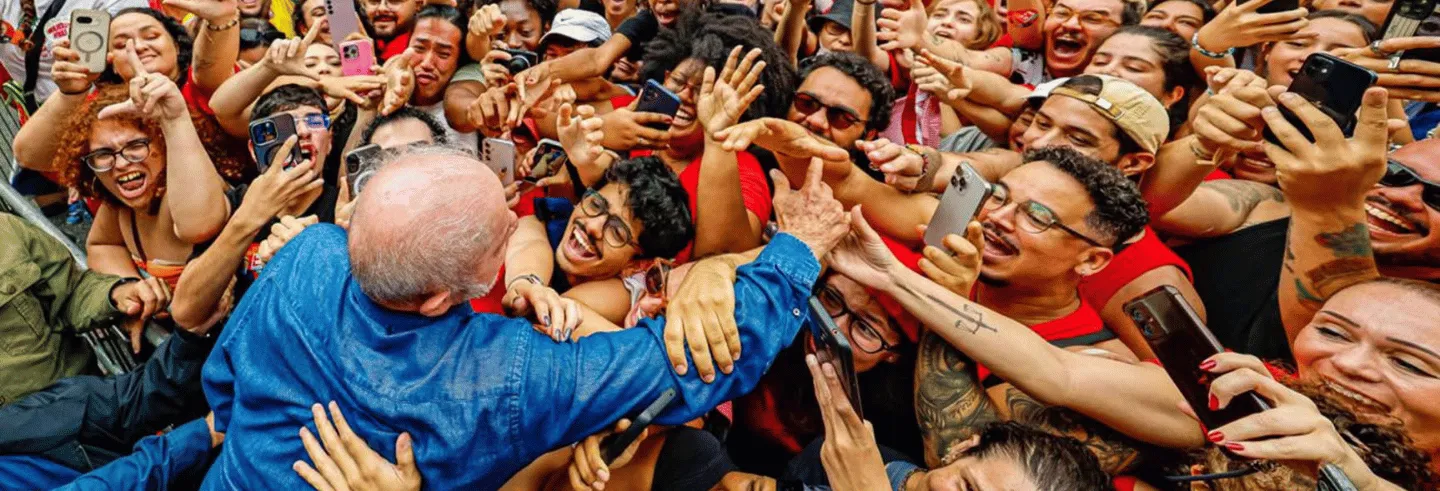



Luiz Inácio Lula da Silva’s victory over his far-right opponent Flavio Bolsonaro in Brazil’s high-stakes presidential election has been celebrated the world over as a resurgence of left-wing political parties in mainstream politics. One of the key highlights of this miraculous victory was the way in which his Workers’ Party (PT) was able to mobilise a lead of almost 4.4 million voters over his opponent in the final polls, after trailing Bolsonaro in the first round.
Brokers or intermediaries are largely known as actors who help citizens in navigating the maze of bureaucracy by using their knowledge of state processes and contacts with people in power.
In doing so, Lula, as the president is better known as, became the first ever candidate to win the presidential elections after trailing in the first round of polling. In the analysis that has followed this historic victory several factors have been attributed to the successful last-minute mobilisation by PT.
These include a renewed campaign strategy and change in the vocabulary of slogans, an overhaul in the welfare benefits for voters, an emphasis on social media campaigns, effective use of WhatsApp by creating a ‘WhatsApp Army’ by Congressman Andre Janones (who successfully mobilised almost 10 million supporters through his daily messages in mission-mode).
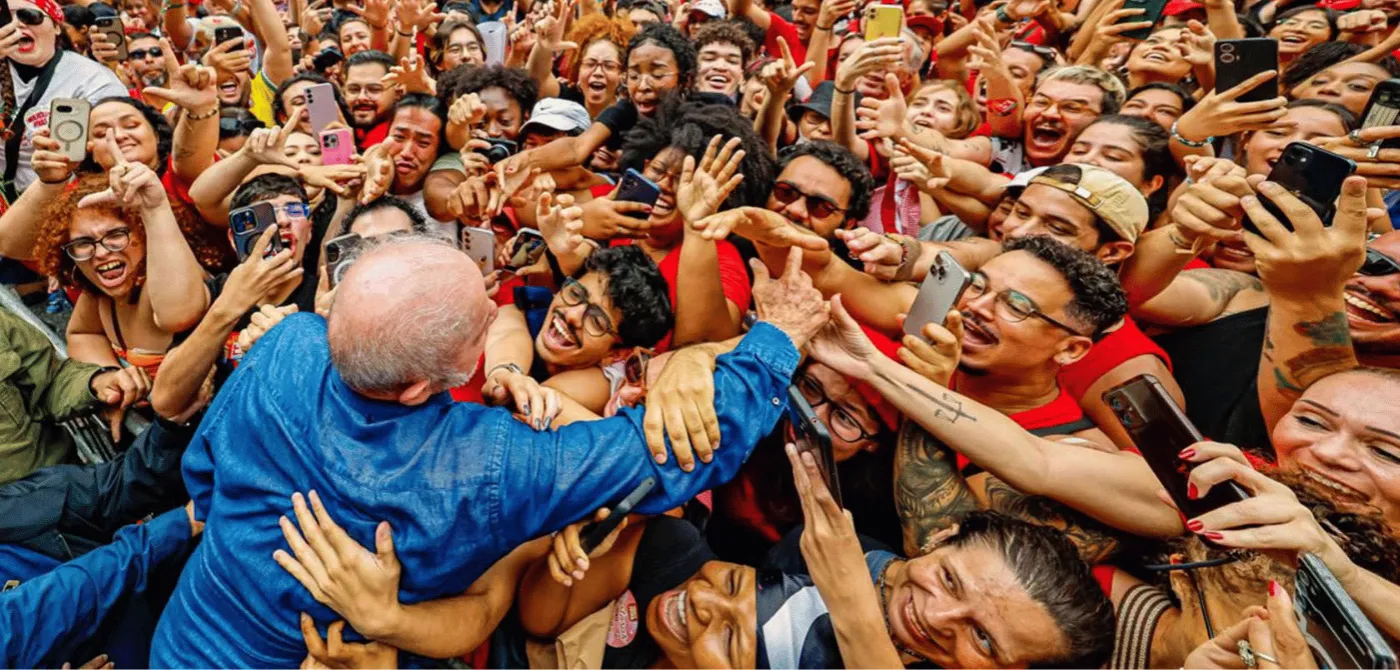
Amidst these several reports of electoral mobilisation, some have also pointed out to the importance of street mobilisation and how Lula’s team was able to successfully complement digital mobilisation with in-person mobilisation on the ground. Such strategies helped Lula’s campaign gain more capillarity, beyond the work of formal structures of parties and electoral committees. This helped the incumbent win massively in cities like Sao Paulo and Rio de Janeiro, even though Bolsonaro won these states in the southeast.
A cursory look at a map of the surge in Lula’s electoral support clearly indicates that the PT succeeded in mobilising a large number of voters from the working classes and low-income neighbourhoods or favelas in major cities like Recife in the northast and Sao Paulo and Rio de Janeiro in the southeast.
The actors involved in these street level in-person mobilisation efforts have played an important but somewhat overlooked part in Lula’s electoral victory. These are the informal actors like community leaders, intermediaries or intermediários and brokers or cabos eleitoral (electoral corporals), who mediate between voters and citizens in the low-income neighbourhoods and favelas of Brazilian cities and local politicians, bureaucrats and other representatives of the state.
Brokers and Clientelist Politics
The scholarly literature on clientelism and informal politics in Latin America is replete with accounts of such intermediaries working steadfastly in urban slums and favelas, emerging as a vital character of democratisation operating in the underbelly of politics in urban areas.
Brokers or intermediaries are largely known as actors who help citizens in navigating the maze of bureaucracy by using their knowledge of state processes and contacts with people in power. Such navigation or mediation includes, but is not limited to, getting access to welfare subsidies, school or hospital admissions, acquiring documentation establishing eligibility for government welfare schemes or scholarships etc, obtaining recommendation for jobs and so on. In exchange for such services, these intermediaries or mediators often persuade or convince citizens to vote for candidates preferred by them, thus acting as a conduit between the voters and the candidates/politicians.
Brokers or intermediaries play an important role in such clientelist exchanges by acting as conduits between the patrons (politicians) and clients (voters).
While much of the electoral mobilisation and electoral support galvanised by brokers happens close to elections, scholars have pointed out through extensive ethnographic studies in Recife and Rio de Janeiro that the mediation work of brokers is not time-bound, and they often use their services to regulate the social life of their neighbourhoods beyond the ballot box (Koster and Eiró 2021). However, they are a crucial force in mobilising the last-mile voters, especially in highly competitive scenarios like the one seen in Brazil recently.
Clientelist politics, which is usually understood as the distribution (or promise) of resources by holders of political office or political candidates in exchange for political support, has long been a crucial element in understanding electoral politics in Latin America, especially in Brazil and Argentina. Brokers or intermediaries play an important role in such clientelist exchanges by acting as conduits between the patrons (politicians) and clients (voters).
Javier Auyero, who has worked on intermediaries, known as punteros, belonging to the Peronist Party in the slums of Buenos Aires, calls such brokers as "problem solving" networks, as they offer alternative channels for "getting things done", circumventing bureaucratic indifference. According to Auyero, punteros provide food in state-funded soup kitchens, broker access to state subsidies for the unemployed or to public hospitals, distribute food and/or food vouchers to mothers, children and the elderly, and even occasionally hand out toys to kids (Auyero 2000).
Similarly, from their extensive ethnographic studies in the favelas of Rio de Janeiro and Recife, scholars like Robert Gay and Martijn Koster, have captured how the intermediaries consistently help poor voters to get access to urban services and ensure their participation in participatory budgetary schemes for welfare delivery like Bolsa Familia etc. (Gay 1999; Koster 2012).
Brokers in such contexts are often found to engage in addressing collective demands such as the legalisation of tenure, the provision of water, electricity, and sewerage, and improved access to transport, healthcare, and education, instead of just distributing freebies like alcohol or soccer team shirts before elections, although the latter also does occur on the sidelines of such collective mediations.
Facilitators in Brazil
The clientelist structure that marked Brazil, especially in the northeast until the end of the 20th century was known as coronelismo, a political system where local elites—coronéis (colonels)—were the state representatives at the local level. They controlled public resources that were directed to relieve the region’s massive poverty and famine. Peasants and rural workers gave their loyalty to the colonels in exchange for the public resources and protection that this patronage provided.
With mass migration of rural population to Brazil’s urban areas, a large number of the rural workers and peasants came to live in the informal and often illegal settlements (the favelas), carrying with them the coronelismo political system of patronage and protection. Such informal arrangements continued even during the military rule in 1970s and 1980s.
As the process of democratisation gained traction after the end of the military rule in 1985, the nature of such clientelist networks transformed and evolved into the informal networks found presently. Such informal mediation networks in Brazil now have three kinds of actors:the lideres comunitarios, intermediários and cabos eleitoral.
The key element in the mediation work and brokerage performed by intermediários is that these are long-term associational ties, cultivated over long periods of face-to-face interactions and are not developed just before elections.
The intermediários (intermediaries) are informal facilitators in the access to public services and other resources. Although their actions are often disputed and border on the illegal, their existence is commonly accepted across parties. Their work includes but is not limited to electoral mobilisation for different parties. But on the basis of their longstanding association with the poor voters and a credibility earned through service delivery, they command influence among voters in the localities of their influence.
This prompts politicians to make a beeline to the intermediários to mobilise voters for ensuring electoral support. The key element in the mediation work and brokerage performed by intermediários is that these are long-term associational ties, cultivated over long periods of face-to-face interactions and are not developed just before elections.
This is unlike the mobilisation done by cabos eleitoral (electoral corporals), who are facilitators positioned between the candidate and the electorate. Although widespread, they are criticised by politicians as they are believed to opportunistically sell their services to the highest bidder. When politicians have to entice the votes of particular communities, and cannot offer much long-term substantive benefits but can hand out frugal short-term material benefits like cash and other allurements they turn to the services of cabos eleitoral for this ‘vote buying’. The cabos eleitoral canvass for politicians by organising campaign teams, referred to as the equipe, made up of fellow slum dwellers.
Equipe members canvass on behalf of candidates, wear their t-hirts, organise posters and the like. In return, they receive financial compensation, which is negotiated with the candidate by the community leader. Equipe members are infamous for shifting their loyalties. This is why the reputation of cabos eleitoral has acquired a negative connotation in recent years. Scholars have pointed out that many brokers refrain from being identified as cabos eleitoral anymore, identifying themselves as either intermediários or líderes comunitários (community leaders) (Koster 2012).
The credibility of community leaders among their followers and in their localities is also judged on the basis of their ability to provide services on a long-term basis.
These community leaders are well-known socially and politically active people from low-income urban neighbourhoods or rural settlements. They are known for their extensive social networks, including with politicians, bureaucrats and entrepreneurs. They struggle for collective improvements for their community for example by ensuring that public works are carried out) and grant personal favours to fellow residents (for instance by helping them through the labyrinthine state bureaucracy). In so doing, they form important bridges between a disadvantaged population and well-resourced patrons. The main job of community leaders is seen as prestando serviço (providing services). The credibility of community leaders among their followers and in their localities is also judged on the basis of their ability to provide services on a long-term basis.
Along with providing services, the community leaders also used to organise bocas de urna (mouths of the ballot box). Similar to the equipe teams, these also involved people wearing the candidate’s T-shirts on polling day, handing out flyers and persuading voters to vote for their candidate. Much like equipe, the nature of political support among such canvassers is free-wheeling and opportunistic, resembling the kind of operators found in Tim-sukses in the Indonesian elections, as shown by political scientists Ward Berenschot and Edward Aspinall (2019). However, such canvassing tasks are now dominated by the cabos eleitoral.
Despite subtle differences and some overlaps between the different strategies and tasks of electoral mobilisation among brokers, intermediaries and community leaders, it is important to note that while such informal actors emphasise the long-term impacts of their interactions on the social life of their neighbourhoods, their political influence makes them forge a balance between everyday politics of the neighbourhood and electoral politics.
Everyday Relevance
In the Global South, where resource distribution often depends on personalised ties between voters and politicians, the mediation done by intermediaries shapes such distribution during electoral mobilisation. Elections become a rare window of opportunity for voters to present their needs and aspirations to political candidates, and to gain access to otherwise unavailable resources.
In Brazil, the important mediation work done by actors like líderes comunitários and intermediários has undergone some transformation in the wake of the democratisation processes that have been at play since 1985. Simple hierarchical clientelist exchanges have given way to more demand for collective actions and demands for participatory budget allocations by poor voters in favelas and slums. These are mediated by their brokers and community leaders. Scholars have pointed out to how such mediation work by brokers enables more participation in decision-making at the local level by voters who come from the most marginalised positions.
Scholars have also shown how brokers and intermediaries play an important role in people being able to access public resources like water and sanitation in the slums of Mumbai.
In similar studies in India, political scientists Adam Auerbach and Tariq Thachil (2018) have shown how voters and clients are able to put pressure on their brokers in order to ensure better service delivery of urban welfare in the slums of Jaipur, Rajasthan. Scholars have also shown how brokers and intermediaries play an important role in people being able to access public resources like water and sanitation in the slums of Mumbai (Björkman 2021), while others have captured the essential role that brokers play in handing out money for electoral support during election campaigns (Chauchard 2018). Along with Ward Berenschot, I have also documented the important role played by brokers and intermediaries in ensuring the delivery of public goods and welfare services for voters in both rural and urban areas of Bihar and Gujarat. We have also shown how the transformation in the nature of such brokers and intermediaries has had an impact in the form of an informal democratisation in everyday politics (Berenschot & Bagchi 2019).
In the age of digital mobilisation and WhatsApp armies that have the power to amplify messages and rhetoric to large audiences, it is important to also understand the importance of street level in-person mobilisation performed by the informal networks of brokers and intermediaries. Such informal actors show the critical importance of robust party organisations which can overcome populist rhetoric and act as a counter to powerful polarising narratives. The recent victory of the Workers’ Party (PT) in Brazil, underlines the significance of such informal actors.
Sarthak Bagchi is a researcher in political science based in Ahmedabad.