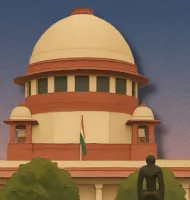
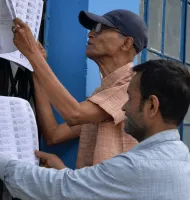
The Supreme Court’s ruling upholding the SIR crystallises key trends in contemporary constitutional adjudication: judicial evasion, executive constitutionalism, disregard of precedent through stealth…
Mapping the world’s largest military-industrial complexes, their relationships to one another, and their overlapping structures of corporate ownership suggests that their expansion is, in the final…
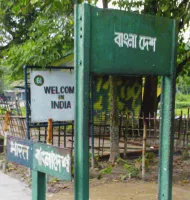
District-level data from West Bengal and Assam show only modest and uneven growth in Muslim populations in border districts between 2001 and 2019. The evidence does not support political claims that…
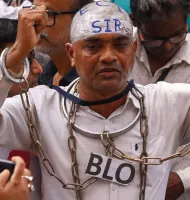
By deleting 90.82 lakh voters—disproportionately in TMC strongholds and Muslim-majority constituencies—the exclusions in the SIR exercise in West Bengal exceeded winning margins in 160 seats. The SIR…
India’s current regime rests on three interwoven factors: Hindutva, a captured civil society, and an authoritarian state. Together they have produced a decade-long collective suspension of disbelief.…
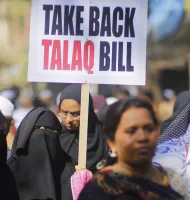
Seventy-five years after the Constitution came into force, India’s first uniform civil code laws have emerged—but as instruments of Hindutva rather than gender justice. Weaponised to stigmatise…
At a pragmatic level, support for caste enumeration may be conceded. But it should not be burdened with the untenable claim that it will generate attrition and lead to the abolition of caste.
Telangana’s census-scale caste survey reveals that SCs and STs are three times as backward as dominant castes, and that caste remains the principal determinant of poverty. The data challenges the…
Telangana’s caste survey maps multidimensional deprivation across 242 castes, revealing a steep and persistent hierarchy. Growth and urbanisation improve averages but leave the caste gradient…
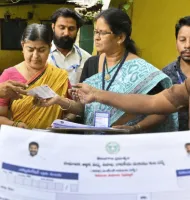
There is a lack of legal clarity on what happens to those excluded from the Special Intensive Revisions of electoral rolls across the country. If Assam is any indication, it will be the beginning of…