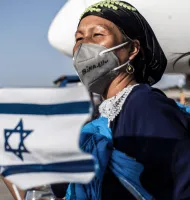
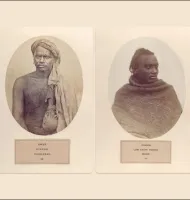
The emergence of the Bnei Menashe among the Christianised Kuki-Chin-Mizos of Manipur and Mizoram is an intriguing story of how a community imagines itself as a ‘Lost Tribe’ and with the support of…
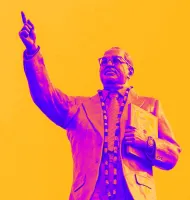
Caste is not merely a structural injustice but a form of symbolic domination—controlling who gets to define social meaning. Annihilating caste requires democratising the symbolic order itself: the…
The fall-out of the stabbing of Henry Nowak by a young Sikh shows the vulnerability of Sikhs who, despite being British-born or British citizens, are often viewed as foreigners. This reflects the…
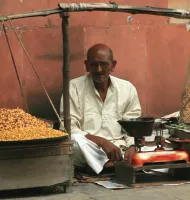
‘Any comprehensive approach to the hawker crowding of streets in cities must address two key questions: how to accommodate the continuous entry of new vendors, and how to manage hawker presence in…
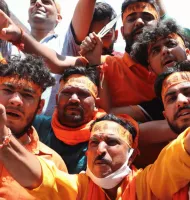
India’s current regime rests on three interwoven factors: Hindutva, a captured civil society, and an authoritarian state. Together they have produced a decade-long collective suspension of disbelief.…
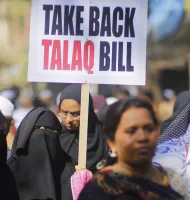
Seventy-five years after the Constitution came into force, India’s first uniform civil code laws have emerged—but as instruments of Hindutva rather than gender justice. Weaponised to stigmatise…
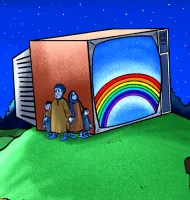
Like other parents across rural Kashmir, mine too were pushed towards drastic measures to get us a television to keep us in during the dark nights. The television almost got all of us killed.
At a pragmatic level, support for caste enumeration may be conceded. But it should not be burdened with the untenable claim that it will generate attrition and lead to the abolition of caste.
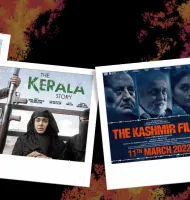
Hindi cinema has recalibrated itself to serve majoritarian ideology and we have a new market for state-supported hatred. In post-truth times, audiences seek self-validation over truth, and films like…
The Transgender Rights Amendment Act 2026 is an instance of how the state's impulse to produce a limited and governable category of persons takes priority over constitutional principles of…