




In Punjab, there has been for sometime a 'poster war' against Chief Minister Bhagwant Maan, alleging him to be a 'Guru Dokhi' and a 'Khalsa Panth Virodhi'— that he is an offender against the Sikh Gurus and stands against the Sikh community. The ultimate trigger for these charges was a video that made rounds late last year on the internet, in which a man—alleged to be the chief minister —is seen sprinkling alcohol from a glass on a portrait featuring the ten Sikh Gurus, a sacrilegious act. Since then, there has been heightened confrontation between the Akal Takht, Sikhism's highest seat of authority, and the Mann’s Aam Admi Party (AAP).
The vague and loose use of bedabi has developed a constant state of fear and an imminent possibility of vigilantism.
Sacrilege is a politically serious matter in Punjab, a defining phenomenon in the state for as long as a decade and contributing to unseating governments. Cases of sacrilege rocked the state in 2015 when they made headlines in three villages in Faridkot constituency. The theft of a bir (copy) of the Guru Granth Sahib, the Sikh holy book, from a gurudwara in Burj Jwahar Singh Wala village, was the immediate triggering point. Widespread protests put pressure on the state government and police. What appeared as a case of a missing bir turned out to stoke an old conflict between Sikhs and Dera Premis, the followers of the Dera Sacha Sauda sect. In 2007, during a Dera event, the Dera chief had tried to imitate the last Sikh Guru, Gobind Singh. The resultant clashes between Sikhs and Dera Premis, continued the following years. This conflict was overlaid by electoral compulsions. The Akal Takht's surprising pardoning of the act in 2015 was widely seen as a move to help the Akali Dal’s vote bank in the Malwa region, where Dera followers are electorally salient. The accusation against the Akali Dal for using the Takht for its electoral gains was not entirely unwarranted, given that since 1997 the party has maintained its hold over the Takht, Jathedar, and the SGPC, and their decisions (Baixas 2007).
The intense public backlash forced the Akal Takht to take back the pardon, which coincided with Dera followers protesting a ban on a movie on their chief. Amidst this tension, provocative handwritten posters attributed to the Dera were found pasted on the walls of gurdwaras in Faridkot constituency threatening desecration of the Guru Granth Sahib (Sandhu 2017). When a few days later the pages of the Granth were found scattered in a village, clashes and police firing ensued. The Akali Dal and BJP alliance, then ruling the state, were accused of supporting the Dera (Tur 2024). In the 2017 assembly elections that followed, the Akali Dal was decimated, a loss from which it is yet to recover ground. Ahead of those elections, Captain Amrinder Singh, then with the Congress, took an oath on a Gutka Sahib— a breviary of selections from the Sikh scriptures—to fight sacrilege, amongst other social ills. However, the Congress government headed by him was widely perceived as having failed to live up to this promise. The AAP, which defeated the Congress in the 2022 state elections, passed an act in April 2026 to deter cases of sacrilege of the Guru Grant Sahib.
No doubt electoral calculations are at work here in the competing claims of sacrilege, but to focus exclusively on them is to miss the transformation in Punjabi society under their strain.
Beadbi and its Elusiveness
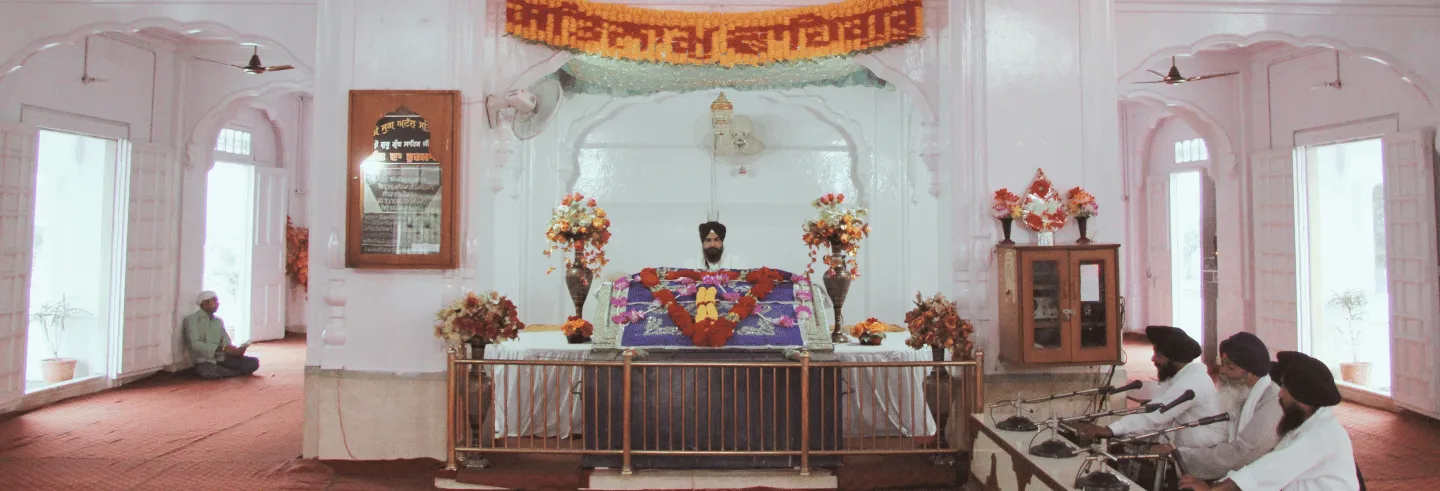
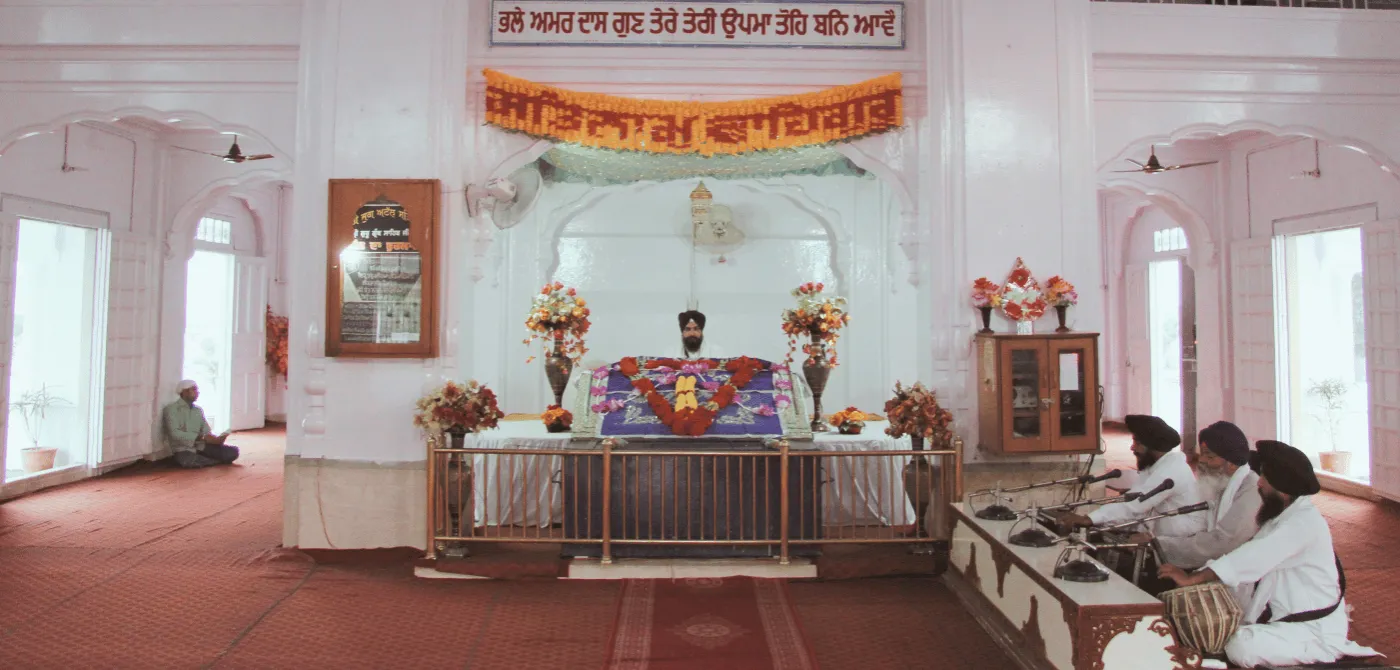
At the centre of this controversy lies the elusive character of the concept of beadbi, the act Amrinder Singh vowed to eliminate. The term can be understood as going against adb, propriety, and is used to gloss sacrilege involving desecration of the Guru Granth Sahib. The sacred text is for Sikhs a living Guru (jagdi jot), the eleventh and eternal. The pages of the Granth are called angs (limbs) (Tur 2024). Any physical harm to the Granth, such as defilement, tearing, burning, or throwing, is considered beadbi, an act of violation that challenges the sovereignty of the holy book (Nanda 2026).
Religion-centered politics has a danger of relegating the important socio-economic issues that the Punjabi society is currently confronting to the margins in political discourse.
While beadbi emerged as a response to cases of hurt religious sentiment, in everyday parlance it carries different meanings for different people. The elusive nature of the term allows it to term any act as beadbi, making even minor or unimportant things to be seen as instances of sacrilege. For instance, the Akali Dal's Sukhbir Singh Badal accused Raja Warring of Congress of beadbi for touching the joora (hair bun) of two Sikh children. In another incident, a man called Sahil, was deemed sacrilegious for entering a gurudwara with shoes on and without covering his head, resulting in him being beaten by shrine staff. Sahil’s brother clarified that Sahil was suffering from depression, and was unaware of his surroundings. In many other cases too, the accused had been found to be mentally incapable.
What is noteworthy in many of these incidents of beadbi is that the acts are neither symbolic, where the perpetrator performs them to criticise Sikh religion or practice, nor are they communal to the extent a member of a non-Sikh community is involved in the act.
Securitisation and Vigilantism
The rising spectre of sacrilege has transformed the institution of gurudwaras, bringing about growing securitisation of religious spaces. Community life in Punjab, especially in its villages, mostly revolves around the gurudwaras which perform a range of functions such as a site of paying obeisance to the Guru Granth Sahib, celebrating festivals, and a space for coping with stressful times. The freedom with which worshippers traditionally accessed gurudwaras appears to be fading with every incident. The very idea that gurudwaras need to be locked and under CCTV surveillance was never part of public imagination in Punjab. But not any longer: Local people join with the gurudwara management committees in keeping vigil. From a site of mingling and praying, gurudwaras are becoming a site of heightened security and surveillance.
Such a transformation has damaged social bonding and trust. Gurudwaras were places that were welcoming to strangers. Yet, in June 2021, Deepak Singh, a 39-year-old man, was lynched in Gurdaspur on suspicion of sacrilege. He had gone to the gurudwara to spend the night there, since he had got off a bus at the wrong drop-off point (Tur 2021). The incident illustrates how guarding the gurudwaras might appear legitimate, but paves the way for a vigilante society on the prowl against real and imagined cases of beadbi. For instance, 28-year-old Karam Singh, a daily labourer and Mazhabi Sikh, was lynched to death in Moga’s Mustafa village for allegedly stealing from the donation box of the Gurdwara. In another incident, a 19-year-old Sikh youth was beaten to death following an alleged sacrilege incident that took place at a gurdwara in Ferozepur. His father, Lakhwinder Singh, said he had a mental illness and was undergoing treatment for it. In another case, police booked a 10-year-old Mazabhi Sikh girl of Rampura village in Sangrur district under the pressure of religious leaders and people, on the charges of beadbi since a few pages of Guru Granth Sahib were torn at the bottom (Tur 2020). Even though the alleged beadbi could have been just an accident, an FIR was registered against the child.
The presence of a Hindu majoritarian state at the centre, along with the historical sense of injustice, exacerbates the urge to protect religious identity.
What is most troubling here is that there appears to be a widespread public legitimacy to these lynchings. The silence across party lines, the absence of anger over the lynchings, and justification for killings, paints a very grim picture. The key to understanding this lies in the inability of police forces to prevent or prosecute several instances of sacrilege, leading people to resort to the idea of instant justice. Such vigilantism has been further exacerbated by a strong sense of historical injustice among the community, given the state's history of militancy, killings by the police, and being a minority religion in the country. The community is still haunted by Operation Blue Star, the use of force to desecrate the holiest site in the Sikh faith by the Indira Gandhi-led union government in 1984 (Mander 2010). Far from just being a military exercise, it is largely viewed as an act of desecration. For a community that is trying to come out of the trauma of Operation Blue Star and the anti-Sikh pogrom of 1984, beadbi not only tears open old wounds but poses a new threat to their religious identity and belief.
In such a context, the sense of betrayal and distrust towards the justice system creates a conducive condition for the legitimisation of vigilante violence. The very fact that Sikh places of worship are not secure, that too in a state in which they are in a majority, further induces them towards instant justice. Thus, the vague and loose use of bedabi has developed a constant state of fear and an imminent possibility of vigilantism.
The recent law passed by the AAP government seems as a step in putting beadbi in its place by restricting the usage of the term to the sacrilege of the Guru Granth Sahib and not other religious notions. 1The law says: “for the purposes of this Act means any wilful and deliberate act, committed with the intent of desecration by way of physical damaging, defacing, burning, tearing or theft of the Saroop(s) of Jaagat Jot Sri Guru Granth Sahib or part thereof, or by words, either spoken or written, or by signs or by visible representations or through electronic means or otherwise, which is of such a nature as to hurt the religious feelings.” However, it is also true that the law's mention of a 'custodian', responsible for the protection of copies of the Granth and the observance of Sikh Rehat Maryada–Sikh traditions– leave a lot of room for ambiguity and can potentially be misused against individuals under the pretext of beadbi.
For a society already struggling to cope with agrarian distress, unemployment, and drug menace, beadbi adds another layer of volatility. The presence of a Hindu majoritarian state at the centre along with the historical sense of injustice, further exacerbates the urge to protect religious identity. This also prepares a ground fertile for conservative elements to solidify their position, as evidenced by the rise of political groups like the Waris Punjab De. Yet, politics centred around religion may just end up relegating Punjab's socio-economic issues to the margins.
Prabhjot Kaur Jossan is a doctoral scholar at the Centre for Comparative Politics and Political Theory, Jawaharlal Nehru University, studying issues of conversion, identity and the state.