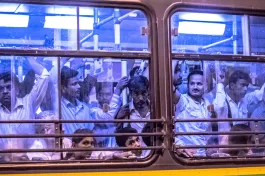




For Shivangi, a 23-year-old woman with a locomotor disability residing in Delhi, leaving her hostel room is never unplanned. Each outing requires her to work through a practical checklist: Is the destination is accessible? Will assistance will be available if needed? Who will accompany her? Only after answering these questions, does she turn to assess whether the trip is worth attempting at all.
Accessibility extends far beyond the built environment.
Even in the national capital, independent mobility remains difficult. Accessible entrances are frequently missing. Accessible washrooms, where they exist, are often locked or poorly maintained. Railway stations, in particular, can be very challenging to navigate without help.
“Sometimes I simply cancel my plans”, she says.
Shivangi’s case points to a larger question at the centre of India’s accessibility agenda. It is not merely about physical infrastructure. For millions of disabled Indians, the lack of accessibility affects their independence, dignity, and ability to participate in daily life on equal terms.
Over the past two decades, India has passed disability rights legislation, launched accessibility programmes, and committed itself to international frameworks. Yet barriers to independent mobility continue to persist. The question is whether these legal and policy commitments have translated into real inclusion and equal participation.
The 2011 Census counted 26.8 million disabled persons—2.21% of the population. Official surveys rely on narrow definitions and self-disclosure in a society still marked by stigma. People with invisible impairments, psychosocial disabilities, age-related limitations, or those who fear discrimination are often excluded from such counts. A 2009 World Bank report estimated the true number to be between 55 million and 90 million, or 5–8% of the population.
This data gap has real policy consequences. In a nation of more than 1.4 billion people, even small measurement errors can consign large numbers of people to the margins of public planning. When disability is undercounted, fewer resources are allocated, and public spaces are designed as though millions of citizens do not exist.
Progress on paper
India's accessibility agenda is rooted in a broader policy shift in how disability has been understood.
For decades, disability policy in India largely focused on welfare, rehabilitation and social assistance. Persons with disabilities were often viewed as beneficiaries of support rather than as equal rights-holders. A significant turning point came with India's ratification of the UN Convention on the Rights of Persons with Disabilities (UNCRPD) in 2007. The convention encouraged countries to adopt a rights-based approach, recognising accessibility, equality, independent living and participation as fundamental rights rather than welfare measures.
Exclusion accumulates through countless small obstacles: a missing ramp, an inaccessible bus, a broken lift, an unavailable form, a journey abandoned midway.
This shift found legislative expression in the Rights of Persons with Disabilities Act, 2016. The law established accessibility as a legal right and widened the recognition of disabilities to 21 from seven. Disability rights jurisprudence was increasingly informed by constitutional guarantees under Articles 14, 16, and 21. Courts have consistently interpreted accessibility as an essential condition for the exercise of fundamental rights. In Rajive Raturi v. Union of India, the Supreme Court emphasised the need for accessible public infrastructure.
The Accessible India Campaign (Sugamya Bharat Abhiyan), launched in 2015, became the government's flagship effort to translate these commitments into practice. Today, the central policy question is no longer whether India has laws or targets. It is whether these measures are being implemented consistently enough to transform accessibility from a promise on paper into a lived reality. The question is whether these legal and policy commitments have translated into real inclusion and equal participation.
The implementation gap
Despite India’s disability rights framework, the gap between policy commitments and lived reality remains significant.
Implementation is uneven across states and local bodies. Accountability remains a persistent challenge. Accessibility is often assessed through the number of ramps constructed or buildings retrofitted rather than whether these measures remain functional over time.
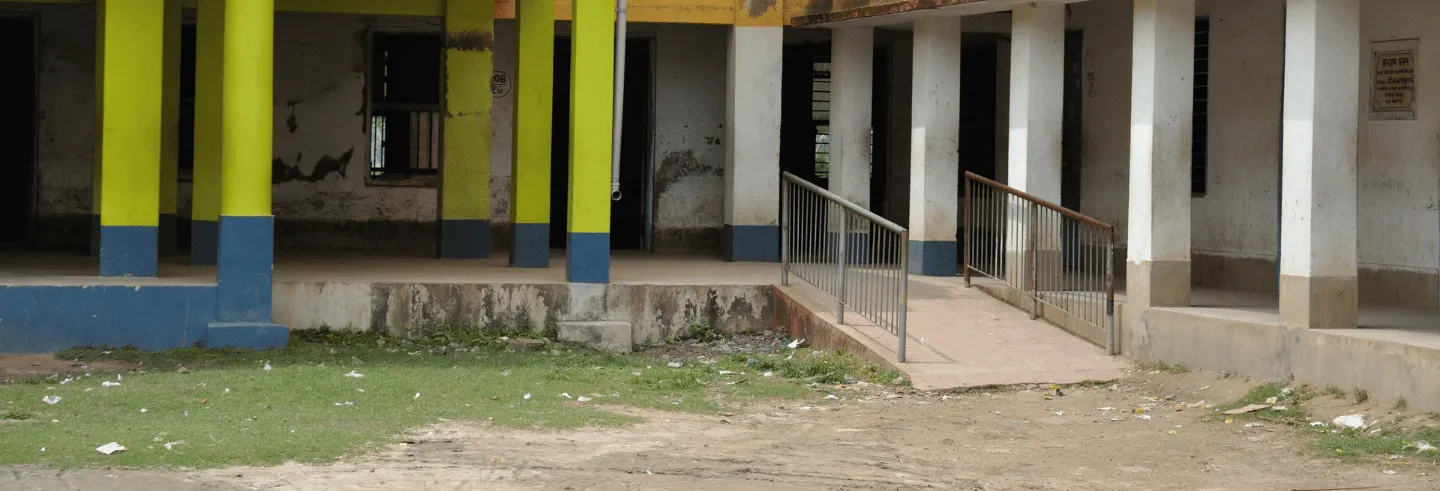
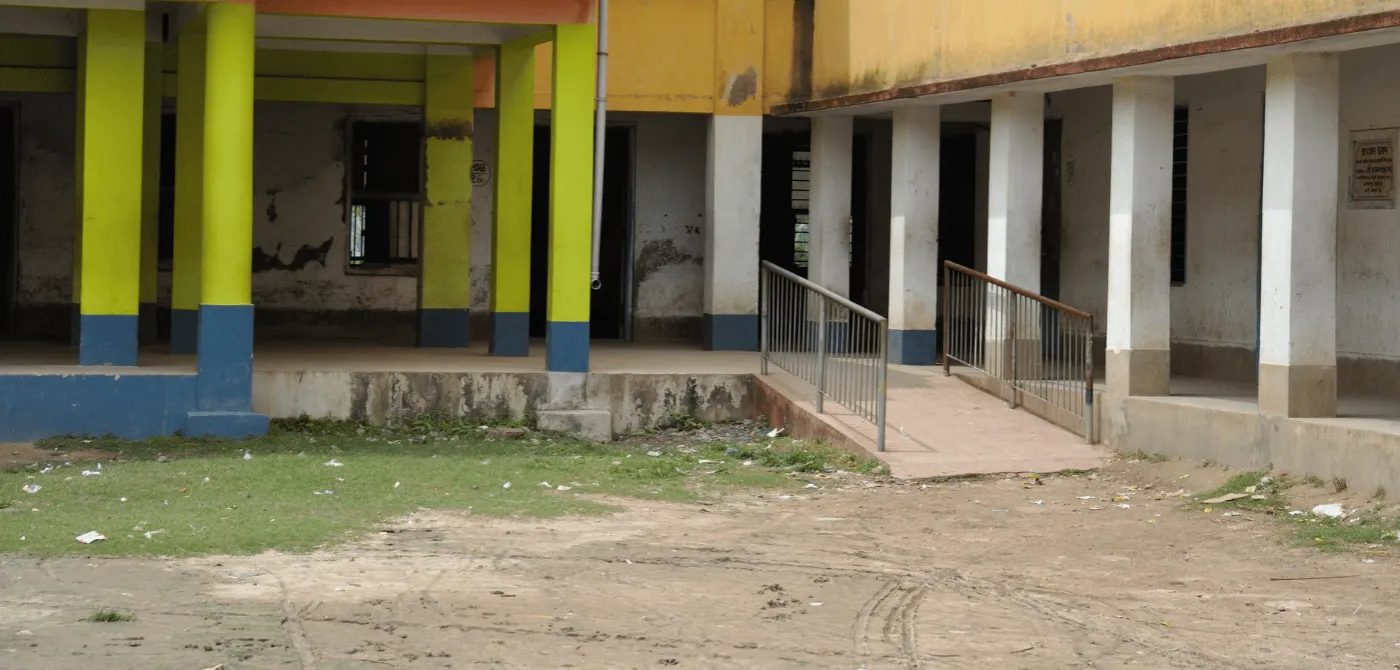
A 2025 report by the Comptroller and Auditor General (CAG) found that many public buildings were retrofitted without first assessing what accessibility barriers existed (pre-accessibility audits), while many completed projects were not subsequently inspected to determine whether the modifications actually worked for persons with disabilities (post-retrofit assessments). As a result, compliance recorded on paper may not always translate into usable access. Ramps that are too steep, lifts that remain out of service, or tactile pathways obstructed by vendors can substantially limit accessibility despite formal compliance.
Accessibility standards are often treated as one-time compliance requirements rather than continuing obligations. Infrastructure may be created, but maintenance and monitoring frequently remain inadequate.
The consequence is that accessibility is often counted as an infrastructure achievement while remaining only partially accessible in everyday life. Barriers persist not necessarily because legal protections are absent, but because implementation and long-term maintenance remain inconsistent.
Why does the implementation gap persist
If India's disability rights framework is relatively strong on paper, why do accessibility barriers remain so widespread?
Part of the answer lies in institutional fragmentation. Accessibility spans transport, urban development, education, health care, digital governance and local government. Responsibility is therefore distributed across multiple ministries, departments and agencies. While accessibility is everybody's responsibility, this can sometimes mean that no single institution is clearly accountable for ensuring implementation and maintenance.
The question is not merely whether a building can be entered, but whether society itself can be fully accessed.
Capacity constraints present another challenge. Many accessibility measures are implemented by local authorities and public institutions that may lack specialised expertise, technical guidance or dedicated financial resources. Compliance can therefore depend heavily on local administrative priorities and capacities.
A further challenge is enforcement. A 2024 study by Sanjay Jain and Malika Jain found that despite a growing legal framework around disability rights, accessibility often advances through judicial intervention rather than routine administrative enforcement. Their analysis suggests that the challenge is no longer the absence of legal commitments but the failure of institutions to consistently translate those commitments into everyday practice. Several other scholars have argued that implementation mechanisms remain weaker than the legal commitments themselves.
Perhaps the most significant gap concerns participation. Disability rights movements emphasise the principle of "Nothing About Us Without Us": that persons with disabilities should be involved in planning, monitoring and evaluating accessibility measures. Yet disability rights groups have repeatedly argued that persons with disabilities are not consistently involved in planning and evaluating policies that directly affect them, despite the principle of “Nothing About Us Without Us. As a result, accessibility can become a matter of technical compliance rather than lived usability.
The challenge, therefore, is not simply creating accessibility standards. It is building institutions capable of enforcing them consistently and improving them over time.
The rural accessibility divide
The accessibility challenge becomes even more pronounced beyond India's major cities. According to Census 2011, nearly 69% of persons with disabilities in India live in rural areas. Yet accessibility discussions and infrastructure investments have often focused on major cities and public institutions that are more visible to policymakers and the media.
The measure of India's disability rights framework is not simply what it promises in law, but what it delivers in practice.
If barriers persist in metropolitan centres with greater resources and visibility, the situation in many smaller towns and rural areas is often far more difficult. For persons with disabilities in rural India, schools, primary health centres, panchayat offices and public transport systems continue to present significant barriers.
A recent study on access to primary healthcare services found that physical and systemic barriers continue to affect the quality and accessibility of healthcare for persons with disabilities. The challenge begins before they even reach a health facility. Inadequate transport options, inaccessible roads, long travel distances, and limited mobility support can make routine healthcare difficult to access. Studies examining primary healthcare access have found that physical barriers, transportation constraints, and health-system barriers continue to limit access to healthcare services for persons with disabilities (Tamboli and Nagarkar 2024).
Administrative processes can also create obstacles. Disability certification remains a gateway to many entitlements, welfare schemes and support services. However, obtaining disability certificates often requires repeated visits to hospitals or district authorities, a process that can be particularly burdensome for individuals living in remote areas. Although the Unique Disability ID (UDID) programme was introduced to simplify certification and improve service delivery, researchers and disability advocates have pointed to continuing challenges related to awareness, access and implementation, particularly in rural regions.
These barriers illustrate that accessibility is not simply an urban infrastructure issue. It is also a question of governance, service delivery, and administrative capacity. For millions of persons with disabilities living outside India's major cities, the challenge is not merely accessing a building. It is accessing the systems and services that make full participation in society possible.
Beyond Infrastructure
Public discussions on accessibility often focus on visible infrastructure such as ramps, lifts and accessible toilets. These are important, but accessibility extends far beyond the built environment. A person may be able to enter a government office yet remain excluded if information is unavailable in accessible formats, if websites cannot be navigated using assistive technologies, or if public services are not designed for diverse communication needs.
As public services continue to move online, exclusion can occur without any physical barrier at all. For many persons with disabilities, meaningful access now depends not only on accessible buildings and transport systems, but also on whether digital platforms are designed to accommodate diverse users.
Government benefits, disability certificates, educational admissions, job applications and welfare schemes are increasingly accessed through online platforms. Yet digital accessibility often receives less attention than physical infrastructure. Websites may not function properly with screen readers, important documents are frequently uploaded as inaccessible PDFs, and online forms can be difficult to navigate for persons using assistive technologies.
The challenge is equally evident in education and employment. Students with disabilities frequently encounter inaccessible classrooms, learning materials and assessment systems, while job seekers continue to face barriers that limit equal participation in the workforce. Accessibility, therefore, is not only about mobility but also about access to information, opportunities and decision-making processes.
When education, transport systems, workplaces and public services remain inaccessible, persons with disabilities face greater difficulties in participating fully in economic life. These barriers can reduce income opportunities, increase dependence on family members, and limit long-term social mobility.
Accessibility cannot be treated merely as an infrastructure project; it is equally a question of governance, accountability, and participation.
The costs are not borne by individuals alone. Exclusion can also affect households, employers and public institutions by restricting the participation of a significant section of the population. Viewed from this perspective, accessibility is not only a social or legal obligation; it is also closely linked to economic participation and inclusive development.
This broader understanding is reflected in disability studies scholarship. The June 2024 issue of the TISS Journal of Disability Studies and Research argues that disability studies must engage with questions of equality, access, justice and opportunity rather than viewing disability solely through the lens of physical impairment. The journal also emphasises the principle of “Nothing About Us Without Us”, highlighting the importance of meaningful participation by persons with disabilities in policies and decisions that affect their lives.
Accessibility is also increasingly understood through the concept of universal design.
Rather than viewing accessibility as a specialised accommodation for a small segment of the population, universal design seeks to create environments, services and technologies that can be used by the widest possible range of people.
A ramp may assist a wheelchair user, but it can also benefit an older person with limited mobility, a parent pushing a stroller, a traveller carrying luggage, or someone recovering from an injury. From this perspective, accessibility is not simply about removing barriers for persons with disabilities. It is about designing public spaces and services that work better for everyone. This broader understanding helps shift accessibility from a narrowly defined welfare concern to a wider question of inclusive development and public planning.
Recent legal scholarship has also highlighted the limits of accessibility reform in India.
Viewed through this lens, accessibility is not simply a matter of compliance with technical standards. It is a measure of whether persons with disabilities can participate as equal citizens in education, employment, governance, and public life. The question is not merely whether a building can be entered, but whether society itself can be fully accessed.
Conclusions
For many persons with disabilities, exclusion is rarely the result of a single barrier. It accumulates through countless small obstacles: a missing ramp, an inaccessible bus, a broken lift, an unavailable form, a journey abandoned midway. Taken together, these everyday barriers can quietly limit participation, opportunity, and independence.
The challenge is no longer primarily legislative. It lies in how accessibility commitments are implemented, monitored, and maintained over time. Accessibility cannot be treated merely as an infrastructure project; it is equally a question of governance, accountability, and participation. The measure of India's disability rights framework is not simply what it promises in law, but what it delivers in practice. For persons like Shivangi, that measure is reflected in a decision many others rarely have to make: whether leaving her room is worth the attempt.
Divya Kashyap is a freelance journalist who writes about disability, accessibility, and inclusion based on her lived experience.