



On 13 June 2025, Israel commenced what became known as the “12-Day War” with the Islamic Republic of Iran. The final acts of this war started 10 days later, on 22 June 2025. On that day, the United States used B2 bombers and Tomahawk missiles to strike Iranian nuclear sites in Fordow, Natanz, and Isfahan.
On 23 June 2025, Iran fired several missiles at the Al Udeid air base in Qatar. This retaliatory act was heavily choreographed by the Iranians with the aim of avoiding US casualties. It was a remarkable gesture by a country faced with a series of unprovoked attacks on its territory and its sovereignty. However, and despite the choreography, the decision to fire at this target was significant as the facility represented the largest US military base in the Middle East.
And, of course, many months later we are witnessing another war involving the US, Israel, and Iran.
There are some circumstantial differences between the motivations behind the two conflicts, but also a shared one, at least as far as the Israelis are concerned.
The differences are in relation to the pretexts employed.
Briefly, with respect to the June 2025 war, the US and Israeli position was that Iran was determined to continue its uranium enrichment programme and that, if left unchecked, Iran would cause an existential threat to Israel’s very existence. Also, it is important to note that this conflict came on the back of several rounds of negotiations, which had not concluded when the war began.
The current conflict, which began on 28 February 2026, seems to have had no clear objective, at least as far as the US side is concerned. President Donald Trump and members of his administration have struggled to articulate their position. They have cited Iranian procrastination during the latest negotiations on its enrichment programme and ballistic missile capabilities, the killing of thousands of protesters, the need for regime change, and the desire to lay their hands on Iran’s vast oil reserves.
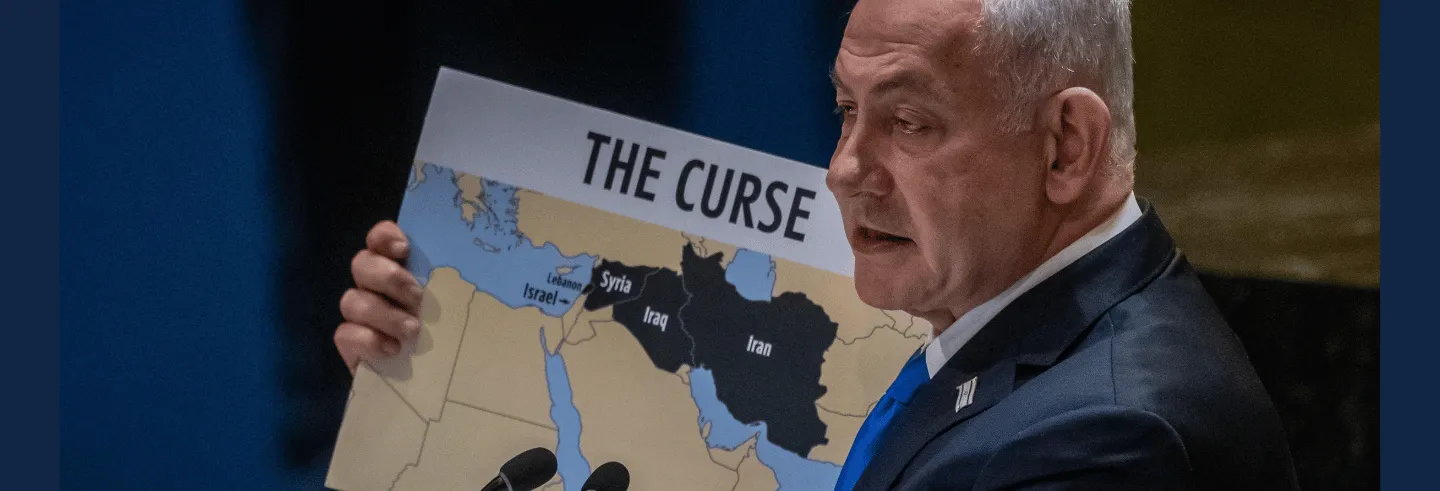
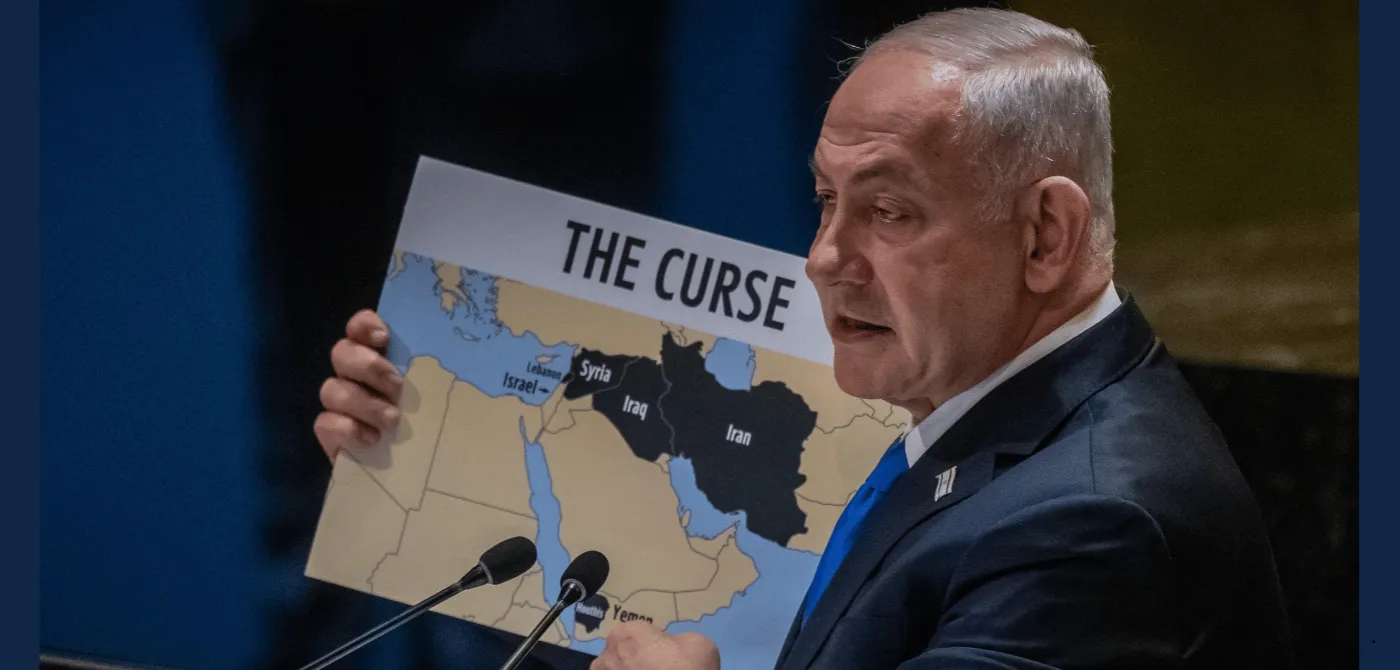
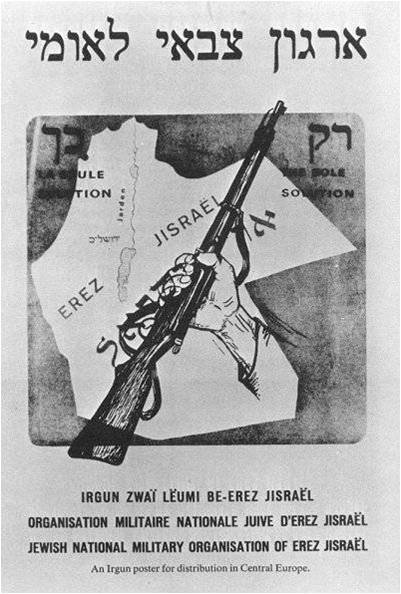
While several of the above objectives are ones that Israel also supports, a growing suspicion has been that Israel’s primary objective continues to be its pursuit of the Greater Israel Project. In summary, this historical goal is to expand the land mass of the State of Israel from the Nile eastward all the way to the Euphrates, thus occupying parts of several existing sovereign states, including Jordan and Iraq.
Several questions arise:
1. Were the negotiations taking place in January and February 2026 between the US and Iran on curbing Iran’s nuclear ambitions and its ballistic missile programmes?
2. In the face of large-scale protests, starting in late December 2025, and the ensuing crackdowns, and the US president’s various utterances such as “help is on the way”, was the war about addressing human rights issues in Iran?
3. Or can the commencement of the war be seen in terms of Israel’s territorial ambitions and linked to what is commonly referred to as establishing the Greater Israeli Project 1Amongst the clearest references for this is Oded Yinon and Israel Shahak’s ‘The Zionist Plan for the Middle East’ published in 1982 by the Association of Arab American University Graduates, Belmont, Massachusetts. ?
Dishonest US Intentions
Sometime after the 12-day war ended, the US and Iran recommenced the negotiations they began on 12 April 2025. Once again, and despite a bumpy ride along the way, the conversations between the two teams were reported as having been mostly constructive. Of course, we now know that efforts to limit Iran’s enrichment programme in return for sanctions relief came to nothing and, at the time of writing, war rages on. Perhaps these negotiations were doomed from the start. The US side was held up by Steve Witkoff and Jarred Kushner, two wealthy individuals with business and family ties to Trump. Their expertise was real estate development, and neither had any experience in negotiating a nuclear deal.
…[I]t is hard to believe that the US or Israel have any interest in helping the Iranian people replace the current regime in Tehran on humanitarian grounds alone. If that was their intent, then how does one explain their bombing of civilian targets…?
Irrespective of that, and as reported by The Guardian, the negotiations had reached agreement on the main issues even though Trump’s team appear to have taken on “an idiosyncratic approach” throughout. For example, at one stage during their conversations, Witkoff invited Iran’s Minister of Foreign Affairs Abbas Araghchi to join him and Kushner for a visit to the USS Abraham Lincoln carrier strike group. The same Guardian article paints a damning picture of how ill-equipped Witkoff and Kushner were to be part of these negotiations in the first place.
The UK’s national security advisor, Jonathan Powell, was present in the latter stages of the February 2026 negotiations. His perspective as reported in another Guardian piece is that the negotiations had presented enough significant progress to avoid a rush to war. Yet the war began on 28 February 2026.
Further, the claim, made repeatedly by senior Israeli politicians, that Iran is close, within days or weeks, of being able to develop a nuclear bomb had been doing the rounds since at least 1996. Various inspection regimes and security agencies from around the world had dismissed these suggestions repeatedly. Ayatollah Ali Khamenei, the assassinated Supreme Leader, had issued a fatwa against Iran developing of a nuclear weapon as far back as 2003-2004.
Admittedly, Iran's stance on developing a bomb has been one of deliberate ambiguity. 2This approach to conducting and engaging with global political challenges is an established strategy used by many states as a way of creating opportunities for furthering their own strategic ambitions. Examples include the US position on its willingness to protect Taiwan; Israel’s silence on its nuclear weapons capability; the UK’s potential use of its ballistic missile submarines as part of any counterattack. Although the term deliberate ambiguity is not mentioned explicitly, Thomas C. Schelling’s 1960 The Strategy of Conflict is replete with references on how adversaries employ such ambiguity in the search for exploiting opportunities. It is worth pointing out that Schelling, a Nobel Prize winner in Economics, is regarded as a pioneering voice in the application of game theory to conflict resolution. This stems, at least partly, because it believes it has an inalienable right to enrich uranium. This belief is recognised (as part of Article IV) of the Non-Proliferation Treaty (NPT) to which Iran has been a long-term signatory.
Iran’s policy of deliberate ambiguity has also been driven by its desire to keep open the option of moving towards producing a bomb. Given the destruction visited on some of its neighbours by US forces since the early 2000s, this policy could be argued to have been prudent. Ultimately, however, it has been used against Iran to devastating effect. As we have seen, this policy of deliberate ambiguity gave the Israelis and their backers the perfect excuse to spread as much disinformation about Iran’s plans for a bomb as they wanted to. It gave them the opportunity to refer to Iran as an existential threat and to push that narrative at every opportunity.
What about protecting human rights in Iran? Is this what the war is about?
The evidence for this is weak. Despite their statements on this, it is hard to believe that the US or Israel have any interest in helping the Iranian people replace the current regime in Tehran on humanitarian grounds alone. If that was their intent, then how does one explain their bombing of civilian targets both during the 12-day war and the current conflict? Further, there are credible reports of false flag operations by both Israeli and American special agents during the recent protests in Iran, leading to scores of deaths.
The more plausible explanation seems to rest on the idea that Israel and the US want a much weaker Iran, one that is incapable of offering any resistance to their ambitions.
Regarding human rights violations, the clerics in Iran have used some truly dreadful measures against ordinary citizens, and for many years. Some of the hardliners deserve everything the law can throw at them. Their human rights records, overall, has been abysmal. And for this they deserve little sympathy.
Iran and Palestine
As against this, and to their credit, seeing the Iranians attempting to provide support to the wider Palestinian cause is both commendable and praiseworthy. This stance has been a centrepiece of Iranian foreign policy since the earliest days of the 1979 revolution. The Iranian intention may be summarised as one that has sought Palestinian “liberation”.
Iran lending its support to the Palestinian cause has made a significant contribution to preventing successive Israeli regimes pursuing their parallel ambitions towards establishing the Greater Israel Project.
As far as Iran is concerned this position has been extremely costly as it has led to its international isolation, which has had significant and severe political and economic costs. This makes Iran’s decision to pursue this supportive stance even more remarkable.
As is widely known, the diplomatic routes for most Palestinian rights have been shut by various US presidents stretching back in the modern era to at least Bill Clinton in the early 1990s. So, for the Palestinians, achieving political aims has morphed into an armed struggle. Iran has played its part in that and helped them stand up to Israeli and settler aggression and wider land-grab efforts. Iran lending its support to the Palestinian cause has made a significant contribution to preventing successive Israeli regimes pursuing their parallel ambitions towards establishing the Greater Israel Project.
But the Islamic Republic has been in existence only since 1979. Israeli efforts dating back to the 6-DayWar, in 1967, can be construed as being a part of the Project. Among the most egregious landgrabs of this period was Israel’s occupation of the Golan Heights, captured from Syria. Despite international condemnation, Israel remains in control, and it attempted to assert its sovereignty as long ago as 1981 when the Knesset, Israel’s parliament, passed the Golan Heights Law. Other examples include the reassignment of the whole of the City of Jerusalem as Israeli after the 6-Day War, even though most of the members of the international community have rejected the claim.
President Clinton’s term in office provided an opportunity for a permanent settlement between the Israelis and the Palestinians. In September 1993, the Palestinian Liberation Organisation (PLO) led by Yasser Arafat signed what came to be known as the Oslo Accords with Israel’s Prime Minister Yitzhak Rabin. In summary, the deal was supposed to pave the way for increasing levels of self-rule for Palestinians in return for their recognition of the State of Israel. However, many key parts of the vision articulated within the 1993 Accords were left hanging, in the hope that they would be discussed and resolved with the passage of time.
For a variety of reasons, the so-called “final status” was never reached, and the agreement fell apart. Israeli expansion, mainly through settlement programmes within the West Bank, became more intense, leading to a growing sense of resentment and frustration among the Palestinians and their regional supporters.
Greater Israel Project
Despite Israel’s ambitious Greater Israel Project, it is difficult to see how this can come to pass without further wars with neighbours. Some would say that the chances of such conflicts emerging began to recede with the Abraham Accords in September 2020. However, the current war has created new tensions among the signatories, Israel, the United Arab Emirates (UAE), and Bahrain.
…[R]ecent and current conflicts may be seen less from the perspective of an Iranian nuclear bomb being around the corner. They may more appropriately be seen as relating to Israeli ambitions … and ensuring the weakening of a powerful adversary nearby.
Iranian efforts in thwarting the Greater Israel Project have led to many of Israel’s influential supporters in the US (such as the American Israel Public Affairs Committee, or AIPAC) and others in Europe to make an issue of the country’s nuclear programme. Influential Zionist billionaires, such as Miriam Adelson (wealth estimate of $60 billion), and Larry Ellison ($190 billion), among others, have invested heavily in both President Trump and Israel’s Prime Minister Benjamin Netanyahu, and their various projects. Adelson has raised the prospect of Trump running for President again in 2028.
So, recent and current conflicts may be seen less from the perspective of an Iranian nuclear bomb being around the corner. They may more appropriately be seen as relating to Israeli ambitions regarding achievement of the Greater Israel Project and ensuring the weakening of a powerful adversary nearby.
And, of course, the Israelis have been agitating for what we are witnessing now for a very long time. However, previous US presidents were too smart to fall in with Netanyahu’s plans. Trump’s intelligence, or lack of, is on a different scale and he is easily manipulated. It has been said that Trump tends to embrace the ideas and advice of the last person he speaks to, which must go some way in explaining why Netanyahu has visited the White House half a dozen or more times during Trump’s first 15 months of his second term.
The current US administration has fallen victim to Netanyahu’s demands. And they have been planning and plotting against the Iranian state for some time. There are many examples of this.
During recent meetings at Davos, US Treasury Secretary Scott Bessent boasted in an on-stage interview about how, in December 2025, the US attempted to engineer the collapse of the Iranian currency by creating a sudden dollar shortage Several banks in Iran were forced to shut down permanently, many businesses collapsed, and inflation, already very high, became intolerable. In response, people took to the streets to express their frustrations. These protests were initially peaceful and made up mostly of the merchant classes.
As a young financier Bessent worked with George Soros from the early 1980s and helped engineer a run on the Pound Sterling in the early 1990s during the Black Wednesday debacle. So, his appointment by President Trump as US Treasury Secretary came with considerable baggage. Despite Bessent’s best efforts to create chaos on Iranian streets, the protesters remained largely peaceful. This helps in explaining why other options came into play. Mike Pompeo, the former director of the Central Intelligence Agency (CIA), has admitted that Mossad agents were operating across Iranian cities during the protests, and their aim was to whip up the crowds. 3Amongst others, see reports and social media posts (for example., on 2 February 2026) by Tim Anderson who is director of the Centre for Counter Hegemonic Studies (www.counter-hegemonic-studies.site) There have been allegations of many atrocities carried out under these false flag operations.
As recently as 22 March 2026, a New York Times article reported that David Barnea, the Mossad chief, had claimed that his service would be able to galvanise the Iranian opposition, igniting riots and other acts of rebellion that could even lead to the collapse of Iran’s government. These ideas, according to the daily, were presented to both the Trump and Netanyahu administrations in mid-January 2026, and both embraced them.
Anyone familiar with Iran’s history through the past 100 years will know about the impact of external manipulations in its affairs. The history is long and sordid. Most of the external interference in Iran originated from the US, but others, including Britain, and, more recently, Israel, have been active as well. 4For a good account of many of these global interventions, see O’Rourke (2021).
January protests
The Iranian government’s response to the protests has been described as shameful, by many voices across the political spectrum. However, I believe it is fair to note that the circumstances in which the authorities found themselves in were extraordinary. Reports of false flag operations such as the ones alluded to by the New York Times were rife and in the moment of street conflict identifying and separating out peaceful and legitimate protest from those with other plans presents enormous challenges to law enforcement agencies.
Having said that, like many, I find that thousands were killed in January is appalling. One death is one death too many. However, what I find equally intolerable is the way some prominent voices have used what appears to be inflated numbers to either settle scores with the regime, or even worse, to manufacture consent for war. Estimates of the death toll vary widely. Figures as high as 90,000 over a two or three-day period appear regularly to this day, while the regime claims that 3,117 were killed, including around 200 security personnel. The most widely cited figures, and those that many politicians and commentators in Western media have settled on, hover around 30,000 to 32,000.
In a sense it does not matter whether the numbers are correct, as even one death is one death too many. However, the large counts are eye-catching and have been used to provoke certain reactions among those it is aimed at.
In this context, it is important to note that investigative journalists such as Max Blumenthal of The Grayzone, an investigative site, have questioned their veracity. The Grayzone article elaborates on the narrative built by Tess McClure and Deepa Parent of The Guardian on these numbers and how any challenge to their claims has been rebuffed aggressively. According to Blumenthal, in January this year, Parent relied on evidence produced by a single anonymous doctor to help push the numbers into wider circulation.
End Game
As has come to light since the start of the 28 February 2026 war, the main instigators, according to President Trump himself, included Witkoff, Kushner, Pete Hegseth, Marco Rubio, and, of course, Benjamin Netanyahu. What we have now is a cocktail of multiple disastrous decisions coming together. Something along the following lines:
● Bessent and Trump’s manipulations leading to protests were partially hijacked by external agencies.
● Netanyahu, who had been waiting in the wings for someone with Trump’s limitations, finds himself in a fight he had been yearning for for 40 years.
● Thousands were killed by the Iranian regime.
● Two real estate businessmen (Kushner and Witkoff), plus Hegseth, offer self-serving but technically incorrect advice on the nuclear issue to a President who is severely intellectually challenged.
● War and destruction.
Various senior US administration officials have admitted to having their eyes on Iranian assets once the war ends. This brings into sharp focus the claims made by many among the Iranian diaspora that the US’s engagement is based on its concern for humanitarian issues.
Examples of senior US officials letting the proverbial cat out of the bag are plentiful. One such individual is Jarred Agen, a White House staff member, admitting on live television that the US wants all of Iran’s oil . Another is Hegseth, the Secretary of State for War, who said in video broadcast that the US is “playing for keeps”.
Various senior US administration officials have admitted to having their eyes on Iranian assets once the war ends.
The Iranian leadership has been aware of these ambitions, which helps to explain many of the decisions it took on treatment of protesters and its conduct of a war it did not invite. Helping to explain is, of course, not the same as approving the methods used. And for Iran to have any hope of wading through the mess currently engulfing it, and emerging from it intact, it must start to work with more of its citizens and address their legitimate concerns at all levels.
But it is impossible to know how this all ends. What is certain is that the Iranian authorities have lost all faith and trust in the US as they have been attacked twice while negotiations on the nuclear issue had not concluded. Murmurings of some conversations have begun to emerge in recent days. But it takes a brave soul to think they will bring about peace and stability to the region.