



The museum, we believe, can authoritatively tell apart true and false, original and copy, authentic and inauthentic. Yet, throughout the history of museums, even as recently as the 19th century, authenticity was a capacious idea. Take, for example, the Court of Casts in London’s Victoria and Albert Museum. Built in 1873, these courts housed plaster casts of monuments and antiquities from across the world, ‘true copies’ rendered in plaster of paris. In the museum, they attested to the importance of transmission, and instruction—in artistic excellence, the canon of art, and good taste—apart from singularity. The long life of these casts within the museum has now rendered them important artefacts of the 19th century, worthy of preservation in their own right. What appears commonplace today, whether casts or prints and posters, may well enter the haloed portals of the museum. Sanctified by the museum, even the ordinary and the banal work to coalesce inchoate, often complicated narratives into coherence. That is, the museum brokers between knowledge and order, and usable pasts.
The paintings on display at Bhai Mati Das were the outcome of the patronage of the “first Sikh bank”, the Punjab and Sind Bank, set up in 1908, which commissioned them to be included in a series of calendars the bank published from 1974 onwards.
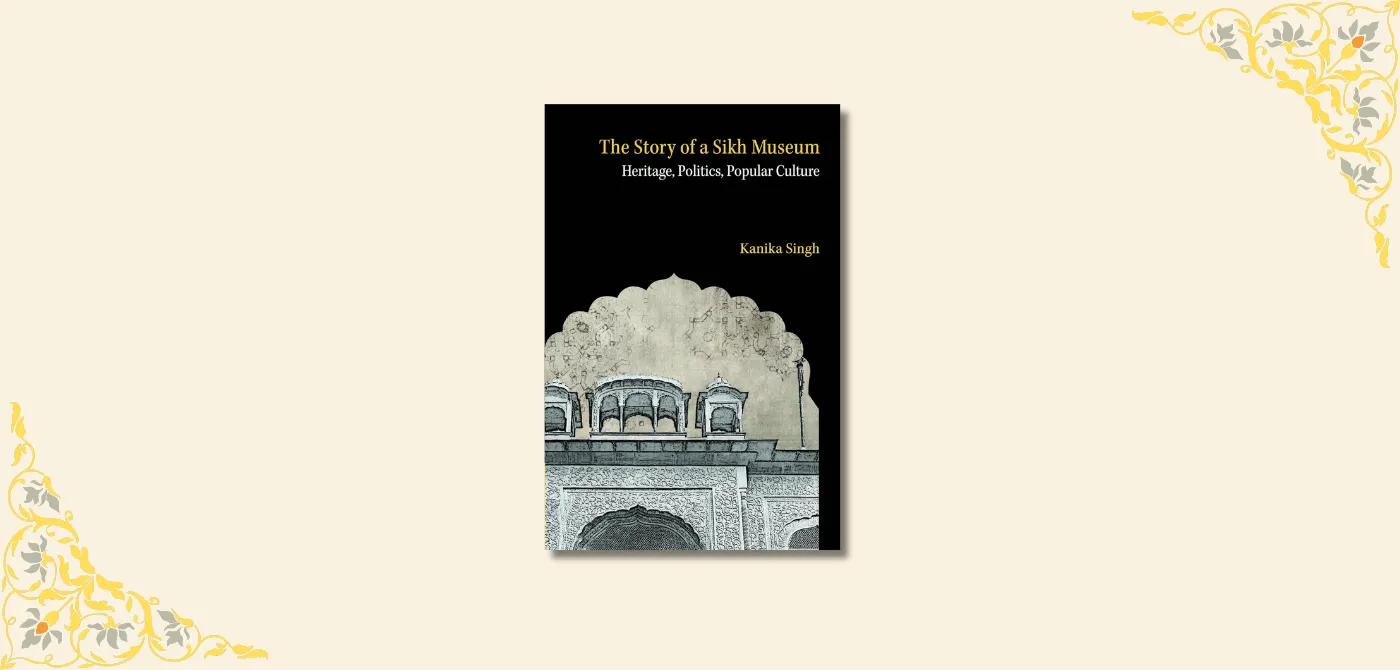
Kanika Singh’s book on the Bhai Mati Das Museum in old Delhi, the former Shahjahanabad, attempts to demonstrate the intercourse between the museum (and a broader visual culture) and the Sikh past, to mould contemporary forms of identity within the Indian nation-state, as well as globally. In this case, the museum is across from the Sisganj Gurudwara, which has a hoary past commemorating the martyrdom of the tenth Sikh Guru, Guru Tegh Bahadur, along with his followers, in 1675. Established in 2001, this museum’s collection of 169 paintings dating from the 1970s onwards, rather than historically reified artefacts pertaining to the Sikh faith, is what sets it apart from the better-known and more spectacular museums like the Central Sikh Museum (1958) established by the Sikh community or the Virasat-e-Khalsa, established in 2011 by the Punjab government.
Singh leads us to this fairly new and modest museum because of the dance it performs around questions of the secular nature of the museum, and its deployment of naturalistic painting (the author uses the more dated term, "history painting") to produce a "usable" Sikh heritage. This is predicated on narratives of selfless service, sacrifice, and the willingness to embrace martyrdom to defend one’s faith. She notes that such collections and museum-like spaces have become a common feature of several Sikh religious spaces; as in Bhai Mati Das, there is a reliance on painted/printed images, or "modern history paintings", i.e. a second order of artefacts whose value lies not in their singularity, but in their ubiquity and their recognisability.
The quasi-sacred status of the objects—depicting revered gurus and other figures significant within the Sikh faith, and yet, devoid of an indexical relationship to these figures, i.e. artefacts neither created by the gurus nor directly associated with their life, or person—and their work in producing "historical evidence’" of the Sikh past is a key problematic set up in the book.
Feeling the Fact
The paintings on display at Bhai Mati Das were the outcome of the patronage of the “first Sikh bank”, the Punjab and Sind Bank, set up in 1908, which commissioned them to be included in a series of calendars the bank published from 1974 onwards. Singh gives us an inordinate amount of background about the bank, the members associated with the production of the calendars, and the planning around the calendars, but far less about the actual museum and its genesis. Through interviews with a few artists associated with the production of these calendars, she foregrounds the interest on the part of the artists, and the institutional patron that is the bank, in fusing "not only historical facts but also 'feeling'".
The farmers’ protests of 2022, which saw large-scale mobilisation of Punjabi farmers and other citizen groups against three farm laws introduced by the Indian government, are the other contemporary flashpoint where Singh traces continuities between the museum’s artefacts and broader visual culture.
A fraught task, this excavation of history through the image— taken up by the artists at the urging of the patron, viz. the bank— involved, among other things, as the artist, Mehar Singh recalls, looking into "'clothes, shoes, hairstyle, beard, moustache'". “Authentic” is a word used liberally (this is discussed in greater detail below). The spiritual qualities of the ten Sikh gurus, and the various episodes from their lives were sought to be depicted in these paintings, and fed into the bank’s calendars. The effort— at combining historical background with these visual forms directed at the "common man"—"gave this Sikh 'heritage' an unmatched historical validity, acceptability and prestige". Thus, “modern history paintings" [as used within the Sikh community] have come to be a “document” and “evidence” of history, Singh concludes.
The most engaging part of the book is where Singh analyses the “lives”1 These images lead beyond the museum, through two contemporary conjunctures. The first was the Fateh Diwas (Victory Day) celebrations, which took place in 2014 for the first time. Organised within the Red Fort by the Delhi Sikh Gurudwara Management Committee (DSGMC), the celebrations commemorated a purported siege of the Mughal capital in 1783 by Sikh forces. These celebrations, initiated by the Shiromani Akali Dal (SAD) (of the Badal faction), whose victory in the DSGMC (after years of Congress rule) came just a year prior, mobilised the complex late-18th century Mughal-Sikh political jousting to present “a statement of triumph of a regional power (SAD (Badal)) over the oppressive centre at Delhi”.
Singh parses through varied secondary sources recounting this event, including from the 19th century, to note that the museum’s version of the story, seen in at least three paintings. (with their accompanying textual explanations) render the event into a religious conflict. Baghel Singh and the other Sikh chiefs are described as "liberating Hindus, Muslims, and Sikhs […] from Mughal tyranny". This invocation of ‘Mughal tyranny’ segues into a broader contemporary public culture in India where the othering and marginalisation of Muslims has been justified on the basis of these purported historical wrongs. The Fateh-Diwas, as a public memorialization of the Sikh past, has spawned others, for example, the Veer Baal Diwas of 2022, Guru Tegh Bahadur’s Prakash Purab, also in 2022, this time organised by the central government; these have often instrumentalised the Sikh past to advance the "marginalisation of Muslims [as evil and foreign]". Even as they circulate beyond the confines of the museum, the paintings perform as authoritative sources, rather than as forms of representation, reflective of the conditions and biases of their making. Their status as museum artefacts lends credence to the narratives they advance, presenting them as incontrovertible ‘facts'.
The farmers’ protests of 2022, which saw large-scale mobilisation of Punjabi farmers and other citizen groups against three farm laws introduced by the Indian government, are the other contemporary flashpoint where Singh traces continuities between the museum’s artefacts and broader visual culture. Unlike the Fateh Diwas celebrations, the farmers’ protests presented an oppositional voice drawing from the very same visual culture, featuring, among other figures found in the museum, Baghel Singh—the Sikh general who besieged Delhi—and the slogan of Dilli Fateh. The broader visual culture of the protests—comprising posters, prints, and banners—as well as music, invoked heroic figures from the Sikh tradition, in addition to figures who stood for equality and justice, as well as peasant rights.
Dilli Fateh, invoked through the images of Baghel Singh which are found in the museum, was common to the Fateh Divas commemoration as well as the farmer protests. Dilli Fateh is a claim based in Sikh sovereignty, one which makes "a greater claim upon the nation, not a demand to secede from it".
What is a Museum?
Singh presents the Sikh museum as a distinctive phenomenon, and concludes that museum-making projects have served the community in negotiating their history vis-à-vis the Indian nation, including to correct omissions and the lack of acknowledgement of the community’s suffering, as well as contributions. "The Sikh museum", Singh offers, "draws upon the Western model of the secular museum and transforms it for its own use". Further, ‘None of the other religious minorities (Muslims, Jains, Christians, Buddhists) or marginalised groups such as the Dalits have a comparable museum-building activity.’
Beyond Singh’s own reading, the voice of the community, which she generously cites in all other instances, would have been useful to have here, especially since a case has been made for a ‘Sikh museum’.
These conclusions— based upon the examination of the Bhai Mati Das Museum— appear tenuous in the context of the Indian museum-scape, or even globally for a range of reasons. The interest in museum-making has only grown: UNESCO notes that the number of museums has risen to 104,000 in 2024 from 22,000 in 1975. The museum, far from being a unique cultural emanation, has come to include nation-states, corporate houses, aggrieved communities, as well as majoritarian forces. The presence of the Ram Mandir Museum at Ayodhya, right alongside one of the most contested as well as vaunted temple-making projects in independent India, and further, a ‘Museum of Temples’ supported by the Tata Group, attest to the fact that museum-making has become de rigeur for religious denominations, minoritarian or otherwise.
Moreover, the Dalit/Buddhist community in India has often tied in with global heritage-making projects in terms of site museums (Sarnath, Kushinagar, Bodhgaya, to name a few) which draw patrons, funding, and visitorship which is global in nature, allowing for parallels with Sikh museum-making. Public monuments, for example, Mayawati’s ‘parks’ in Lucknow and elsewhere, remain an unparalleled assertion, visibilising Dalit icons and pride— the lines between religious belief and identity and public-facing commemoration, and outreach are continually muddied.
Further, even as the museum becomes the space within which we attempt to tame the potency of objects, or repurpose them into secular or aesthetic categories, concessions are made for a range of reasons: The National Museum of India, no less, exceptionalises one gallery containing the Piprahwa relics, allowing for prayer, meditation, and floor-level seating, and requires visitors to remove their footwear before entering the gallery.
Whether within a museum or outside, these icons/spaces operate on the same terms as the examples that Singh discusses. They are often in conjunction with places of worship (or incorporate one in their premises); they are aimed not just at adherents of the faith but a wider visitorship, and just like the paintings in the Bhai Mati Das museum, the artefacts on view are not intended for worship, and yet often become so.
In insisting on the exceptionalism of Sikh museum-making, an opportunity to place Sikh heritage-making within a larger configuration of religion and exhibitionary value is lost. The author’s analysis of this seeming dichotomy—secular and sacred—appears directed at an ur museum of the West which is entirely devoid of the taint of the ‘sacred.’ It would be instructive to consider the constant breach of lines between these as a feature of not Indian museology alone. It is also worth going as far back as Carol Duncan’s characterisation of the civilising “rituals” that Western museums perform. She notes how museum architecture, as well as the modalities of the visit, are “secular rituals”, participation in which works to produce a shared (national) identity.
As Singh details the genesis of this collection, there is an abundant use of quotations from a range of actors involved about the desire for authenticity. Here, a certain conflation takes place: what is being discussed is the production of the paintings, and we hear little about the larger act of establishing museums by the community, which are apparently proliferating. The museum always works as a greater totality than the sum of its individual parts taken together.
It follows, therefore, that in a book centred on museums, the community’s views on museum-making, apart from the production of specific artefacts, deserve discussion. What, for instance, did the artists interviewed think of the Sikh approach to museum-making? What oughts and shoulds would prevail in the case of museums, rather than the paintings? How do the artists, and their interlocutors involved in the production of images for the bank calendars—the original context in which these paintings appear—see the transition into the space of the museum? Since this book ostensibly shows us what goes into a museum, especially when it is not a ‘given’ such as rare and precious objects reified by time and historical significance, but rather as a didactic project, it is even more important to understand what the commitment to museum-making was.
What we have instead is the Sikh commitment to “history painting” and illustration, and the chapter attempts to recreate the original context in which these images came about: the calendars, rather than museums. Beyond Singh’s own reading, the voice of the community, which she generously cites in all other instances, would have been useful to have here, especially since a case has been made for a ‘Sikh museum’.
Authentic Pasts
While the interviews build a picture of the artists’ commitment to rendering the past as ‘authentically’ as possible, a number of problematics arising from such a project remain without counterpoint. The question of which archive grounds these claims of authenticity remains unanswered. What are/were the artist’s tools and methods of research? If the artists interviewed by the author found the visual language of the past, the janam sakhis, or other manuscripts and traditions of miniature painting not relevant to their purposes, what indeed were the methods by which ‘authenticity’ was produced?2
For Singh, the absence of original artefacts, which give other museums/museal drives their charge, is what makes the Bhai Mati Das Museum unique. Yet, the subcontinent’s visual history is marked by the revolution that Raja Ravi Varma’s oil paintings, and later, chromolithographs, caused.
The artist Mehar Singh, in explaining the choice of naturalism to render the past authentically, contends that "abstract style has abstraction and traditional styles are miniature". We hear of the study of palmistry by the stalwart Sobha Singh to render Guru Nanak’s hand. But the notion that this form of verity is what creates the most efficacious images needed a much stronger counterpoint and closer engagement with the images than we see in the book.
What the artist is correct about is our desire for images that answer the needs of an age. But what needed further elaboration is the relationship of this desire to the highly questionable assumption that naturalistic images replete with “landscape, people, architecture, vegetation appearing with depth and perspective” are the only way to picture the past.
These same ‘requirements’ for images of the past are easily cast aside by popular picture producers, in whose art time, space and perspective do not seem beholden to naturalism. New assemblies (for example, of various gurus) may be imagined, sacrifices depicted with blood and gore, and multiple temporalities may interact freely, all without the burdens of perspective or the version of naturalism that the artists cited. The efficacy of these images is not a function of ‘correct’ delineation. This, here, then has to be read as the modern artist’s conceit about the mastery of perspective and the medium of oil painting, serving to distinguish the efforts of modern, high-art painters and their patrons from their plebeian counterparts producing the images of the bazaar which have been a vibrant constant in Punjab’s visual culture.
In not discussing the genealogy of images and offering counterpoints to these claims about what is the most efficacious means of depicting the past, we are left with an incomplete story. In addition to a vast corpus of art historical writing which considers image-making traditions, which have been kept out of discussion, questions of negotiating tradition and modernity within image-making would also have been useful. Molly Emma Aitken’s Intelligence of Tradition, to name just one example, comes to mind.
The Sacred and the Profane
For Singh, the absence of original artefacts, which give other museums/museal drives their charge, is what makes the Bhai Mati Das Museum unique. Yet, the subcontinent’s visual history is marked by the revolution that Raja Ravi Varma’s oil paintings, and later, chromolithographs, caused. Cheap, available, and omnipresent, these prints or ‘photos of the gods’ brought the divine into corporeality, as well as within the domestic space.3 Gods, saints, national and subnational icons (like the Tamil language personified as a mother figure) have all been rendered through precisely this ‘corpothetic’ schema.
And so, the naturalistic depiction of the Sikh gurus, and the rest of the pantheon, as they feature in the Bhai Mati Das Museum, needs to be situated—deeply—within the shift that occurred in the relationship between the sacred and the profane through the efflorescence of print culture in the 19th century. Such a relay of iconography, formats, artists, and production processes, which converts recognisable images into usable icons, makes for rich reading, as the work of Kajri Jain’s crucial work on bazaar art and its visual, and production economies shows us.4
A larger question then is: should we assume the paintings in the Bhai Mati Das Museum as a breakaway from tradition¸ if the tradition cited is that of the janam sakhis, or should we consider the paintings as highbrow versions of the lexicon laid out by popular prints long after they have made their borrowings from the janam sakhis? The museum, it might appear, is a lookout point from which to consider past and future lives, rather than a terminus of authenticity.
Deepti Mulgund is an assistant professor at the School of Humanities and Social Sciences, Shiv Nadar University, Delhi NCR.
- 1
Richard Davis’ book, The Lives of Indian Images (Motilal Banarasidass Publishers, 1997), pioneered an object biography method to consider the varied stages of objects’ journeys, in, and out of the museum.
- 2
Janam Sakhis are hagiographic writings pertaining to the life of the founder of Sikhism, Guru Nanak Dev ji. Of these the B40 manuscript, housed in the British Library is well-known for its 57 miniature-style illustrations of episodes from Guru Nanak’s life.
- 3
‘Photos of the Gods’ is a coinage by visual anthropologist Christopher Pinney, borrowing from the popular description of chromolithographs of various deities. For Pinney, ‘corpothetics’ is ‘embodied, corporeal Aesthetics,’ in contrast to traditional conceptualizations of aesthetics.
- 4
Kajri Jain’s Gods in the Bazaar: The Economies of Indian Calendar Art, (Duke University Press), 2007.