



Silicosis is a respiratory disease where the lungs are left scarred over time due to the exposure to silica dust. It is an occupational disease because the scope for exposure to silica dust is mainly in occupational settings such as stone quarries, mining, and construction. Also, it depends on the type of job within these sectors—for instance, those directly involved in quarrying as labourers are more exposed.
One of the reasons it is important to focus on silicosis as a public health challenge is the sheer number of people working in occupations where exposure is likely.
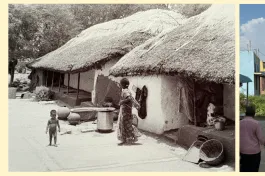
People dependent on these jobs are from some of the most marginalised communities in various parts of India. They depend seasonally on work in stone quarries, mines, and construction, and often travel from their remote villages to these worksites.
While working in these jobs over years, their lungs get damaged by fine silica dust, and become less capable of facilitating oxygenation of the blood. The body is left with low energy for physical activity, eventually even for vital processes—making it a debilitating disease leading to premature death. Affected persons also become prone to infectious diseases such as tuberculosis.
Many activists have worked hard to facilitate the identification of workers with silicosis, improve their access to healthcare, fight for compensation, and hold industry accountable for prevention and workers’ safety (NewsClick 2018). Patel (2025a) points out that the diagnosis of silicosis has improved with greater access to high-quality x-ray equipment.
However, making inroads into silicosis detection and prevention has been highly challenging, and it has needed the constant involvement of human rights bodies, such as the Rajasthan State Human Rights Commission. In October 2019, a policy was instituted in Rajasthan on preventing and controlling silicosis, and rehabilitating affected communities in the state (Government of Rajasthan 2019).
One of the reasons it is important to focus on silicosis as a public health challenge is the sheer number of people working in occupations where exposure is likely. A 1999 study indicated 8.4 million workers in such jobs—5.4 million in construction, and 3 million in other jobs (Pandey 2024).
A 2009 report estimated that by 2015, 11.5 million people would work in occupations that exposed them to silica dust, and that this figure would increase to 52 million by 2025. These figures have been cited across many articles such as Cousins 2025 and Singh et al. 2024. We went through the India Labour Report 2009 (TeamLease 2009) to better understand how these estimates were made, but found no explicit mention of the 52 million figure in the report.
By reducing and eliminating dust levels in occupational settings, and by providing appropriate personal protective equipment, it should be possible to reduce the prevalence of silicosis.
In terms of the actual number of silicosis cases in India, the Global Burden of Disease study estimates that the total Disability Adjusted Life Years (DALYs; a measure of the burden of disease) attributable to occupational silica dust exposure in 2023 in India was 138,674 from respiratory diseases and neoplasms, and that total deaths due to silica dust exposure were 4,467 (Institute for Health Metrics and Evaluation 2025).
However, drawing on months of fieldwork across several states and hundreds of villages in India, Pandey (2024) points to gross underreporting and under-recognition of the number of affected persons, and suggests that cumulative silicosis deaths since Independence may exceed one million. A recent literature review reported a meta-analytic estimate of 25.9% prevalence of silicosis, based on 11 studies from various occupational settings in India, most of them related to stone quarries and stone cutting (Khetan and Babu 2025).
However, the review did not assess or critique the quality of the included studies, and it reported a high degree of heterogeneity without much reflection on whether it was appropriate to pool studies from such different occupational settings in a single meta-analysis.
In addition, some studies included both current and former workers, and most appeared to rely on convenience samples or were affected by self-selection bias. As a result, these findings are unlikely to provide an accurate estimate of the prevalence of silicosis among current workers, or of the incidence of disease over a defined period of exposure.
A second reason to focus on silicosis as a public health challenge is that it is preventable. By reducing and eliminating dust levels in occupational settings, and by providing appropriate personal protective equipment, it should be possible to reduce the prevalence of this immensely debilitating and deadly disease. There is really no excuse for failing to prevent it.
Occupations of Concern
We did not find a comprehensive list of occupations in which exposure to silica dust can be expected, although various articles identify the main sectors where this is likely to occur. A report of the Rajasthan State Human Rights Commission (2014) noted that “silicosis is likely to be prevalent among workers engaged in several other occupations like stone crushers, quartz mining and processing, foundries, sand blasting, ceramic industries, gem cutting and polishing, slate and pencil industries, glass manufacturing, construction workers etc.”.
To better understand the current situation and trends in occupations with potential exposure to silica dust in India, we examine what can be learnt from the Periodic Labour Force Survey data.
Other authors have emphasised mining, construction, agate stone and imitation jewellery, and stone-carving and polishing as important sectors (Pandey 2024). Patel (2025b) cited more than 90 occupations as relevant.
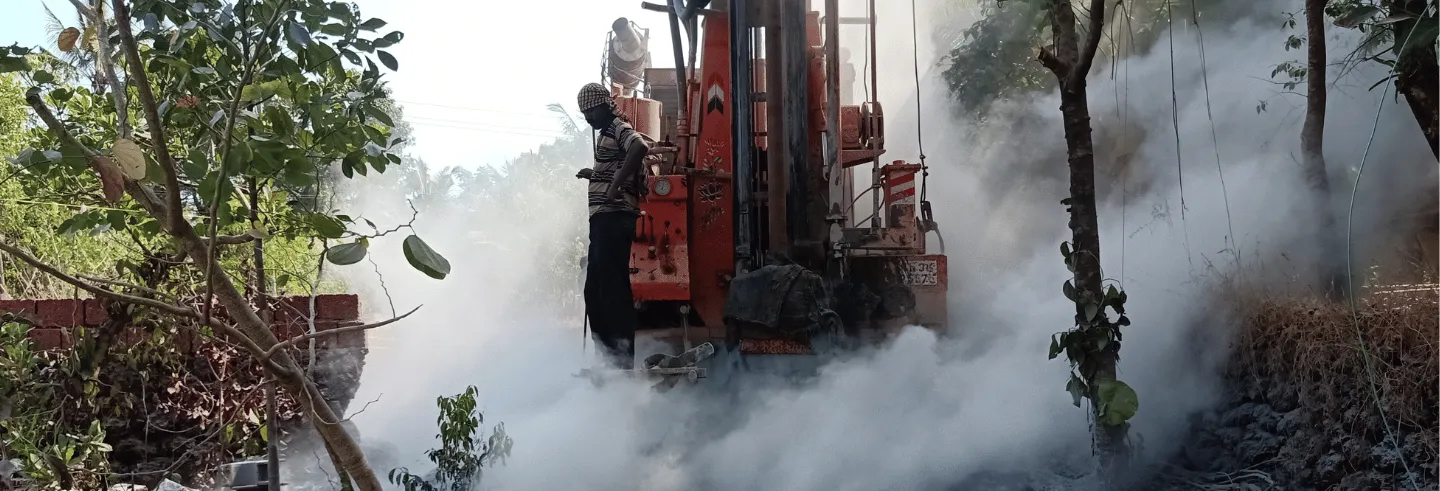
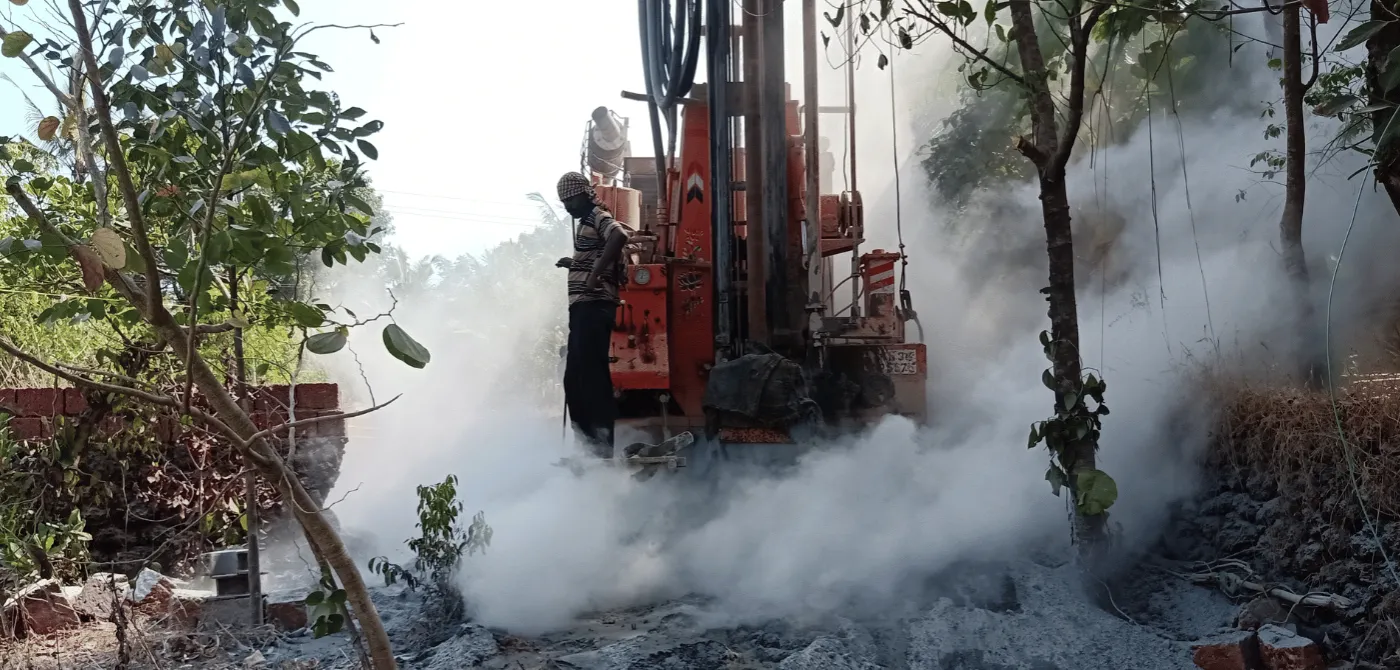
The Occupational Safety and Health Administration in the United States states that silica dust “is created when cutting, sawing, grinding, drilling, and crushing stone, rock, concrete, brick, block, and mortar”. It further notes that “activities such as abrasive blasting with sand; sawing brick or concrete; sanding or drilling into concrete walls; grinding mortar; manufacturing brick, concrete blocks, stone countertops, or ceramic products; and cutting or crushing stone result in worker exposures to respirable crystalline silica dust” (Occupational Safety and Health Administration, no date).
The standard for respirable silica dust in occupational settings in the US is 50 micrograms per cubic metre of air (Occupational Safety and Health Administration, no date). By contrast, the standard for mines in India is almost twice the US standard, at 100 micrograms per cubic metre of air (Directorate General of Mines Safety 2010).
Some studies from India have analysed air samples in occupational settings and found that many samples exceeded the applicable standards; for instance, in one study by Dhatrak and Nandi (2020), 30% of the samples were above the standard. There is also anecdotal evidence that the risk, understood as the probability of developing the disease, varies across different jobs in which silica dust is present.
However, we did not find any study that has estimated the risk of developing silicosis across different industries in India. This represents a major gap in knowledge, which should be addressed through appropriate epidemiological studies.
The Outlook
In line with the projections made in the 2009 report, we believe that the number of people working in occupations that expose them to silica dust has increased over the past few years.
The reasoning is as follows. India is urbanising at a rapid rate, and this urbanisation has been accompanied by an increase in construction activity and, therefore, in the number of jobs in construction. As a result, the demand for construction materials has risen, including, but not limited to, the demand for stone. With urbanisation, there is also an increase in the demand for energy.
These changes in demand may have led to an increase in quarrying and mining jobs. It is not uncommon to see stone workshops in Indian cities where workers are not using personal protective equipment.
To better understand the current situation and trends in occupations with potential exposure to silica dust in India, we decided to examine what can be learnt from the Periodic Labour Force Survey (PLFS) data. We did not find other papers that used PLFS data to address this question.
What the Data Says
The PLFS has been conducted on a quarterly basis since 2018 to understand the employment situation in India, with reports released annually (Bhattacharya and Mishra 2025). The survey is designed to be nationally representative and collects various details from respondents, including the industry in which they work and the type of work they do within that industry.
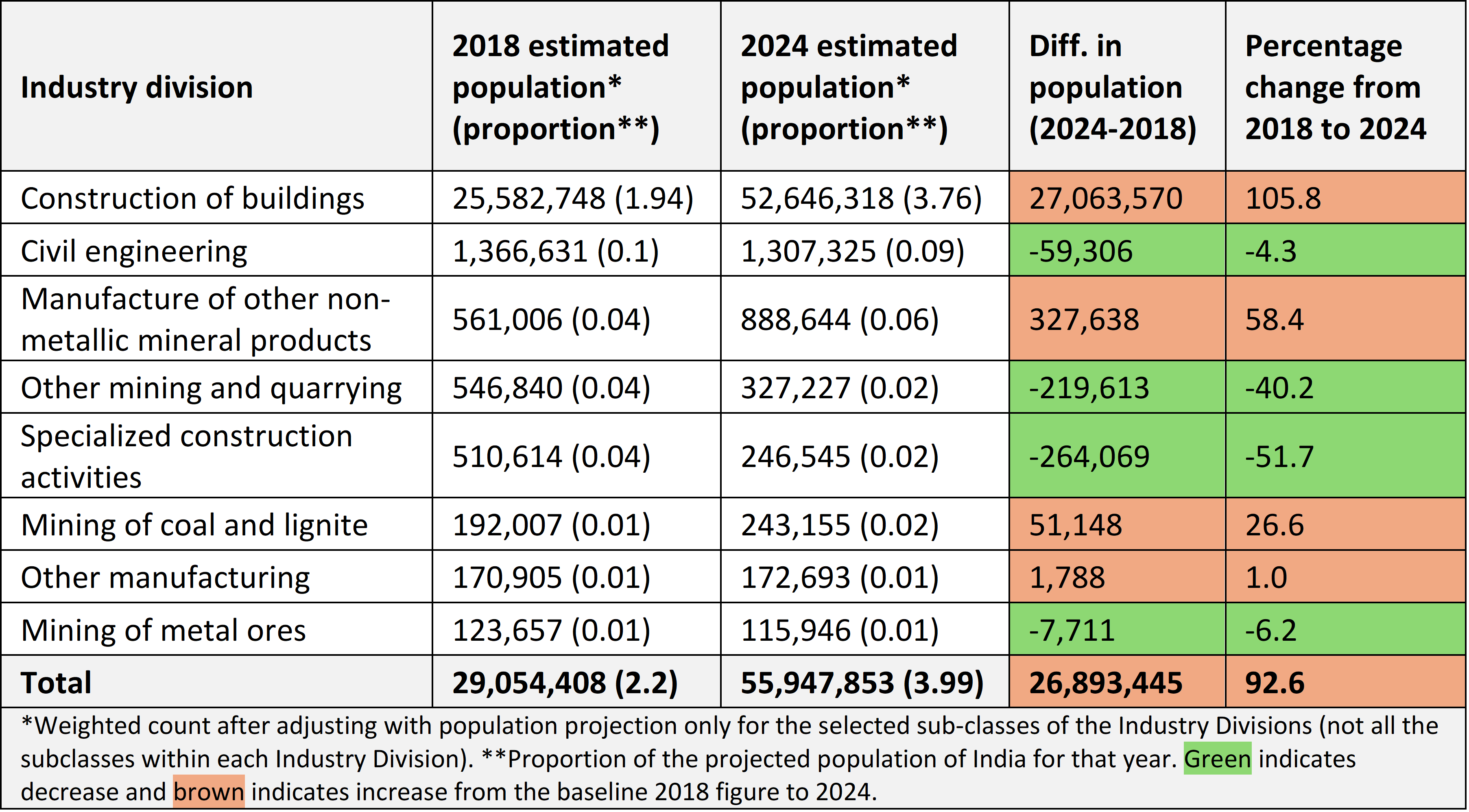
The proportion of persons working in jobs with potential silica dust exposure was 2.2% of India’s population in 2018 (more than 29 million individuals) and 3.99% in 2024 (more than 55.9 million individuals).
If a person has engaged in a particular type of work for the majority of the preceding year (major time criterion over 365 days), this is recorded as their usual principal status (MoSPI 2024). Focusing on principal status, we analysed the 2018 and 2024 PLFS datasets to assess employment trends in relevant industries and occupations.
The PLFS uses National Industrial Classification (NIC) codes and National Classification of Occupations (NCO) codes to describe the work of individuals. The NIC describes the industry or sector in which the person is employed, regardless of the specific nature of their work within that industry, whereas the NCO describes the nature of work performed by the individual. For example, a person may be employed in the mining industry but may be working in a managerial role.
For our analysis, we identified specific industries, at the level of sub-class of industry in the NIC framework, and then specific occupations, at the level of “group” in the NCO framework, within those industries as relevant in terms of potential exposure to silica dust. These were the smallest levels at which the NIC and the NCO were described in the data. By combining these two variables, we were able to satisfactorily shortlist those survey respondents who we believe would be exposed to silica dust.
To estimate the number of individuals in these jobs, we used two steps. First, we applied the correction factors provided in the PLFS data to estimate weighted counts from the shortlisted sample. Second, we extrapolated these values in proportion to the national population projection for that year, using the report of the Technical Group on Population Projections (2020).
Table 1 shows the shortlisted “industry divisions”.
Findings of Analysis
Informed by the literature, we shortlisted 79 NIC sub-classes (out of a total of 1,199 NIC sub-classes) and five NCO occupational groups (out of a total of 115 NCO groups) as those with potential silica dust exposure.
The proportion of persons working in jobs with potential silica dust exposure was 2.2% of India’s population in 2018 (more than 29 million individuals) and 3.99% in 2024 (more than 55.9 million individuals) (see Table 1). The size of the estimated exposed population almost doubled between 2018 and 2024, representing an increase of over 92%. Our estimate is in the ballpark of the earlier cited estimate of 52 million workers.
The main increase in numbers occurred in the “construction of buildings” NIC division, which accounted for over 52 million workers, or 94% of all exposed workers, in 2024, compared with 25 million workers, or 88% of all exposed workers, in 2018. Similarly, if we look at the occupational groups, “mining and construction labourers” had the highest share, at 82.4% in 2024 and 97.2% in 2018.
It is noteworthy that the proportion of individuals working in “other mining and quarrying” decreased, whereas one might have expected an increase, given the construction and infrastructure boom; this finding merits further investigation.
Table 1: Estimates of the Number and Proportion of Workers in Industries (and Occupations) with Potential Silica Dust Exposure, 2018 and 2024
With respect to gender distribution in these industries and occupations, we found that a large majority of workers were men (more than 90%). The overall proportion of women in the relevant occupations was 9.4% in 2018 and 7.3% in 2024, but there was considerable variation across industries. For example, the “other manufacturing” division, which includes jewellery-making, had a relatively higher female workforce (30.3% in 2018 and 49.4% in 2024).
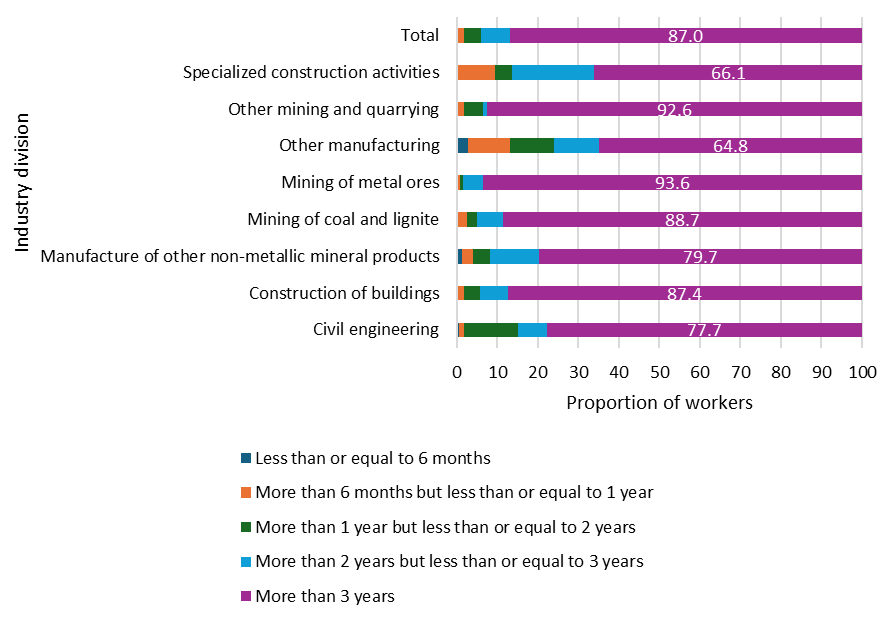
The median age of workers in these jobs was between 35 and 39 years, but workers in these sectors spanned all age groups from 15 years to over 60 years. In addition, a large majority of workers (87%), especially in more dangerous sectors such as quarrying, had been in their principal jobs for more than three years (Figure 1). This pattern indicates the potential for chronic exposure to silica dust in a large section of this workforce and, therefore, an increased risk of developing silicosis.
Figure 1: Duration of Principal Status in Industry Division from 2024 PLFS Data
If we apply the previously cited meta-analysis estimate of silicosis prevalence among silica dust–exposed workers outside the construction sector (25.9%, with a confidence interval of 13.6% to 38.3%) to our estimated 1,994,210 workers in non-construction silica dust-exposed settings in India in 2024, the resultant number of workers affected by silicosis would be 516,500 (ranging from 271,213 to 763,782). However, this figure is likely to be inaccurate, given the methodological concerns about the meta-analysis discussed earlier.
Conclusions
We used the PLFS data to estimate the proportion of India’s population working in jobs that may expose them to silica dust. We estimate that more than 55 million individuals were working in jobs with silica dust exposure in 2024, most of them in the construction industry. The growth in these numbers between 2018 and 2024 is striking and may be explained by rapid urbanisation and the expansion of infrastructure across India.
Silicosis is a scourge on some of the most vulnerable populations in the country, and ... far more needs to be done.
Given the size and vulnerability of the exposed population, the severity of the disease, the lack of preventive action, and the lack of access to quality healthcare, this represents a significant public health challenge.
We suggest that the PLFS data could be made more robust for occupational health analysis in India, particularly by better characterising workers’ occupational exposure through more detailed information on duration of work.
We also emphasise the substantial gaps in knowledge about the risk of silicosis in different occupational settings and urge epidemiologists and industrial hygienists to undertake longitudinal and analytical studies to describe exposure and risk, for example in quarrying, mining, glass-making and construction. Exposure among households living close to such worksites should also be investigated.
Silicosis is a scourge on some of the most vulnerable populations in the country, and although there have been small steps in the right direction in some places, such as Rajasthan, far more needs to be done. We hope this analysis adds to the impetus for such action.
The full list of specific types of industries and occupations shortlisted in this analysis can be shared over email (adithya.pradyumna@apu.edu.in). The views expressed are of the authors and do not necessarily represent the views of Azim Premji University.
Acknowledgements: We thank our colleagues Paaritosh Nath, Vikas Kumar, and Neeraj Hatekar for their technical inputs on the PLFS methodology, data, and our analysis. We thank Mukta Gundi for closely reviewing our manuscript.
Adithya Pradyumna teaches courses at Azeem Premji University on environmental health, food systems, and evidence in development action. Sherry Martin is interested in the analysis of large health data and building apps.